Gambonanza Guide
Gambonanza Tiles Guide
Learn how Phantom, Ghost, Blessed, Protective, Trap, Gold, Cursed, and Crumbling tiles work in Gambonanza, plus Chemist tile-copy tips.
Tiles are one of the easiest ways to turn a normal Gambonanza run into a powerful one.
A good tile can protect a queen, create a temporary copy, trap a dangerous enemy, generate money, or make a risky trade safe. A bad tile placement can waste money, block your own route, or bait you into sacrificing a piece you cannot replace.
This guide explains the main tile types in Gambonanza, how to use them safely, and how tile-copy effects such as Chemist Gambit can turn one strong tile into a full-board plan.
How Tiles Work
You usually get modified tiles through shop rewards, tile tokens, or related upgrade effects.
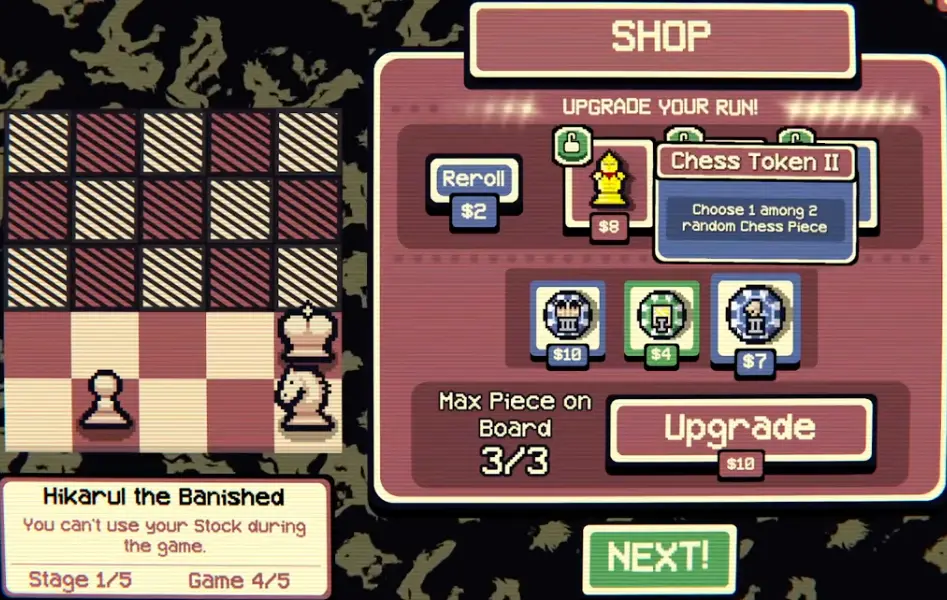
A modified tile is a special square on the board. Its effect usually matters when a piece moves onto that tile, but exact wording is important. Some effects may care about moving, landing, capture timing, or whether the piece is already standing there.
Use this beginner rule:
Read the tile tooltip, then assume movement onto the tile matters unless the game says otherwise.
This matters because simply placing a piece from stock is not always the same as moving a piece during the board. If you place a queen onto a tile and nothing happens, the tile may require an actual move, capture, or trigger condition.
Tile priority by run type
| Run type | Best tile direction |
|---|---|
| Beginner first clear | Blessed, Protective, Trap |
| Queen carry | Blessed, Protective, Phantom |
| Pawn promotion | Blessed, Protective, Gold |
| Economy run | Gold, Phantom + Gold, tile-copy effects |
| Dangerous boss board | Protective, Blessed, Trap |
| Crumble-heavy board | Protective, Jump support, safe fallback tiles |
The biggest beginner mistake is treating every tile as equally useful. Tiles are strongest when they support your current pieces and your next few boards.
Phantom Tile
Phantom Tile creates a temporary phantom copy when a piece moves onto it.
Phantom is sometimes referred to by players as a Ghost-style copy effect, but Phantom is the safer name to use unless the game tooltip says otherwise.
A phantom copy is useful because it lets you create value without risking a permanent piece. In available footage, the phantom copy sells for zero and vanishes at the end of the game, so beginners should treat it as temporary unless another Gambit or tile interaction changes that behavior.
Use Phantom tiles for:
- risky captures
- emergency blockers
- queen-copy tactics
- baiting enemy attacks
- testing dangerous lines
- surviving boards where you cannot afford to lose your real queen
Phantom is strongest when it lets you trade something fake for something real.
Two Phantom mistakes are especially common:
- Do not plan around phantom copies as if they are permanent. Use them for trades, blockers, bait, or temporary tempo, not as your long-term board value.
- Do not place Phantom tiles where your best pieces cannot realistically reach them. A powerful copy tile in the wrong corner may never trigger when the board gets dangerous.
Blessed Tile
Blessed Tile can let a captured blessed piece return to stock.
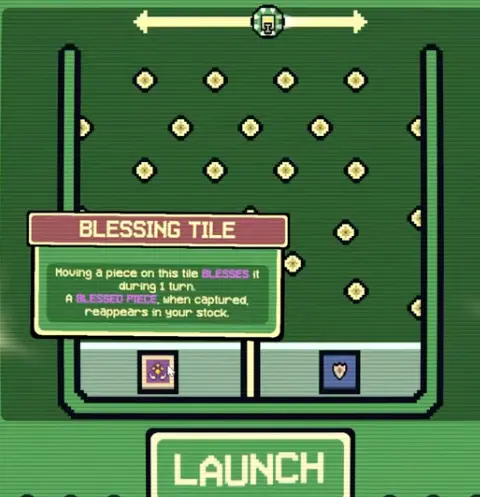
Blessed is one of the safest and most beginner-friendly tile effects because it changes the cost of a sacrifice. If your queen, rook, bishop, or promoted piece can come back after being captured, a risky capture can become a winning trade.
Use Blessed tiles for:
- queen sacrifices
- rook trades
- promoted pawn protection
- boss boards
- baiting enemy attacks
- recovering from forced captures
A simple Blessed plan:
- Put the Blessed tile where fights are likely to happen.
- Move a valuable piece onto it when you are ready to trade.
- Use that piece to take something important.
- If it gets captured, recover it through stock instead of losing it permanently.
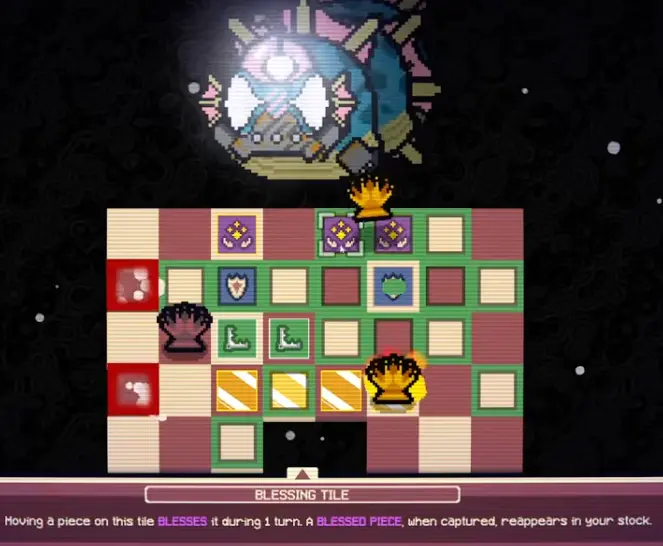
Blessed + Promotion note
There is a player-reported interaction where a promoted pawn that becomes blessed may return to stock as its promoted form after being captured. This can create very strong queen-farming lines, but it should be treated as patch-sensitive and possibly unintended.
Do not build your beginner strategy around this always working. The reliable lesson is simpler:
Blessed tiles are best used on pieces you cannot afford to lose.
Protective Tile
Protective Tile protects a piece for one turn.
Protective is less flashy than Phantom or Gold, but it is one of the best tiles for safe play. It helps you place a queen or rook into a dangerous zone without immediately losing it.
Use Protective tiles when:
- you need to move a queen into enemy range
- you want to survive one forced response
- a boss board has too many long-range threats
- enemy rooks, bishops, or queens control the center
- you need one turn to set up a capture chain
Protective is especially good for beginners because it reduces punishment for one risky move. It does not mean your piece is safe forever. After the protection window ends, you still need an exit route or a follow-up capture.
Good Protective placement:
- central enough for your queen to reach
- near likely fight zones
- not directly on a tile that may crumble soon
- not so deep in enemy territory that you cannot escape afterward
Protective is a tempo tile. It buys time. Make that time count.
Trap Tile
Trap Tile can trap an enemy that steps on it, preventing movement for a turn.
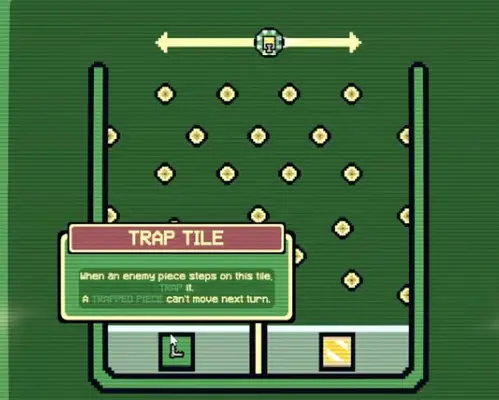
Trap tiles are best against dangerous enemy pieces that rely on movement:
- queens
- rooks
- bishops
- knights
- advanced pawns
- Elite pieces that are hard to solve immediately
Use Trap tiles to:
- stop a queen from escaping
- freeze a rook before it controls a file
- prevent a pawn from promoting
- buy time against Elite pieces
- force an enemy into a capture route
The most common mistake is placing Trap tiles too far away from the action. A trap is only useful if an enemy is likely to step on it.
Good Trap placement usually means:
- near enemy advancement routes
- near the middle rows where fights happen
- near pawn promotion lanes
- in places that force the enemy into your queen, rook, or bishop line
Trap tiles are not just defensive. They can also create kills by stopping an enemy exactly where your next move can reach it.
Gold Tile
Gold Tile turns pieces into golden pieces and creates money value.
Gold is an economy tile. It does not always save you immediately, but it can help your run scale by converting movement and board control into money.
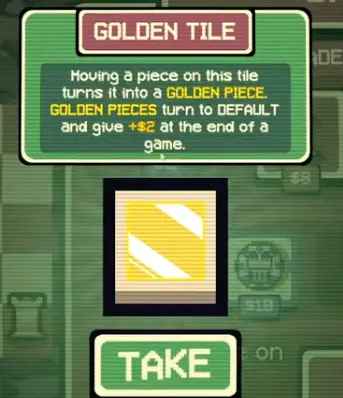
Use Gold tiles when:
- your board is already stable
- you can safely move pieces through the tile
- you have enough pieces to keep fighting
- you want money for future shops
- you are not about to enter a dangerous boss with no backup plan
Gold is strongest when you can trigger it repeatedly without ruining your position. It is weaker when you are already struggling to survive.
Good Gold users:
| Piece | Why it works |
|---|---|
| Queen | Can move through many routes and still control the board. |
| King | Can step onto nearby tiles safely when the board is calm. |
| Pawn | Can generate value while moving toward promotion. |
| Rook | Can use open lines if the Gold tile is placed well. |
Economy is useful only if you survive long enough to spend it.
Chemist Gambit and Tile Duplication
Some Gambits can interact directly with modified tiles. The most important example for tile builds is Chemist Gambit.
Chemist-style tile play is powerful because it can copy the first tile effect you trigger onto another tile. If the first triggered tile is strong, the copied tile can turn one good square into a wider board plan.
Good Chemist targets include:
| First triggered tile | Why copying it is strong |
|---|---|
| Protective Tile | More safe entry squares for queens, rooks, and promoted pieces. |
| Blessed Tile | More recovery squares for valuable sacrifices. |
| Gold Tile | More routes for economy farming. |
| Trap Tile | More chances to freeze dangerous enemies. |
| Phantom Tile | More copy points for temporary attackers or blockers. |
This is why you should be careful with your first tile trigger after taking Chemist. If you accidentally trigger a low-value or badly placed tile first, the copied effect may not support your build.
A simple Chemist rule:
After buying Chemist Gambit, make your first tile trigger the tile you most want to duplicate.
For beginners, Protective and Blessed are usually the safest Chemist targets. Advanced economy runs may prefer Gold or Phantom + Gold routes, but only when the board is already stable.
For more Gambit-specific examples, read Strong Early Gambits in Gambonanza.
Crumbling Tiles and Cursed Tiles
Crumbling tiles and crumble-related board states are dangerous because they can remove space from the board.
Crumble can sometimes help by destroying enemy routes or pieces, but beginners should treat it as a threat first.
Crumbling tiles matter because they can:
- remove safe squares
- kill pieces standing on collapsing tiles
- block queen or rook routes
- create holes that trap pawns
- make Stalemate Counter situations worse
- punish long games with no progress
If the board is starting to collapse, ask:
| Question | Why it matters |
|---|---|
| Is my queen standing on a dangerous tile? | Losing your carry piece can end the run. |
| Can I still reach the last enemy piece? | Holes can block your final route. |
| Do I have Jumps or movement support? | Some Gambits can make holes less punishing. |
| Is crumble hurting enemies more than me? | Sometimes waiting is useful, but only with a reason. |
The safest response is to move valuable pieces away from unstable zones before starting long capture chains.
Cursed tiles from bosses
Some boss fights can add dangerous tile states that are not part of your normal shop plan. Tàl the Cursed, for example, can randomly place cursed tiles around the board.
Treat boss-created cursed tiles differently from tiles you choose yourself:
- identify cursed tiles before committing your queen
- do not park high-value pieces on newly dangerous squares
- keep alternate queen and rook routes open
- avoid depending on one Blessed or Protective tile if a boss can disrupt that area
- move promoted pieces carefully if cursed tiles block the normal path
You cannot always prevent cursed tiles from appearing, but you can reduce the damage by not leaving your best pieces in places the boss can punish.
For boss-specific planning, read the Gambonanza Boss Tips guide.
Phantom / Ghost + Gold Combo
Phantom and Gold can create strong economy or copy-style lines, especially when players refer to Phantom as Ghost-style tile play.
The basic idea is:
- Phantom creates a temporary copy.
- Gold can turn movement into money value.
- Tile-copy or tile-trigger Gambits may multiply the effect.
- Queen movement makes these effects easier to repeat.
This can become powerful, but do not overstate it as guaranteed. Exact interactions can be patch-sensitive, and some copies may vanish at the end of the board.
Use this combo when:
- you already understand how Phantom works
- you have safe routes through Gold tiles
- your queen or rook can trigger tiles without dying
- you are not relying on a temporary piece as your only win condition
Avoid this combo when:
- you need immediate survival
- the tile is too far from the fight
- Crumbling tiles can destroy the route
- you do not have enough permanent pieces left
For beginners, Phantom + Gold is an upgrade path, not a first-clear requirement.
Best Tiles for Beginners
The best beginner tiles are the ones that forgive mistakes.
| Tile | Beginner rating | Why |
|---|---|---|
| Blessed | Excellent | Saves valuable pieces after capture. |
| Protective | Excellent | Prevents immediate punishment for one risky move. |
| Trap | Strong | Stops dangerous enemies and buys time. |
| Phantom | Strong | Creates temporary sacrifice pieces. |
| Gold | Good | Helps economy, but only if your board is stable. |
| Crumbling | Risky | Can help, but often punishes beginners. |
If you are still learning, prioritize:
- Blessed for queen or rook recovery.
- Protective for safe positioning.
- Trap for dangerous enemies.
- Phantom once you understand temporary copies.
- Gold when you are already stable.
A safe beginner tile setup usually places defensive tiles near the center or near common fight lanes, not in random corners.
Best Tiles for Queen Builds
Queen builds usually want Blessed for recovery, Protective for safe entry, and Phantom for risky captures. Trap tiles help hold targets inside queen attack lines, while Gold tiles can turn safe queen movement into economy.
For full queen-build tile setups, read the Gambonanza Pawn and Queen Build Guide.
Common Tile Mistakes
| Mistake | Why it hurts | Fix |
|---|---|---|
| Placing tiles too far from combat | They never trigger. | Put tiles near likely movement and capture routes. |
| Assuming placement equals movement | Some effects may not trigger just because you place a piece there. | Move onto the tile when the tooltip implies movement. |
| Triggering the wrong tile first with Chemist | You may duplicate a weak or badly placed effect. | After buying Chemist, trigger your best tile first. |
| Chasing Gold while dying | Money does not matter if the run ends. | Buy survival first, farm Gold when stable. |
| Wasting Blessed on low-value pieces | The saved piece may not matter. | Use Blessed on queens, rooks, promoted pieces, or critical blockers. |
| Overtrusting Protective | Protection is temporary. | Have a follow-up move or escape route. |
| Treating Phantom copies as permanent | Temporary copies can vanish. | Use them for trades, blockers, and tempo. |
| Ignoring boss-created cursed tiles | A boss can turn safe-looking squares into danger zones. | Re-check the board after boss modifiers appear. |
| Ignoring crumble | Tiles can disappear or become unreachable. | Move key pieces before collapse pressure rises. |
| Blocking your own queen route | Bad tile placement can limit movement. | Place tiles where they open lines, not where they trap you. |
FAQ
What is the best tile in Gambonanza?
For beginners, Blessed and Protective are usually the safest. Blessed helps recover important pieces, while Protective helps prevent immediate punishment.
What does Phantom Tile do?
Phantom Tile creates a temporary phantom copy when a piece moves onto it. Treat the copy as temporary unless another effect clearly changes that interaction.
Is Ghost Tile the same as Phantom Tile?
Some players use Ghost-style language when talking about copy tiles, especially in Phantom + Gold discussions. If the in-game tooltip says Phantom, use Phantom as the official name, but Ghost is still a useful search term for community discussions.
What does Blessed Tile do?
Blessed Tile can let a captured blessed piece return to stock. This is very strong for queens, rooks, and promoted pieces.
What does Protective Tile do?
Protective Tile protects a piece for one turn. It is best used when you need a queen, rook, or other valuable piece to survive a dangerous position.
What does Trap Tile do?
Trap Tile can stop an enemy that steps on it from moving on the next turn. It is useful against queens, rooks, knights, and promotion threats.
What does Gold Tile do?
Gold Tile turns pieces golden and creates money value. It is strongest when your board is stable enough to trigger it safely.
What does Chemist Gambit do with tiles?
Chemist Gambit can copy the first triggered tile effect to another tile. This makes your first tile trigger very important. Protective, Blessed, Gold, Trap, and Phantom can all become much stronger when duplicated.
What are cursed tiles?
Cursed tiles are dangerous tile states that can appear in certain boss fights, especially against Tàl the Cursed. Treat them as boss-created hazards and avoid parking high-value pieces on risky squares.
Are Crumbling tiles good or bad?
They can be either, but beginners should treat them as dangerous. Crumble can remove enemy pieces, but it can also kill your own key pieces or block routes.
Where should I place tiles?
Place tiles where pieces will actually move: center lanes, fight zones, pawn routes, queen paths, and enemy advancement squares. Avoid random corners unless you have a specific plan.
Which tile is best for queen builds?
Blessed is usually the safest queen-build tile. Protective and Phantom are also strong because they let queens make risky plays without always losing permanent value.
Should I build around Phantom / Gold combos?
Only when your run is already stable. Phantom / Gold can create strong value, but it is not required for a first clear.
Continue Reading in the Gambonanza Guide Cluster
This article is part of our Gambonanza strategy cluster. Use these guides to keep learning the game's core systems and routes.
Learn how to play Gambonanza with beginner tips for win conditions, stock, promotion, shops, mini-games, tiles, bosses, crumble, and special pieces.
First Win GuideHow to Win Your First Gambonanza RunA first-clear Gambonanza strategy covering early pawns, queen promotion, shop choices, mini-games, Elite pieces, Crumblers, bosses, and common mistakes.
Build GuideGambonanza Pawn and Queen Build GuideLearn how to build around pawns, promotion, queen carry, multiple queens, Blessed and Protective tiles, Phantom copies, and queen farming in Gambonanza.
Gambits GuideGambonanza Early Gambits Tier ListA practical early Gambits tier list for Gambonanza, covering Thunder, Falling Crown, Chemist, Valkyrie, Banana Peel, Silver Fork, Demon, Jump, Beth, and key combos.
Boss GuideGambonanza Boss Guide and ModifiersLearn Gambonanza boss timing, key boss modifiers, cursed tiles, Elite pieces, Crumblers, and what to buy before boss fights.