Gambonanza Guide
Gambonanza Pawn and Queen Build Guide
Learn how to build around pawns, promotion, queen carry, multiple queens, Blessed and Protective tiles, Phantom copies, and queen farming in Gambonanza.
A Pawn and Queen build is one of the safest ways to win Gambonanza because it turns cheap pieces into long-range board control.
The basic idea is simple:
protect pawns → promote into queens → keep queens alive → use tiles and Gambits to create more value
This guide explains how to build around promotion, queen carry, multiple queens, Blessed and Protective tiles, Phantom queen copies, and patch-sensitive queen-farming interactions.
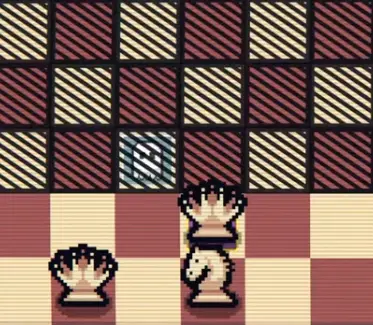
Core Build Logic
The build works because pawns are cheap and queens solve many board problems at once.
Pawns give you early bodies, promotion routes, and Gambit triggers. Queens give you reach, cleanup power, boss stability, and strong answers to enemy pawns, rooks, bishops, and scattered threats.
This build is not about forcing one perfect combo. It is about creating a reliable path from weak early pieces into stable late-run power.
How Pawn Promotion Works
Pawns can promote when they reach the far side of the board. For most beginner and first-clear runs, promoting into a queen is the safest default.
A queen is usually the best promotion because she can:
- attack across rows, columns, and diagonals
- chase scattered enemies
- stop enemy pawns before they promote
- punish exposed rooks and bishops
- rescue positions where your other pieces are trapped
- make boss boards easier to stabilize
Promotion is powerful, but it still requires planning. A promoted queen can die if she lands in a bad square or captures into a protected enemy.
Before promoting, ask:
| Question | Why it matters |
|---|---|
| Is the promotion square safe? | A queen that dies immediately may not help the run. |
| Can the new queen reach useful targets? | A queen trapped behind holes or pieces loses value. |
| Do I have a defensive tile nearby? | Blessed or Protective support makes risky queen play safer. |
| Am I about to trigger crumble? | Board collapse can kill promoted pieces. |
| Is an enemy pawn close to promotion? | Your new queen may need to stop it first. |
A promoted queen is not just a reward. She becomes the center of your board plan.
Why Queen Is Usually the Best Promotion
Other promotions can have uses, but queen is the most flexible choice for new players.
Queen promotion is strong because Gambonanza is about clearing every enemy piece, not checkmate. You need reach, safety, and control. The queen gives all three.
| Promotion choice | Beginner value | When it can make sense |
|---|---|---|
| Queen | Highest | Default choice for most runs. |
| Rook | Good | Useful if you need row or column control. |
| Bishop | Situational | Strong on open diagonals but color-limited. |
| Knight | Situational | Good for awkward threats, less reliable as a carry. |
| King | Usually avoid manually | More useful as a Gambit reward or support piece than as your main promotion target. |
For first clears, do not overcomplicate promotion. If you are unsure, choose queen and then protect her.
Should you ever promote into a king?
Usually, no.
A king can be useful in Gambonanza because kings are not sacred the way they are in normal chess. They can block, support short-range captures, and sometimes work with specific Gambits.
But for a Pawn and Queen build, king is usually not the piece you should manually choose at promotion. If a Gambit such as Throne’s Gambit rewards you with king value after promotion, treat that king as a bonus piece or support tool. Do not turn your best promotion route into a king unless your current run has a very specific reason.
The safe beginner rule is:
Promote into queen first. Let Gambits create kings when they want to.
Early Pawn Setup
The early game is about creating pawn value without losing your future win condition.
Good early pawn play means:
- use pawns to trade up into better pieces
- keep at least one pawn with a realistic promotion route
- avoid pushing pawns into enemy knight forks
- do not sacrifice every pawn before your build starts
- buy cheap pawns when your board needs more bodies
- use pawn-support Gambits if they match your current board
A pawn is valuable in three ways:
| Pawn role | What it does |
|---|---|
| Trader | Captures enemy pieces or forces responses. |
| Blocker | Stops enemy pawns, rooks, or bishops from opening lines. |
| Future queen | Becomes your long-term carry piece. |
Do not treat all pawns the same. Some pawns are expendable; one or two should be protected as promotion candidates.
Queen Landing and Pawn Upgrades
Some Gambits or effects can care about landing a queen or placing a queen from stock. One player-facing example in footage is a queen-landing effect that turns one of your pawns into another random piece.
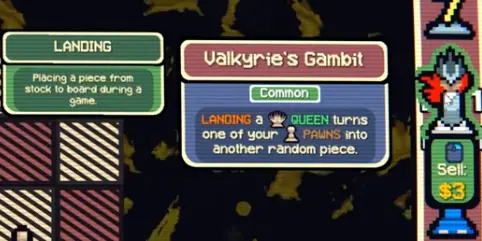
This kind of effect is useful because it turns queen deployment into extra pawn value. It can help you convert cheap pawns into stronger pieces without needing every pawn to reach the back rank.
Use queen-landing effects when:
- you already have spare pawns
- you can safely place or move the queen
- your board has enough space for the new piece
- the random result will help even if it is not a queen
- you are not exposing your only carry piece
Be careful with wording. Landing, moving, placing from stock, and promoting may not always mean the same thing. If an effect does not trigger when expected, the wording may require a different type of action.
How to Protect Queens
A queen is powerful, but she is not invincible.
A queen dies when you forget that enemy rooks, bishops, knights, pawns, Elite pieces, boss effects, and crumble can all punish overextension.
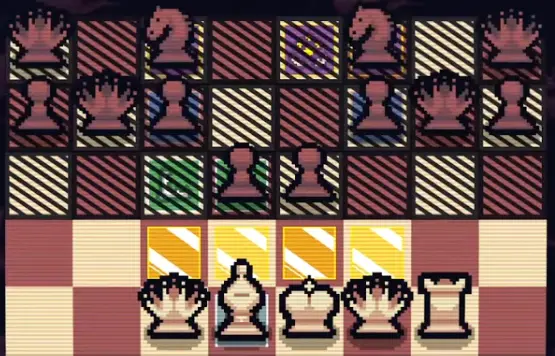
Use this protection checklist before every risky queen move:
| Check | Safe habit |
|---|---|
| Enemy recapture | Make sure the enemy cannot immediately take your queen for free. |
| Long-range lines | Check rooks, bishops, and enemy queens before moving. |
| Knight jumps | Do not assume a queen is safe just because no line piece attacks her. |
| Pawn diagonals | Enemy pawns can punish queen captures near promotion lanes. |
| Crumble risk | A queen on a collapsing tile is not safe. |
| Boss modifier | Some bosses punish stock, tiles, placement, or captures. |
For tile-based protection, see the Blessed and Protective Queen Plays section below.
The safest queen play usually has one of these supports:
- another queen
- a rook or bishop covering the route
- a Blessed tile
- a Protective tile
- a Phantom copy
- enough stock or money to recover if the trade goes wrong
Do not risk your only permanent queen unless the reward is worth the run damage.
Managing Multiple Queens
Getting more queens is only useful if those queens help you clear the board.
A common queen-build mistake is turning the run into a stall loop: waiting for more queen copies, filling the board with extra pieces, and forgetting to actually open a capture route. More queens can make the position safer, but they can also block each other, clog your deployment slots, and create awkward no-progress boards.
When you have multiple queens, your job changes from “make another queen” to coordinate your existing queens.
Use these rules:
| Multi-queen rule | Why it matters |
|---|---|
| Keep one clear capture lane open. | A queen build still needs to remove enemy pieces, not just generate more queens. |
| Avoid stacking queens on the same line. | Queens can block each other’s routes if they crowd one file, rank, or diagonal. |
| Assign roles. | One queen can pressure enemies while another protects pawns, blocks promotion, or covers escape squares. |
| Do not wait just to create more queens. | Waiting without progress can invite crumble, Stalemate Counter pressure, or enemy promotion. |
| Use extra queens to reduce risk, not increase greed. | A second queen should make captures safer, not tempt you into bad trades. |
A practical pattern is:
- Use the safest queen to open a capture route.
- Keep another queen outside immediate danger as backup.
- Use pawns or minor pieces to block enemy promotion lanes.
- Only create another queen if it improves the current board or protects the next board.
Multiple queens are strongest when they create clean angles. They are weakest when they all sit behind each other while the board collapses.
Blessed and Protective Queen Plays
Blessed and Protective tiles are the best defensive support for queen builds.
Blessed is best when your queen may get captured. If the blessed queen returns to stock, a risky queen trade can become a good exchange.
Protective is best when your queen needs to enter danger for one turn. It gives you time to make a capture, bait a response, or reposition.
Use Blessed for:
- queen sacrifices
- risky boss captures
- promoted queen protection
- baiting enemy attacks
- saving your main carry piece
Use Protective for:
- entering controlled squares
- surviving one enemy response
- setting up a capture chain
- moving into the center safely
- buying time against long-range threats
Blessed is recovery. Protective is tempo. The best queen builds often use both.
Phantom Queen and Temporary Copies
Phantom tiles can create temporary copies of pieces. With queens, this can be extremely strong because a temporary queen can take risks your real queen should avoid.
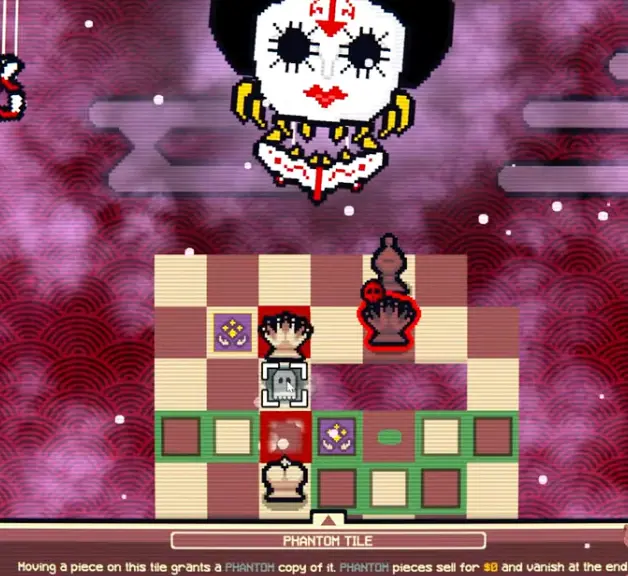
Use Phantom queens for:
- risky captures
- baiting enemy bishops, rooks, or queens
- blocking dangerous lines
- testing a route before risking your real queen
- forcing the enemy to respond to a disposable threat
The key rule is:
Use the fake queen to trade for real enemy value.
Do not build your long-term plan around a Phantom queen unless another effect clearly makes the copy permanent or recoverable. Most Phantom copies should be treated as temporary tools.
Good Phantom queen plays usually start with one of these questions:
| Question | Why it matters |
|---|---|
| What can the fake queen capture? | The copy should create real board progress. |
| What enemy response does it bait? | A fake queen can pull enemies into bad positions. |
| Can my real pieces clean up afterward? | The Phantom move should open a follow-up. |
| Will the copy vanish soon? | Do not depend on it for the next board. |
Phantom is strongest when it protects your real queen from doing dangerous work.
Queen Duplication / Queen Farming Notes
Queen duplication and queen farming are some of the strongest-looking strategies in Gambonanza, but they should be explained carefully.
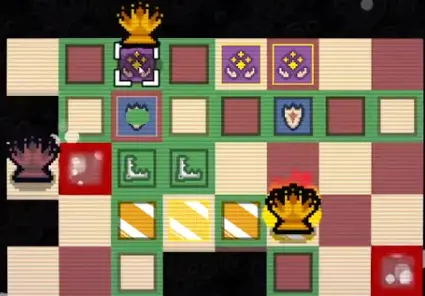
Some current-version player reports and footage show interactions where Phantom/Ghost-style queen copies, Blessed effects, Gold, or tile/Gambit synergies can produce extra queen value.
The most important warning:
Treat queen-farming interactions as patch-sensitive unless the tooltip clearly confirms the behavior.
A reported example is a blessed promoted or copied queen returning as a real queen after being captured. Another reported pattern involves Phantom/Ghost-style copies and Gold interactions creating permanent value. These can create powerful “free queen” or “real queen achieved” moments, but they may be unintended or changed in future patches.
Use queen-farming notes as advanced tech, not as your only beginner win condition.
Safer queen value comes from:
- normal pawn promotion
- buying queens or strong pieces
- protecting promoted queens
- using Phantom queens for temporary trades
- using Blessed on pieces you cannot afford to lose
- using Protective to prevent immediate punishment
- coordinating multiple real queens instead of stalling for more copies
Riskier queen-farming ideas include:
- relying on a temporary copy becoming permanent
- assuming a promoted pawn will always return as a queen
- building the whole run around one patch-sensitive interaction
- using your only real queen to test an unclear mechanic
- waiting repeatedly to duplicate queens while the board stops progressing
If you want a reliable build, make real queens first. Use duplication and farming as bonus upside.
Best Gambits for Pawn and Queen Builds
Pawn / Queen builds like Gambits that help one of four goals:
- promote pawns
- protect queens
- reward queen captures
- create extra pieces or tempo
Strong directions include:
| Gambit direction | Why it helps |
|---|---|
| Pawn capture tempo | Lets pawns trade safely and reach promotion routes. |
| Waiting upgrades pawn | Can turn safe waiting into promotion value. |
| Queen capture rewards | Makes queen cleanup generate money or extra pieces. |
| Queen threatened rewards | Can turn risky queen positions into pawn economy. |
| Landing queen effects | Converts queen deployment into pawn or piece upgrades. |
| Tile-copy effects | Can spread Blessed, Protective, Phantom, or Gold value. |
| Skip-turn effects | Protects fragile pawn and queen setups from enemy responses. |
| King reward effects | Can give support pieces after promotion without wasting manual promotion on king. |
Specific Gambits to watch for:
| Gambit | Why it can matter |
|---|---|
| Thunder’s Gambit | Pawn captures skipping enemy turns helps early pawn chains. |
| Falling Crowns Gambit | Waiting can upgrade pawns, supporting promotion builds. |
| Throne’s Gambit | Promotion-related king rewards can add support pieces while you keep manual promotions focused on queens. |
| Beth’s Gambit | Queen last-hits can improve economy. |
| Chemist Gambit | Copying a strong tile can spread Blessed, Protective, Phantom, or Gold support. |
| Jumps Gambit | Helps queens and support pieces move around holes. |
| Valkyrie’s Gambit | Landing a queen from stock turns one of your pawns into another random piece. |
Do not buy a Gambit just because it mentions queens, pawns, or promotion. Buy it because your current board can trigger it.
Shop Priorities for Pawn / Queen Builds
Your shop plan should support the build without draining your recovery money.
Priority order:
| Priority | Buy when… |
|---|---|
| Pawns | You need promotion routes, cheap trades, or pawn-Gambit triggers. |
| Board upgrades | You have good pieces in stock but not enough active slots. |
| Defensive tiles | You need Blessed or Protective support for queens. |
| Queens or strong pieces | You need immediate board control. |
| Tile tokens | Your build already has tile synergy. |
| Gambit tokens | You can use multiple Gambit outcomes. |
| Rerolls | The shop is bad and you can still preserve enough money. |
A queen build can fail if you spend too hard on fancy upgrades and cannot replace lost pieces. Save enough money to rebuild after a boss or bad Crumbler board.
Common Mistakes
| Mistake | Why it hurts | Fix |
|---|---|---|
| Promoting without checking safety | The new queen can die immediately. | Check enemy lines before promotion. |
| Manually promoting into king without a reason | You lose your best chance to create a carry piece. | Let Gambits create king value; choose queen as the default promotion. |
| Sacrificing the only queen | Your board control disappears. | Use Blessed, Protective, or Phantom support first. |
| Making too many queens without a capture route | The board can stall or collapse while your queens block each other. | Keep at least one clear line toward enemy pieces. |
| Treating Phantom queens as permanent | Temporary copies can vanish. | Use them for trades and tempo. |
| Chasing queen farming too early | Patch-sensitive setups may fail. | Build real queen value first. |
| Ignoring pawns after getting one queen | You lose future scaling. | Keep at least one pawn route active. |
| Overfilling the board | Too many pieces can block queen lines. | Upgrade board space or place pieces with purpose. |
| Forgetting Crumbler effects | A safe queen can fall with the tile. | Move key pieces before capture chains. |
| Letting enemy pawns promote | Enemy queens can ruin your plan. | Use your queen to stop promotion threats early. |
FAQ
What is the best Gambonanza queen build?
The safest queen build promotes pawns into queens, protects them with Blessed or Protective tiles, and uses Phantom copies for risky captures. Advanced queen-farming interactions can be strong, but they should be treated as patch-sensitive.
Is queen always the best promotion?
For beginners, yes. Queen is usually the safest promotion because it gives the most flexible board control. Other promotions can work, but queen is the default first-clear choice.
Should I ever promote into a king?
Usually no. King can be useful as a support piece or Gambit reward, but it is rarely the best manual promotion choice for a Pawn and Queen build. If you are unsure, promote into queen.
How do I manage multiple queens?
Keep at least one clear capture route open, avoid stacking queens where they block each other, and assign roles. One queen can attack, another can protect pawns or cover escape squares. Do not keep waiting for more queens if your current queens can already win the board.
How do I protect my queen?
Use Blessed tiles for recovery, Protective tiles for one-turn safety, and Phantom copies for dangerous trades. Also check enemy rooks, bishops, knights, pawns, crumble, and boss modifiers before moving.
Are Phantom queens permanent?
Usually no. Treat Phantom queens as temporary unless another tooltip or interaction clearly says otherwise. Use them for trades, bait, blockers, and tempo.
What is queen farming?
Queen farming refers to strategies that create extra queen value through promotion, Phantom/Ghost-style copies, Blessed effects, Gold, or Gambit synergies. Some interactions may be patch-sensitive.
Does Blessed make a promoted pawn return as a queen?
Some players have reported this kind of interaction, but it should be treated as patch-sensitive and possibly unintended. Do not rely on it as your only plan.
Which tiles are best for queen builds?
Blessed, Protective, and Phantom are the core queen-build tiles. Gold is useful for economy, and Trap can hold enemies inside queen attack lines.
Which Gambits are best for pawn and queen builds?
Thunder’s Gambit, Falling Crowns-style pawn upgrades, Throne’s Gambit, Beth’s Gambit, Chemist Gambit, Jumps Gambit, and queen-landing effects can all support pawn and queen builds depending on your current board.
Should I buy more pawns after I already have queens?
Yes, if you have space and a plan. Pawns can become future queens, trigger pawn Gambits, block threats, or act as cheap trade pieces.
Continue Reading in the Gambonanza Guide Cluster
This article is part of our Gambonanza strategy cluster. Use these guides to keep learning the game's core systems and routes.
Learn how to play Gambonanza with beginner tips for win conditions, stock, promotion, shops, mini-games, tiles, bosses, crumble, and special pieces.
First Win GuideHow to Win Your First Gambonanza RunA first-clear Gambonanza strategy covering early pawns, queen promotion, shop choices, mini-games, Elite pieces, Crumblers, bosses, and common mistakes.
Tiles GuideGambonanza Tiles GuideLearn how Phantom, Ghost, Blessed, Protective, Trap, Gold, Cursed, and Crumbling tiles work in Gambonanza, plus Chemist tile-copy tips.
Gambits GuideGambonanza Early Gambits Tier ListA practical early Gambits tier list for Gambonanza, covering Thunder, Falling Crown, Chemist, Valkyrie, Banana Peel, Silver Fork, Demon, Jump, Beth, and key combos.
Boss GuideGambonanza Boss Guide and ModifiersLearn Gambonanza boss timing, key boss modifiers, cursed tiles, Elite pieces, Crumblers, and what to buy before boss fights.