Gambonanza Guide
How to Win Your First Gambonanza Run
A first-clear Gambonanza strategy covering early pawns, queen promotion, shop choices, mini-games, Elite pieces, Crumblers, bosses, and common mistakes.
Your first Gambonanza win is not about playing perfect chess. It is about building a run that can survive mistakes.
The safest first-clear strategy is simple:
build around pawns, promote into queens, protect your best pieces, keep enough money and stock for boss boards, and avoid greedy trades that leave you weak afterward.
This guide focuses on how to win your first full run. If you still need the basic rules, read the Gambonanza Beginner Guide first.
Quick First-Clear Plan
For a first clear, do not chase the most complicated Gambit chain. You want a stable route that works even when shops are imperfect.
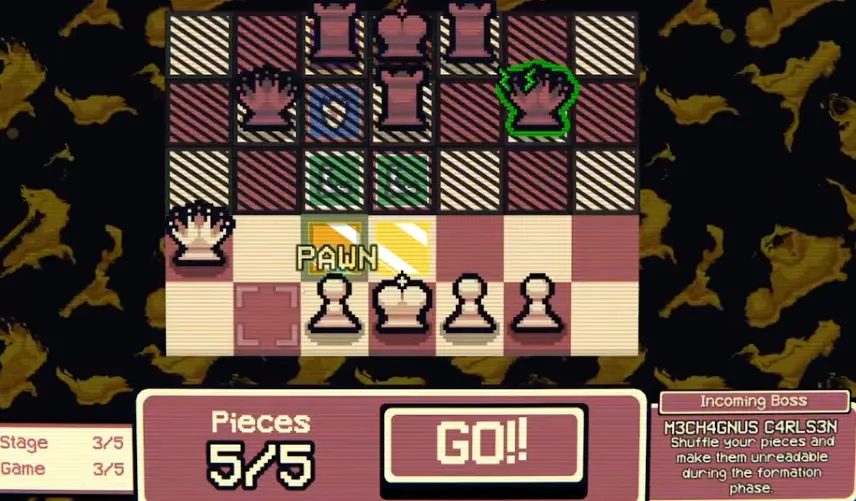
Use this plan:
| Phase | Main goal | What to avoid |
|---|---|---|
| Early boards | Preserve pieces and create pawn value. | Sacrificing permanent pieces for tiny gains. |
| Early shop | Buy stability: pawns, useful pieces, board space, simple Gambits. | Spending all money on flashy effects you cannot trigger. |
| Mid run | Promote pawns into queens and protect them. | Risking your only queen without Blessed, Protective, or backup support. |
| Before bosses | Keep money, stock, and flexible attackers ready. | Entering with one fragile plan. |
| Late run | Use queens, rooks, and tiles to solve crowded boards. | Waiting until crumble or Stalemate Counter ruins the board. |
The first win usually comes from boring consistency, not one perfect combo.
Early Game: Build Around Pawns
Pawns are cheap, replaceable, and can become queens. That makes them the safest foundation for a first clear.
Your early goal is not to win every board with no losses. Your goal is to turn small pawn value into long-term control.
Good early pawn habits:
- use pawns to trade up into knights, bishops, or rooks
- protect at least one promotion route
- keep extra pawns in stock when possible
- avoid pushing pawns into squares covered by enemy knights
- use pawn-capture Gambits when they already help your position
- do not treat every pawn as disposable if you need promotion later
A pawn-for-knight trade can be excellent. A pawn-for-nothing trade is usually just damage to your future board.
If you see Gambits that increase skip-turn pressure, they can be especially useful for a first clear. Thunder’s Gambit is the easiest pawn-based example because pawn captures can skip the enemy turn. Banana Peel, Silver Fork, and Demon are also worth watching for because they can support the same general direction: deny enemy turns, preserve tempo, and make dangerous boards safer.
Do not buy every skip-related Gambit automatically. Buy them when your current pieces can trigger them often enough to matter.
Mid Game: Promote Into Queens
Once your run reaches the middle boards, your first-clear plan should start producing queens.
Queens are the easiest beginner carry piece because they solve multiple problems:
- they attack long lines
- they clean up scattered pawns
- they pressure rooks and bishops
- they stop enemy pawns from promoting
- they make boss boards easier to stabilize
- they can rescue awkward positions before Stalemate Counter becomes dangerous
Before using a queen for a risky capture, ask:
| Question | Why it matters |
|---|---|
| Can the enemy immediately recapture her? | Losing your only queen can end the run later. |
| Is she standing on a Blessed or Protective tile? | Defensive tiles can turn a dangerous trade into a safe one. |
| Do I have another queen or rook in stock? | Backup pieces make risk more acceptable. |
| Will this capture open a new enemy line? | Rooks, bishops, and queens can punish greedy captures. |
| Is the enemy piece an Elite piece? | Some pieces cannot be captured until last. |
Your first clear does not need infinite queens. Two reliable queens and a few support pieces are often better than five fragile pieces with no recovery plan.
Shop Priorities Before Bosses
The shop is where many first-clear runs are won or lost.
The right question is not “What is the strongest thing in the shop?” The right question is:
What makes my next few boards safer?
Use this priority order:
| Priority | Buy this when… |
|---|---|
| Replacement pieces | You are low on board pieces or stock. |
| Pawns | You need promotion routes, cheap sacrifices, or pawn-Gambit value. |
| Board upgrades | You have good stock but not enough active slots. |
| Defensive tiles | You need to protect queens, rooks, or promoted pieces. |
| Simple Gambits | The effect helps your current board immediately. |
| Mini-game tokens | Your run is stable enough to accept variance. |
| Rerolls | The shop is bad and you can still preserve enough money. |
Try to enter boss checkpoints with three things:
- at least one flexible attacker
- enough money to rebuild afterward
- at least one backup piece or recovery line
Do not spend all your money right before a boss unless the purchase directly fixes a weakness.
How to Use Mini-Games Without Ruining Your Run
Mini-games can give powerful upgrades, but they are not the same as guaranteed shop purchases.
For your first clear, treat Pachinko, slot machine, and Gachapon-style rewards as upside plays. They are best when several possible outcomes help you.
Use mini-games when:
- you already have enough pieces to survive the next board
- your money is healthy
- your build can use multiple reward types
- you are looking for a run-breaking upgrade, not emergency survival
Avoid mini-games when:
- you need one guaranteed pawn, queen, rook, or board slot
- a boss checkpoint is coming and you have no backup plan
- your current board is already close to collapse
- you are spending money only because the shop looks exciting
A simple rule:
Buy guaranteed survival first. Gamble for upgrades second.
How to Preserve Key Pieces
The biggest first-clear mistake is clearing one board by destroying your future.
Every permanent piece has run value. Losing a pawn is usually acceptable. Losing your only rook, bishop, knight, or backup attacker can turn the next board into a disaster. Queen protection is covered in the mid-game section above, so use this table for the rest of your board.
| Piece | First-clear use | Preservation habit |
|---|---|---|
| Rook | Controls rows and columns. | Avoid placing directly in enemy bishop or queen lines. |
| Bishop | Strong diagonal cleaner. | Keep at least one bishop on a useful color when possible. |
| Knight | Solves awkward threats and fork patterns. | Do not overvalue it if a trade opens the board for your queen. |
| King | Flexible short-range support. | Useful, but not sacred like standard chess. |
| Pawn | Promotion, cheap trading, and Gambit triggers. | Preserve at least one realistic route to queen. |
Before a risky capture, check three things:
- What captures my piece afterward?
- Can I replace this piece if it dies?
- Does this capture help me win the run, or only this board?
The safest first-clear runs usually have one carry piece, one backup attacker, and enough cheap pieces to absorb bad trades.
How to Handle Elite and Crumbler Pieces
Special enemy pieces are run killers because they punish autopilot.
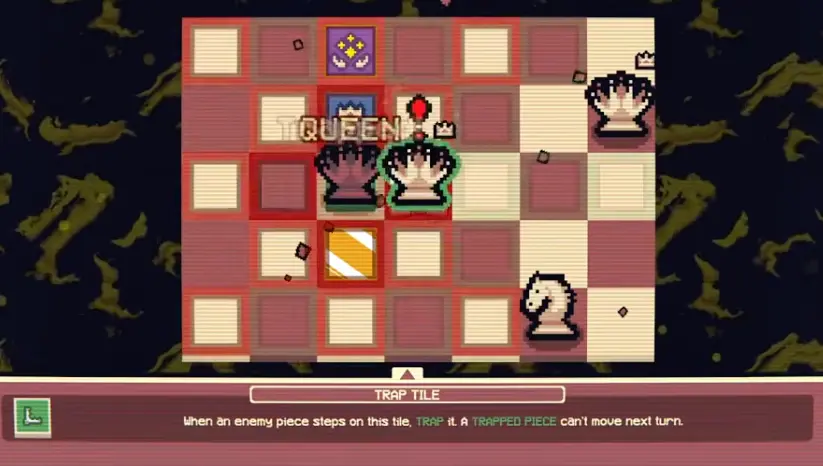
Elite Pieces
Elite pieces usually need to be captured last. If you cannot take a piece that looks available, check whether it has an Elite-style modifier.
Against Elite pieces:
- clear the rest of the board first
- do not spend turns trying illegal captures
- keep a queen, rook, bishop, or knight ready for the final capture
- use traps or forced movement to stop the Elite from controlling the board
- avoid getting boxed in while waiting for the Elite to become capturable
The main danger is wasting turns. If you spend too long trying to solve the Elite directly, crumble or Stalemate Counter can become the real threat.
Crumbler Pieces
Crumbler pieces punish greedy capture chains. If capturing other pieces causes the board to crumble, your safe-looking queen may suddenly fall with the tile.
Against Crumbler pieces:
- identify the Crumbler before your first capture
- move important pieces away from unstable tiles
- avoid optional captures if one crumble can kill your carry piece
- capture the Crumbler early only when it is safe
- use stock pieces as disposable blockers or bait
A first-clear player should treat Crumblers as priority threats, but not always first captures. Sometimes the correct move is to move your queen to safety before starting the chain.
How to Handle Boss Boards
Boss boards are where first-clear runs usually break.
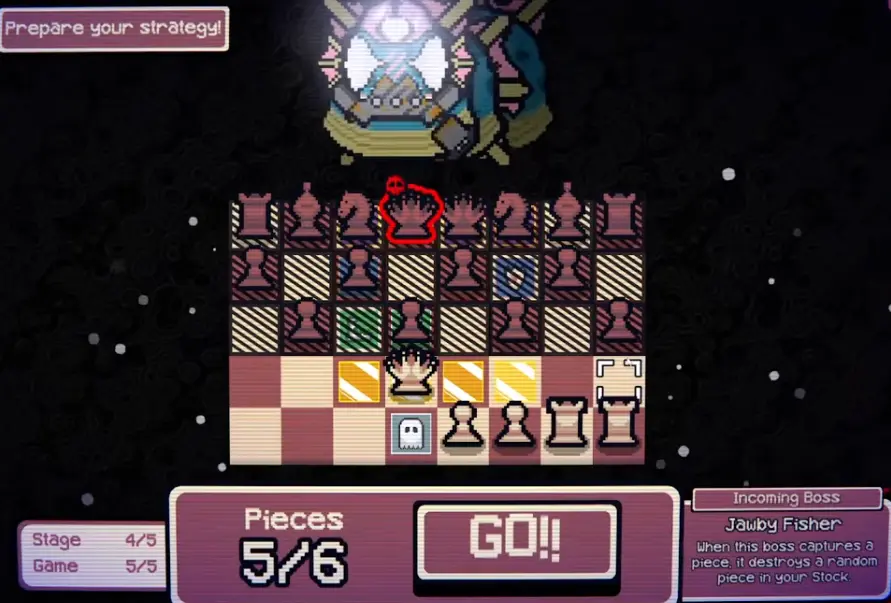
The best boss strategy is preparation before the board starts.
Before a boss, try to have:
- at least one queen, rook, or strong long-range attacker
- enough money to rebuild afterward
- at least one defensive tile or recovery Gambit
- a plan that still works if your first capture goes wrong
- a stock plan that matches the boss modifier
Different bosses attack different assumptions. Some hide formations. Some restrict stock. Some scramble your pieces. Some make captures more dangerous. Some punish you for keeping too much value in reserve.
Jawby Fisher
Jawby Fisher can destroy your reserve pieces, which makes normal stock-heavy planning risky.
Against Jawby Fisher:
- do not enter with all your value sitting in reserve
- deploy key pieces before the fight if the board allows it
- sell, spend, or convert reserve pieces you do not actually need
- keep your active board functional without relying on mid-fight stock
- avoid treating reserve pawns as guaranteed future queens
The goal is not to empty your reserve blindly. The goal is to avoid losing your entire recovery plan to one boss effect.
Tàl the Cursed
Tàl the Cursed can place cursed tiles around the board. Cursed tiles are dangerous because they can interfere with your safest squares, upgraded tiles, or queen routes.
Against Tàl the Cursed:
- identify cursed tiles before committing your queen
- avoid parking high-value pieces on or near cursed danger zones
- do not rely on one Blessed or Protective tile if cursed tiles can disrupt it
- keep multiple escape routes for queens and rooks
- move promoted pieces carefully, especially if a cursed tile blocks the normal path
Your queen can still carry this fight, but she should not be treated as untouchable. Against Tàl, safe squares matter more than usual.
General Boss Rules
Use these rules for any boss you have not fully learned yet:
- Do not rely only on stock. Some bosses can restrict, punish, or destroy reserve-based plans.
- Do not rely on one exact starting square. Hidden or scrambled boards can ruin fragile setups.
- Remove long-range threats early. Enemy queens, rooks, and bishops punish slow play.
- Keep a recovery line ready. A single bad exchange should not end the run.
- Read the boss modifier before your first move. The first rushed capture is often what loses the board.
If a boss board looks impossible, slow down. Most losses come from misunderstanding the modifier, not from the final position.
When to Wait and When Not To
Waiting can be strong, but only when it changes the position in your favor.
Good reasons to wait:
- a Gambit upgrades a pawn or gives value
- no important piece is threatened
- the enemy must move into a worse square
- you need time to create a safer capture
- waiting sets up a queen, trap, or promotion
Bad reasons to wait:
- you do not know what to do
- your queen is already trapped
- enemy pawns are close to promotion
- crumble is about to destroy important tiles
- Stalemate Counter is rising
- an Elite piece is causing you to stall without progress
A safe waiting rule:
Only wait when you can explain what the enemy is likely to do next.
If you cannot explain it, play a move that improves your position: move a queen to safety, deploy stock, block a pawn, open a capture route, or protect a key piece.
Why First Runs Usually Fail
Most failed first runs come from a few high-level mistakes:
| Failure pattern | What it looks like | Fix |
|---|---|---|
| Over-sacrificing | You win a board but lose the pieces needed for later boards. | Trade only when you can recover. |
| No queen plan | You reach mid run with weak pieces and no promotion route. | Preserve pawns and create at least one reliable queen. |
| Bad shop spending | You buy fun upgrades but lack board space, pieces, or recovery. | Buy stability before combos. |
| Ignoring boss mechanics | You prepare normally, then a boss punishes stock, tiles, or setup. | Read the modifier and adjust before the first move. |
| No backup plan | One queen, tile, or Gambit carries everything until it fails. | Keep a second attacker or recovery line ready. |
A first clear does not require perfect play. It requires enough recovery that one mistake does not end everything.
First-Clear Checklist
Use this checklist before each major board:
- Do I have at least one safe attacker?
- Do I have a pawn that can realistically promote?
- Can I replace a piece if I sacrifice it?
- Am I saving enough money for recovery?
- Is there an Elite piece I need to leave for last?
- Is there a Crumbler piece that can collapse the board?
- Are my queens or rooks standing on dangerous tiles?
- Can enemy pawns promote soon?
- Do I have a way to break Stalemate Counter pressure?
- Am I buying stability before risky mini-games?
Before a boss checkpoint:
- read the boss modifier before moving
- keep money available
- keep at least one backup line
- avoid entering with only one win condition
- deploy or protect key reserve pieces if the boss can punish stock
- upgrade board space if you have good pieces stuck in stock
What Counts as a First Win?
A first win means completing the run and unlocking the next layer of progression.
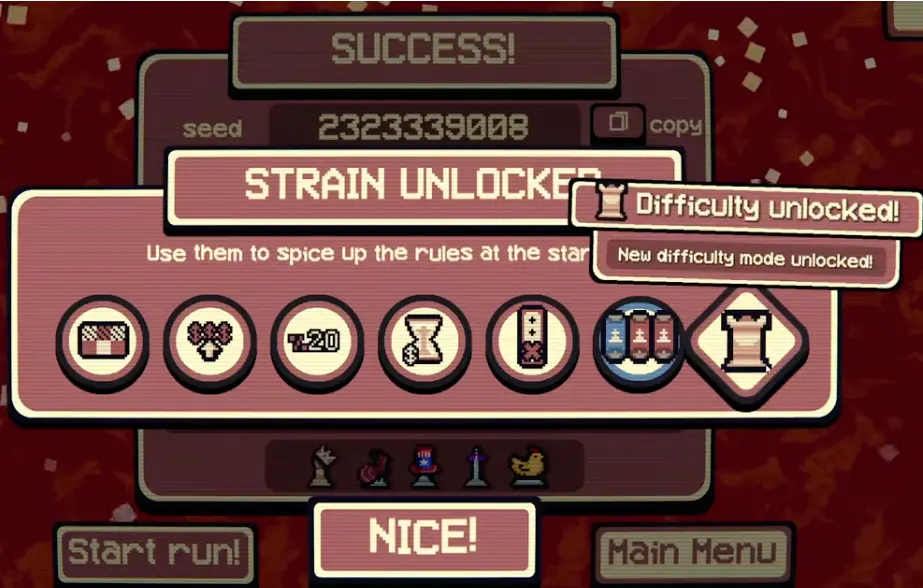
After your first clear, higher difficulty modes and extra challenge modifiers become the next goal. Do not rush them immediately. First, make sure you can win normal runs without depending on one lucky shop or one unstable bug-like interaction.
A good sign you are ready for harder modes:
- you can preserve queens
- you understand when to spend or save money
- you can handle Elite and Crumbler pieces
- you can recover after a bad boss board
- you know when waiting is safe
- you can win without relying on one exact Gambit
Your first win is not the end. It is the point where Gambonanza starts asking whether your strategy is actually repeatable.
FAQ
What is the easiest way to win your first Gambonanza run?
The easiest first-clear route is to build around pawns, promote into queens, protect those queens, and keep enough money and stock to survive boss boards.
Should I force queen builds every run?
For beginners, queen builds are the safest default. You do not need to force an advanced queen-farming combo, but you should usually try to create at least one reliable queen.
Should I buy Gambits or pieces first?
Buy pieces first if your board is weak. Buy Gambits when they immediately support your current pieces, especially pawns, queens, tiles, economy, or skip-turn pressure.
Are Banana Peel, Silver Fork, and Demon good for a first clear?
They can be good if your build benefits from skip-turn effects. Treat them as tempo tools: they are strongest when they help you deny enemy turns repeatedly, not when they sit unused in your Gambit slots.
Are mini-games worth it for a first clear?
Yes, but only when your run is already stable. If you need a guaranteed piece or board upgrade before a boss, buy the guaranteed option first.
How much money should I save before a boss?
There is no exact number that fits every run, but you should avoid entering a boss with no money and no recovery plan. Money is what lets you rebuild after bad trades.
How do I beat Jawby Fisher?
Do not rely on reserve pieces as your whole plan. Put important pieces onto the active board when safe, reduce unnecessary reserve clutter, and keep enough money to rebuild if your stock gets destroyed.
How do I handle Tàl the Cursed?
Watch the cursed tiles before moving your queen or promoted pieces. Avoid committing your best pieces to cursed danger zones, and keep alternate routes open.
What should I do if I see an Elite piece?
Clear the other enemies first. Elite pieces are often designed to be captured last, so do not waste turns trying to force an early capture.
What should I do if I see a Crumbler piece?
Check your key pieces before starting capture chains. If a random crumble can kill your queen, move her or protect her first.
Is waiting good or bad?
Waiting is good when it upgrades your position. Waiting is bad when it only lets crumble, Stalemate Counter, or enemy promotion pressure get worse.
Continue Reading in the Gambonanza Guide Cluster
This article is part of our Gambonanza strategy cluster. Use these guides to keep learning the game's core systems and routes.
Learn how to play Gambonanza with beginner tips for win conditions, stock, promotion, shops, mini-games, tiles, bosses, crumble, and special pieces.
Build GuideGambonanza Pawn and Queen Build GuideLearn how to build around pawns, promotion, queen carry, multiple queens, Blessed and Protective tiles, Phantom copies, and queen farming in Gambonanza.
Tiles GuideGambonanza Tiles GuideLearn how Phantom, Ghost, Blessed, Protective, Trap, Gold, Cursed, and Crumbling tiles work in Gambonanza, plus Chemist tile-copy tips.
Gambits GuideGambonanza Early Gambits Tier ListA practical early Gambits tier list for Gambonanza, covering Thunder, Falling Crown, Chemist, Valkyrie, Banana Peel, Silver Fork, Demon, Jump, Beth, and key combos.
Boss GuideGambonanza Boss Guide and ModifiersLearn Gambonanza boss timing, key boss modifiers, cursed tiles, Elite pieces, Crumblers, and what to buy before boss fights.