Slay The Spire 2 Guide
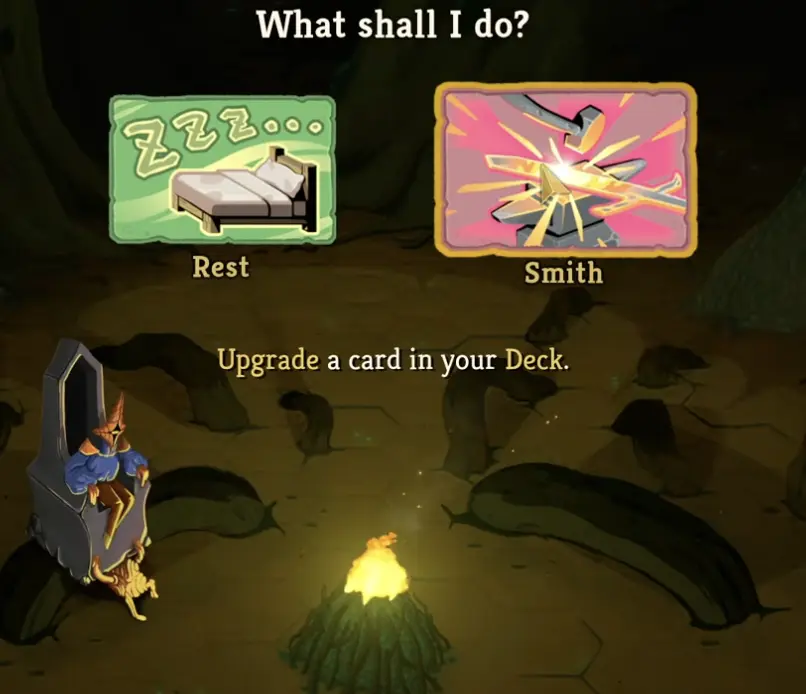
Rest, Smith, Remove? Slay the Spire 2 Campfire & Shop Guide
Learn exactly when to rest, smith, remove cards, or spend gold in Slay the Spire 2. Master HP thresholds, upgrade priorities, and shop logic to win.
One of the biggest differences between beginner and experienced Slay the Spire 2 players is how they spend limited upgrade, healing, removal, and gold resources.
New players usually ask:
“What gives me the biggest immediate boost?”
Experienced players ask:
“Which choice gives me the best chance to survive the next danger without weakening the rest of the run?”
That difference changes everything.
This guide gives you a practical decision system for when to:
- Rest at a campfire
- Smith a card upgrade
- Remove a weak card
- Buy cards, relics, or potions at shops
- Protect HP without falling behind in power
For broader fundamentals, start with the Slay the Spire 2 Beginner Guide.
Fast Answer
Use this table as a symptom check. The detailed node-by-node flow comes next.
| If this is happening… | Your first response should be… |
|---|---|
| You keep dying right after campfires | Rest earlier or buy a potion before the danger node |
| You rest every campfire and still fall behind | Smith fight-changing upgrades earlier in the act |
| Your deck works but draws too many starter cards | Remove Strike or another low-impact card |
| Your upgrades feel underwhelming | Prioritize cost reduction, breakpoints, debuff uptime, and draw |
| Shops feel confusing | Compare every purchase against potion → removal → relic → card → save gold |
| Durability relics carry hallway fights but not elites | Do not treat limited-use effects as a full defensive plan |
These are practical rules, not laws. Slay the Spire 2 is still in Early Access, so exact card numbers, shop prices, and relic behavior may change. Always check the current in-game text.
The Core Decision Flow
Rest, Smith, Remove, and Shop decisions should not be made separately. They are all ways to answer the same question:
What is the cheapest way to solve the next real danger?
Campfire Flow: Rest or Smith?
| Step | Question | Usually choose |
|---|---|---|
| 1 | Can the next fight realistically kill you? | Rest |
| 2 | Are you at 40% HP or lower with danger ahead? | Rest |
| 3 | Are you at 40-65% HP before an elite, boss, or forced hallway? | Rest unless one Smith clearly prevents more damage |
| 4 | Are you at 65%+ HP with no immediate lethal risk? | Smith your best fight-changing upgrade |
| 5 | Is the next node a shop, event, or safe hallway? | Smith more aggressively |
Shop Flow: Potion, Remove, Relic, Card, or Save?
| Step | Question | Usually choose |
|---|---|---|
| 1 | Does a potion solve the next elite or boss? | Buy the potion first |
| 2 | Is the deck functional but still drawing starter/filler cards? | Strongly consider removal |
| 3 | Does a relic solve multiple upcoming fights? | Buy the relic over a medium card |
| 4 | Does a card immediately fix damage, block, AoE, draw, scaling, or a matchup? | Buy the card |
| 5 | Nothing solves a real problem? | Save gold or remove a bad card |
The goal is not to always heal, always upgrade, or always remove. The goal is to spend the least permanent value needed to keep the run moving forward.
Rest vs Smith HP Thresholds
The simplest campfire rule is:
| HP range | Default decision | Why |
|---|---|---|
| 65%+ HP | Smith | You are healthy enough to invest in future power |
| 40-65% HP | Check the next node | This is the danger zone where context matters |
| 40% or lower HP | Rest | One bad draw, elite, or boss pattern can end the run |
When to Break the Rule
Smith at lower HP when:
- the next node is a shop, event, or easy hallway
- the upgrade prevents more damage than resting heals
- you have a strong potion
- the upgrade creates a key damage, block, or cost breakpoint
- you are close to the boss and need the upgrade to win
Rest at higher HP when:
- the next elite is a terrible matchup
- your deck has no block plan
- your potion belt is empty
- your best cards are slow setup pieces
- your route has no recovery afterward
Do not ask only:
“How much HP do I have?”
Ask:
“What happens before my next chance to recover?”
Character-Adjusted Rest Thresholds
Different characters can spend HP differently.
| Character | Practical adjustment |
|---|---|
| Ironclad | Can often Smith slightly lower because Burning Blood heals after fights. Do not overdo it if elites are lasting too long. |
| Silent | Usually follows the normal threshold. Rest earlier if the deck has poison/shiv setup but weak immediate block. |
| Defect | Often upgrade-hungry. Smithing is valuable, but rest if orb setup is too slow to cover early damage. |
| Regent | Can burst hard, but setup turns can be fragile. Rest more often if the payoff turn is not reliable yet. |
| Necrobinder | Use more conservative thresholds when the deck has dead draws, awkward summons, or low immediate defense. |
A useful beginner adjustment: Ironclad can sometimes Smith at roughly 5-10% lower HP than another character in the same situation. Fragile or setup-heavy characters should often require a little more HP before taking the same risk.
Smith Priority: What to Upgrade First
Smithing is strongest when it changes fight outcomes.
Use this upgrade priority:
| Priority | Upgrade type | Why it matters |
|---|---|---|
| 1 | Energy cost reduction | Turns an awkward card into a playable card |
| 2 | Damage breakpoint | Kills enemies one turn earlier or improves AoE cleanup |
| 3 | Block breakpoint | Prevents a rest, saves a potion, or covers a known attack |
| 4 | Weak/Vulnerable duration or uptime | Makes multiple future turns stronger |
| 5 | Draw, discard, exhaust, or consistency | Finds your best cards faster |
| 6 | Scaling speed | Helps long fights after your deck can survive early turns |
| 7 | Small number upgrades | Lowest priority unless the card is central and played often |
What Counts as a Good Breakpoint?
A damage upgrade is usually worth a campfire when it:
- adds about 5+ immediate damage
- turns a two-turn kill into a one-turn kill
- improves AoE enough to clean up multiple enemies
- makes Vulnerable or Strength turns much more efficient
A block upgrade is usually worth a campfire when it:
- prevents a dangerous hit
- lets you Smith again later instead of resting
- covers a known elite or boss attack pattern
- upgrades a card you reliably draw on danger turns
A tiny upgrade like +2 damage or +2 block can still matter, but only if it changes a real fight. If it does not change any matchup, it is probably worse than upgrading a tempo card, debuff card, or cost-reduction card.
Concrete Smith Examples
Do not treat these as a permanent tier list. Early Access balance can change. Use them as examples of what a fight-changing upgrade looks like.
| Card | Why the upgrade can matter |
|---|---|
| Whirlwind | AoE damage upgrades can completely change multi-enemy fights and elite cleanup. |
| Shrug It Off | More block plus draw helps both survival and consistency. |
| Bash / Bash+ | More Vulnerable can make multiple later attacks stronger, especially for Ironclad. |
| Thunderclap | AoE Vulnerable improves damage tempo across the whole enemy field. |
| Uppercut | Weak and Vulnerable together can swing elite turns. |
| Predator | Damage plus future draw can solve both tempo and card flow. |
| Dash | A strong attack/block upgrade can stabilize hallway fights and elite turns. |
The question is not:
“Is this upgrade good?”
The better question is:
“Will this upgrade let me take an elite, skip a rest, save a potion, or beat the boss?”
Bad Smiths and Upgrade Debt
Bad upgrades are not always weak cards. They are upgrades that fail to change outcomes.
Be careful with upgrades that:
- only add tiny numbers
- improve starter cards you want to remove
- make a slow card slightly less slow
- compete with several stronger upgrade targets
- require other cards before the upgrade matters
This creates upgrade debt.
Upgrade debt means your deck needs too many campfires before it becomes functional. One upgrade-hungry card is fine. Four upgrade-hungry cards can make the run collapse because every campfire feels mandatory and you still may need to rest.
Before taking another card that “needs an upgrade,” ask:
Which existing upgrade am I delaying?
Remove Priority: What to Remove First
Removal is not just cleanup. It is consistency scaling.
Every bad card removed makes your best cards appear more often.
Use this removal priority:
| Remove first | When |
|---|---|
| Curses and forced dead cards | Almost always first unless a relic/build specifically wants them |
| Starter Strikes | Usually first once you have better attacks |
| Starter Defends | Consider after damage is solved or if your deck has better block/Weak |
| Low-impact attacks | Remove when they no longer help kill important enemies |
| Unsupported synergy pieces | Remove if the deck abandoned that plan |
| Cards made bad by relics or route needs | Remove when they actively disrupt your strongest turns |
Why Strike Removal Is So Common
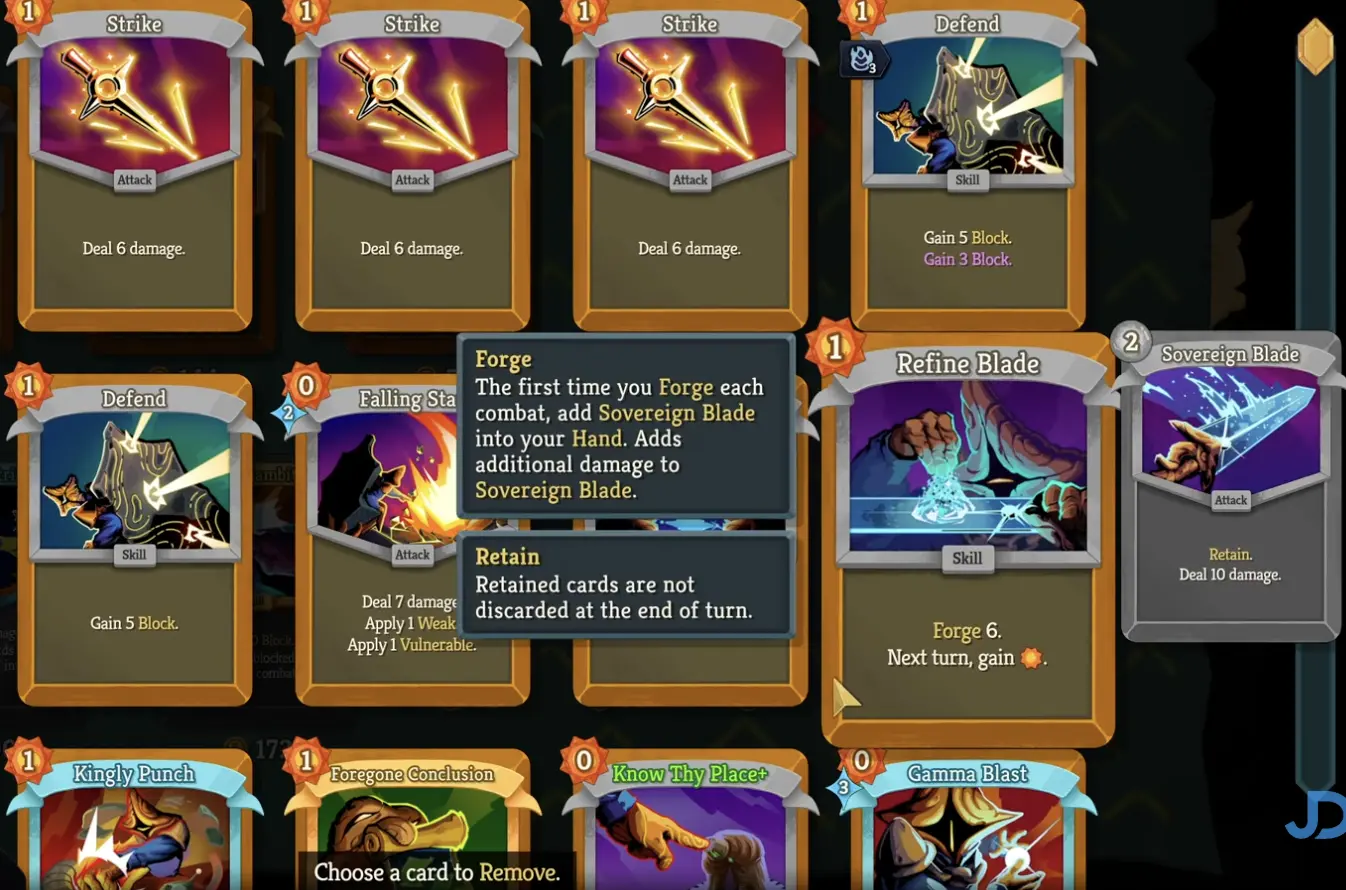
Strikes are usually the first normal removal because they scale poorly and dilute stronger attacks.
However, do not remove every Strike too early if your deck still has no damage. Replacing starter attacks comes before deleting all damage.
A good rule:
- Before first elite: take better attacks first, then remove Strike if damage is solved.
- After damage is solved: Strike removal becomes very strong.
- When deck is already consistent: removal may be better than buying another medium card.
Shop Decision Guide
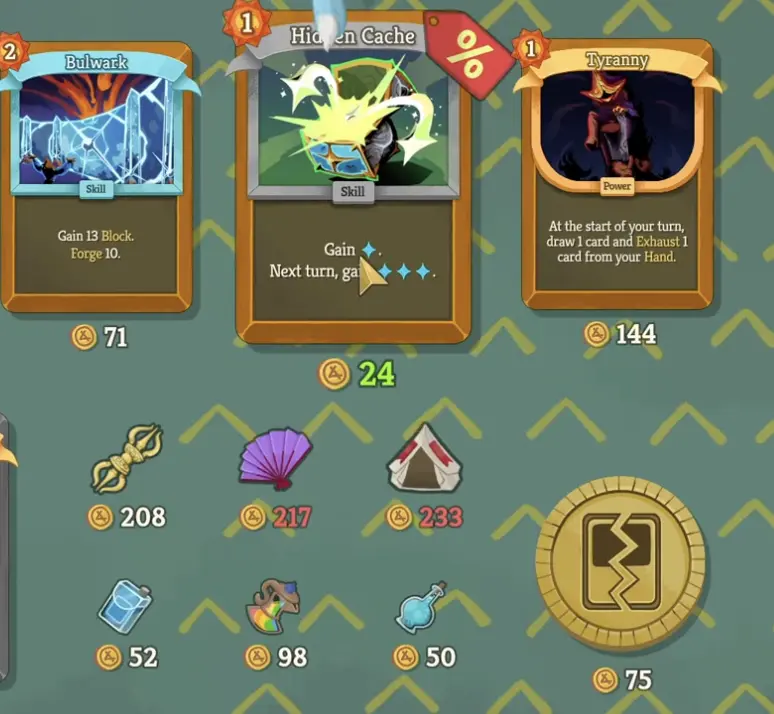
A shop is not a place to spend gold because you can. It is a place to buy the most efficient solution to your next problem.
Use this priority:
| Priority | Shop purchase | Buy when |
|---|---|---|
| 1 | Potion | The next elite or boss can kill you and a potion solves the fight |
| 2 | Removal | Your deck is functional but starter/filler cards keep ruining hands |
| 3 | Relic | The relic solves multiple fights or supports your existing plan |
| 4 | Card | The card immediately fixes damage, block, draw, AoE, scaling, or a matchup |
| 5 | Save gold | Nothing solves a real problem |
Removal is usually one of the first things to check. If the current Early Access build uses scaling removal prices, the first removal is the cheapest and early cleanup becomes even more valuable. If removal is fixed-price in your patch, the logic is simpler: compare the current removal price against the best card, relic, or potion in that shop. Either way, always check the current in-game shop price before planning exact gold lines.
When Removal Beats Buying a Card
Removal is better than buying a card when:
- the card is only “pretty good”
- your deck already has enough damage
- your best cards are hard to draw
- the card creates upgrade debt
- the card duplicates a role you already solved
- removing Strike improves every future hand
When Buying a Card Beats Removal
Buy the card when it solves a specific problem removal cannot solve, such as:
- your deck has no AoE before multi-enemy fights
- you need Weak or Vulnerable before an elite
- you need block before a boss
- you need draw because you have energy but no cards
- you need scaling before long fights
When a Relic Beats Both
Buy the relic when it improves many fights without needing more support.
A strong relic can be better than removal if it:
- gives immediate tempo
- protects dangerous turns
- improves draw or energy
- supports your existing damage/scaling
- lets you take an elite safely
Do not buy a flashy relic only because it is rare. Buy it because it changes the next several fights.
STS2 Mechanics That Change These Decisions
This article is about Slay the Spire 2, not only general Slay the Spire habits. Smithing is the campfire upgrade action, and every Smith competes directly with Rest. Two STS2-specific details also affect removal and shop planning.
Removal Costs and Shop Planning
Shop removal is powerful because it improves every future hand, but it competes with relics, cards, and potions. Because removal pricing can change during Early Access, do not memorize a single gold line. Check the current shop price, then ask whether that removal improves more future hands than the best available purchase.
Do not enter shops with only one plan. Check:
- removal price
- next elite/boss risk
- potion options
- relics that solve real problems
- cards that fix immediate weaknesses
Then choose the purchase that protects the run most efficiently.
Durability Relics Can Mislead Rest Decisions
Durability effects can make a deck look safer than it really is.
A relic that gives early block, damage, draw, or debuffs for only a limited number of activations may crush hallway fights but fail to carry longer elites or bosses.
Before choosing Smith over Rest because a Durability relic helped last fight, ask:
- Did the relic solve the entire fight or only the first few turns?
- Will the next fight last longer?
- What happens after the Durability is spent?
Durability is strongest in short fights and weakest when the enemy forces long attrition.
How Campfires Affect Routing
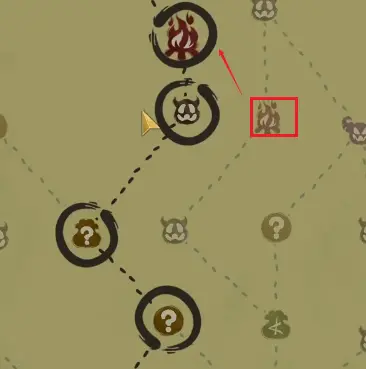
Good routing gives you better campfire choices.
A strong route lets you say:
“I can Smith here, and if the elite goes badly, I still have a later recovery point.”
A bad route forces:
“I must Rest here because the next two fights can kill me.”
Before choosing a path, count:
- how many fights happen before the next campfire
- whether an elite is forced
- whether a shop can buy potion/removal support
- whether your best upgrade happens before the danger
- whether you have an escape route if rewards are bad
A campfire before an elite is an upgrade opportunity. A campfire after an elite is a recovery plan. Routes with both are much safer than routes with neither.
Character Differences
Compress character differences into what actually changes the decision.
| Character | Rest/Smith/Remove adjustment |
|---|---|
| Ironclad | Burning Blood means Rest can often be delayed. Smith damage/Vulnerable upgrades aggressively if the next fights are not lethal. |
| Silent | Removal and draw quality matter a lot because Silent can depend on finding poison, shiv, discard, or control pieces at the right time. |
| Defect | Often wants several upgrades. Avoid taking too many cards that are weak until upgraded, or every campfire becomes forced Smith debt. |
| Regent | Smith burst/setup tools when the deck can survive setup turns. Rest if the deck dies before stars/burst come online. |
| Necrobinder | Remove dead or unsupported pieces quickly. Rest thresholds should be more conservative when draws are awkward or summons do not stabilize fights. |
The useful question is not “what character am I playing?” It is:
Does this character make HP easier to spend, upgrades more urgent, or removal more valuable?
Common Beginner Mistakes
| Mistake | Better habit |
|---|---|
| Resting every campfire | Fix earlier damage, block, routing, and potion use so Smith becomes possible |
| Greeding every Smith | Rest when the next fight can realistically kill you |
| Upgrading cards with tiny gains | Smith cost reductions, breakpoints, debuff uptime, or consistency first |
| Buying cards because gold is available | Compare every purchase against removal, relics, and potions |
| Ignoring removal | Remove weak cards once the deck has enough playable cards |
| Removing too much damage early | Replace starter attacks before deleting all attacks |
| Trusting Durability relics too much | Check whether the relic survives long fights |
| Taking upgrade-hungry cards constantly | Avoid creating more Smith debt than your route can pay |
Final Decision Checklist
Before a campfire, ask:
- Am I above 65% HP?
- Am I below 40% HP?
- What is the next dangerous node?
- Does one Smith change a real fight outcome?
- Would resting only delay the same problem?
Before a shop, ask:
- Do I need a potion to survive the next elite or boss?
- Is removal better than another medium card?
- Does any relic solve several future fights?
- Does a card fix a specific weakness right now?
- Should I save gold instead of forcing a purchase?
Before removing, ask:
- Is this card worse than my average draw?
- Do I already have enough damage?
- Is this starter card delaying my upgraded cards?
- Did my deck abandon this synergy?
- Will this removal make my next fights more reliable?
What to Read Next
- Slay the Spire 2 Beginner Guide
- Why You Keep Dying in Act 1 in Slay the Spire 2
- When to Skip Cards in Slay the Spire 2
- Best Ironclad Builds in Slay the Spire 2
FAQ
Should I rest or smith in Slay the Spire 2?
Use HP thresholds as a starting point. At 65%+ HP, Smith is usually correct. At 40% or lower, Rest is usually correct. Between 40-65%, decide based on the next elite, boss, hallway fight, potion belt, and whether the upgrade changes the fight.
When is Smith better than Rest?
Smith is better when the upgrade prevents more future damage than resting heals. Cost reductions, damage breakpoints, block breakpoints, Weak/Vulnerable uptime, and draw consistency are the best signs.
What should I upgrade first?
Prioritize upgrades in this order: cost reduction, damage breakpoint, block breakpoint, debuff uptime, draw or consistency, scaling speed, then small number upgrades.
Should I always remove Strike first?
Usually, but not before your deck has enough damage. Replace starter attacks with better attacks first. Once damage is solved, Strike removal becomes one of the best ways to improve consistency.
Is removal better than buying cards?
Often yes. If a shop card does not solve a real problem, removing a weak card may improve every future hand more than adding another medium card.
Should I buy potions at shops?
Yes, when the next elite or boss can kill you and the potion solves that fight. A potion that lets you Smith instead of Rest can be worth more than a medium card reward.
What is upgrade debt?
Upgrade debt means your deck has too many cards that need Smithing before they are good. It creates pressure because every campfire becomes a required upgrade, leaving less room to Rest or adapt.
How do Durability relics affect Rest decisions?
Durability relics can make short fights easier but may run out during long fights. Do not choose Smith over Rest only because a limited-use relic carried the previous hallway fight.
Continue Reading in the Slay The Spire 2 Guide Cluster
This article is part of our Slay The Spire 2 strategy cluster. Use these guides to keep learning the game's core systems and routes.
Learn exactly when to skip card rewards in Slay the Spire 2. Master deck building, the rare counter, Enchantments, and act-by-act drafting to avoid dead draws.
Beginner GuideWhy You Keep Dying in Act 1: Slay the Spire 2 GuideLearn why Slay the Spire 2 Act 1 ends so many runs. Master elite preparation, early card drafting, campfire decisions, and map routing to survive.
Co-op GuideSlay the Spire 2 Co-op Guide: Roles, Scaling & RoutingMaster Slay the Spire 2 co-op mode. Learn how multiplayer revives work, the best team roles, scaling allocation, co-op cards, and elite routing strategies.
Character GuideSlay the Spire 2 Ironclad Guide: Best Builds & StrategyMaster the Ironclad in Slay the Spire 2. Learn the best build paths including Strength, Exhaust, and Body Slam, plus Act-by-Act routing and relic priorities.