Slay The Spire 2 Guide
Slay the Spire 2 Co-op Guide: Roles, Scaling & Routing
Master Slay the Spire 2 co-op mode. Learn how multiplayer revives work, the best team roles, scaling allocation, co-op cards, and elite routing strategies.
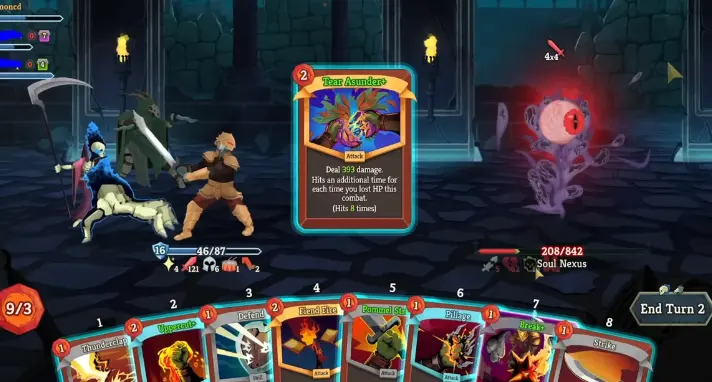
Slay the Spire 2 co-op is not just solo mode with more players.
The biggest mistake new co-op groups make is playing like several separate solo runs. In solo mode, every deck must eventually solve damage, block, scaling, consistency, and boss fights by itself. In co-op, your team can split those jobs.
That changes how you draft, route, spend potions, and judge card value.
For solo fundamentals, start with the Slay the Spire 2 Beginner Guide.
Fast Answer
| If your team keeps… | It usually means… | Fix it by… |
|---|---|---|
| losing long fights | no clear scaling player | assign one deck to scale while others stabilize |
| dying in Act 1 elites | too much greed, not enough tempo | draft Weak, Vulnerable, block, and early damage |
| fighting over carry roles | duplicated scaling and no support | split into damage, support, and scaling jobs |
| taking too much chip damage | poor team-wide mitigation | keep Weak active and use protection cards |
| wasting relics/cards | no resource coordination | discuss who benefits most before choosing |
| desyncing or lagging | setup or connection problems | match mod lists, reduce mods, and use a stable host |
Co-op Is a Team Efficiency Game
Weak co-op teams and strong co-op teams often make opposite decisions.
| Weak team habit | Strong team habit |
|---|---|
| everyone drafts damage | one player handles damage while others support |
| everyone wants to scale | one player scales while teammates buy time |
| support cards are ignored | support cards are treated as team multipliers |
| elites are routed by confidence | elites are routed by team tempo and potions |
| relics are taken selfishly | relics go to the player who converts them best |
| bad turns are blamed on RNG | bad turns are planned around with communication |
The rule is simple:
Team efficiency matters more than personal efficiency.
A card that gives your deck 10% more damage can be worse than a card that lets the whole team survive, scale, or attack during the same turn.
Core Co-op Rules Beginners Miss
Before talking about strategy, understand the multiplayer rules that change decision-making.
Death and Knockdowns
When a player reaches 0 HP, they are knocked down and cannot play cards for the rest of that combat. Enemies continue attacking the remaining players, so one player going down can quickly overload the rest of the team.
After the team wins the combat, the knocked-down player returns with 1 HP in current Early Access co-op behavior. That means a death is not always an instant run loss, but it does create a dangerous recovery problem for the next fight. Because Slay the Spire 2 is still in Early Access, re-check this rule if a patch changes revive behavior.
Practical lesson:
Do not treat one player’s HP as separate from the team economy.
Sometimes blocking for a teammate is stronger than pushing your own damage, because keeping all players active preserves more total cards, energy, potions, and scaling.
Campfire Revives
In current co-op builds, campfires can be used to revive or recover a teammate, but this may cost another player maximum HP or create a major resource tradeoff.
This is usually a bad Act 1 plan unless the run is already strong enough to absorb the cost. Early max HP loss reduces future elite safety, makes chip damage more dangerous, and may force more defensive routing.
Use campfire revival as an emergency recovery tool, not as a normal strategy.
Relic Conflicts
When multiple players want the same relic, co-op can force a conflict resolution, such as a rock-paper-scissors style animation. The important strategic point is not the animation itself.
The important point is:
The best relic owner is not always the person who clicked first.
Before choosing, ask who converts the relic into the most team value. A draw relic may be strongest on the support player. A damage relic may be strongest on the scaling carry. A defensive relic may be strongest on the player who is protecting setup turns.
Map Voting and Route Calls
At route forks, players vote on the path. If votes are tied, the route may be decided randomly. Players can also use map markers or color pings to suggest routes.
Do not wait until the fork to discuss the path.
Before the act starts, agree on:
- how many elites the team wants
- whether the first shop matters
- who needs a campfire most
- whether the team can handle the area’s elite pool
- which route gives an escape option if rewards are bad
The best co-op teams route before the map forces them to.
Team Roles Matter More Than Character Identity
Many beginners ask:
What character am I playing?
Experienced groups ask:
What job is my deck solving for the team?
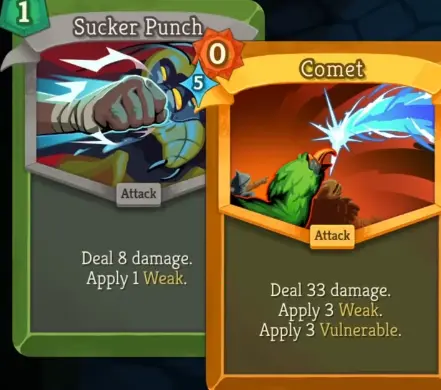
Typical co-op roles include:
| Role | Main job | Good signs |
|---|---|---|
| Frontline damage | end hallway fights quickly | strong early attacks, Vulnerable, burst potions |
| Debuff support | maintain Weak/Vulnerable/control | reliable debuff cards, draw, low-cost plays |
| Scaling carry | win long fights | powers, poison, strength, or engine pieces |
| Stabilizer | prevent collapses | block, redirection, team protection, sustain |
| Utility engine | make others’ turns better | energy support, draw, setup protection |
One player does not need to solve everything. That is the advantage of co-op.
Why Weak and Vulnerable Are Team Multipliers
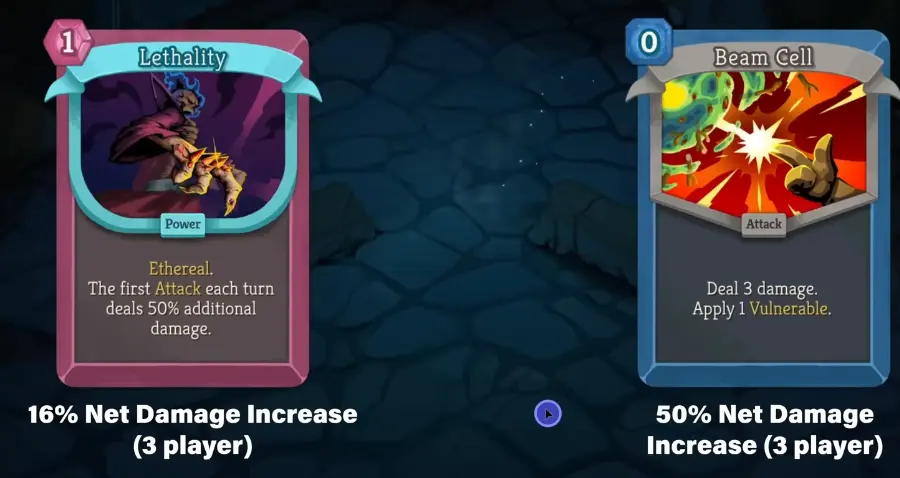
Weak and Vulnerable are already strong in solo play. In co-op, they become much stronger because the whole team benefits.
If one player applies Vulnerable, every teammate’s attacks hit harder.
If one player applies Weak, every teammate needs less block against that enemy’s attacks.
That makes debuff uptime one of the highest-value jobs in multiplayer.
| Effect | Solo value | Co-op value |
|---|---|---|
| Weak | protects one player | can protect the whole team from shared pressure |
| Vulnerable | boosts one deck’s damage | boosts every player attacking that enemy |
| Strength reduction | saves one hand’s worth of block | can stabilize multiple players at once |
| Team energy/draw | improves one turn | may enable several decks in the same turn |
This is why a support card can outperform a selfish damage card. You are not comparing one card against one card. You are comparing one card against the total value it creates across the party.
Co-op-Only Cards Change Drafting
Slay the Spire 2 co-op includes cards that are built around helping or redirecting value between players. These cards are easy to underrate if you judge them like solo cards.
| Co-op card | What it does | Why it matters |
|---|---|---|
| Demonic Shield | uses your block to help protect a teammate | turns one player’s defense into team defense |
| Intercept | redirects attacks aimed at a teammate to you this turn | saves fragile scaling players or low-HP teammates |
| Energy Surge | gives all players extra energy | creates explosive team turns, especially with draw |
| Gang Up | deals more damage when teammates have attacked the same enemy | rewards focus fire and communication |
The key is not whether these cards make your personal deck look stronger. The question is whether they convert your turn into more total team value.
How to Evaluate Co-op Cards
Use this checklist:
| Question | If yes |
|---|---|
| Does it protect the scaling player? | Strong reason to take |
| Does it let multiple teammates attack or set up? | Strong reason to take |
| Does it prevent a knockdown? | Very strong reason to take |
| Does it require team coordination? | Take only if your group will communicate |
| Is it only good when the target teammate is already strong? | Draft carefully |
A card like Intercept can look defensive and boring, but if it keeps the scaling carry alive through a lethal turn, it may be the strongest card played that fight.
Scaling Allocation: Do Not Let Everyone Become Greedy
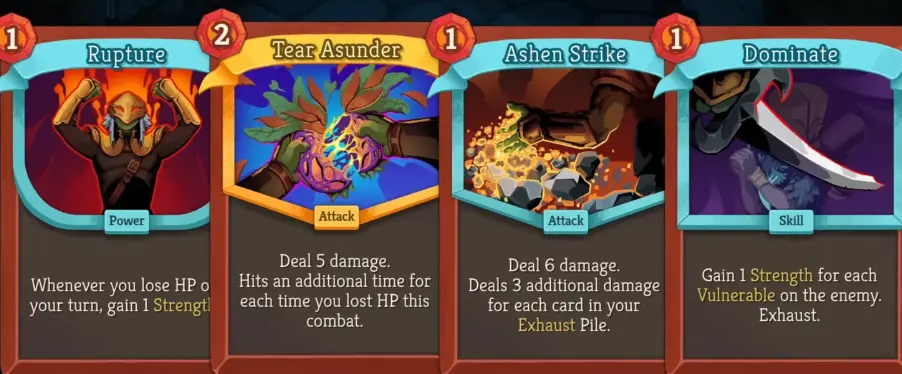
One of the biggest differences between weak and strong co-op groups is scaling allocation.
Weak groups:
- everyone drafts scaling
- everyone drafts setup
- nobody stabilizes Act 1
- elites punish the team’s slow start
Strong groups:
- one player scales heavily
- one player protects dangerous turns
- one player maintains debuffs or consistency
- potions are spent to keep the plan alive
A good scaling plan sounds like this:
“Defect is our long-fight engine. Ironclad and Silent keep the first three turns stable.”
A bad scaling plan sounds like this:
“Everyone take powers and hope we survive.”
The scaling carry does not need to be the same player every run. It depends on relics, card rewards, and route pressure. The important part is that the team knows who is allowed to be slow and who must keep the fight under control.
Strong Team Compositions
You can win with many character combinations, but some pairings are easier for new groups because their jobs naturally fit together.
Ironclad + Silent
This is one of the safest two-player foundations.
| Character | Team job |
|---|---|
| Ironclad | high HP, frontloaded damage, Vulnerable, early elite pressure |
| Silent | Weak, poison, draw, consistency, chip control |
Why it works:
- Ironclad handles early tempo and can spend HP more comfortably.
- Silent smooths fights with Weak and card flow.
- Both characters can contribute debuffs, making focus fire stronger.
- Poison and Vulnerable give the team both long-fight scaling and burst turns.
Ironclad + Defect
This pairing works when Ironclad protects the early game while Defect builds toward scaling.
| Character | Team job |
|---|---|
| Ironclad | damage, Vulnerable, elite tempo |
| Defect | scaling engine, orb payoff, long-fight power |
The danger is that Defect may need time or upgrades. Ironclad should not over-draft greed if Defect is already the scaling plan.
Silent + Necrobinder
This pairing can become very consistent, but it needs early discipline.
| Character | Team job |
|---|---|
| Silent | Weak, draw, poison, control |
| Necrobinder | unusual scaling, summon/soul-style engines, payoff loops |
The danger is that both players can draft too many engine pieces and not enough immediate damage. In Act 1, make sure at least one deck is solving hallway fights and elites.
Regent + Any Stabilizer
Regent’s burst turns become much stronger when another player buys time.
| Partner type | Why it helps |
|---|---|
| Weak support | makes setup turns safer |
| Block/redirection | protects Regent before the burst |
| Energy/draw support | turns one payoff hand into a fight-ending turn |
Regent teams should communicate burst timing. A teammate applying Vulnerable one turn early or saving energy support can turn a normal Regent turn into a boss-killing turn.
Character-Specific Co-op Jobs
Instead of giving every character the same advice, focus on the job each character most often contributes.
| Character | Co-op strength | Common trap |
|---|---|---|
| Ironclad | frontline pressure, HP trading, Vulnerable | taking every damage card after the team already has tempo |
| Silent | Weak, draw, poison, consistency | drafting selfish shiv/poison pieces before the team has stability |
| Defect | long-fight scaling and engine payoff | taking too many slow upgrades while teammates also draft greed |
| Regent | burst windows and payoff turns | building for a huge turn with no protection plan |
| Necrobinder | unusual scaling and synergy loops | adding synergy pieces that do not help the next elite |
This is a role guide, not a fixed rule. If relics push Silent into damage or Ironclad into support, follow the run. Just make sure the team still covers tempo, defense, scaling, and debuffs.
Elite Routing in Co-op
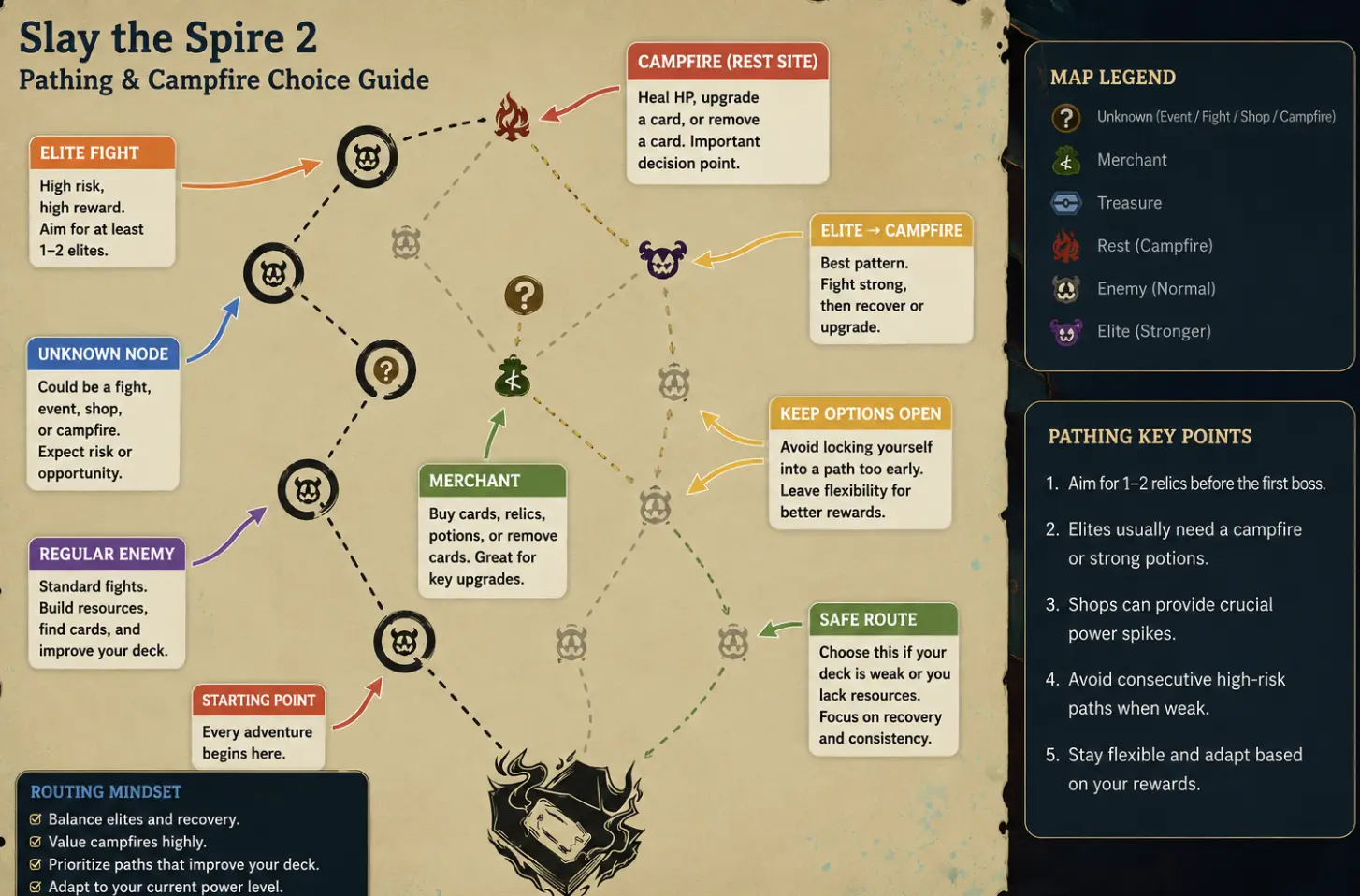
Co-op teams often over-greed elite routes because multiplayer feels safer. That can backfire when one player gets knocked down and the remaining players absorb too much pressure.
Before taking an elite, ask:
| Question | Why it matters |
|---|---|
| Do we have Weak or Vulnerable uptime? | Shared debuffs multiply team value |
| Does anyone have a potion that prevents a collapse? | Potions protect the whole route |
| Who is allowed to scale slowly? | That player may need protection |
| Can we recover before the next danger node? | Knockdowns and low HP compound quickly |
| Are we prepared for this area’s elite pool? | Generic strength is not enough |
The goal is not to fight every elite. The goal is to spend HP efficiently for relics without forcing repeated recovery decisions.
Potions Are Team Resources
Potions become more valuable in co-op because one potion can protect several future turns.
Use potions to:
- prevent a teammate from being knocked down
- keep the scaling carry alive through setup
- secure an elite before damage snowballs
- preserve enough HP to take the next route branch
- turn a coordinated burst turn into lethal
Do not hoard a potion just because your personal HP is safe. If a teammate going down makes the fight spiral, spending the potion is usually correct.
Communication Rules That Win Runs
Good co-op play does not require perfect planning. It requires saying the important things before cards are played.
Use these calls:
| Call | Example |
|---|---|
| Target focus | ”Everyone hit the back enemy this turn.” |
| Debuff timing | ”I can apply Vulnerable before your big attack.” |
| Protection request | ”I need one turn to set up; can anyone cover me?” |
| Potion plan | ”I can potion this elite if we commit.” |
| Route plan | ”Take the campfire path because Defect needs an upgrade.” |
| Relic assignment | ”This relic is better on Silent because she cycles faster.” |
Most co-op mistakes are not mechanical. They are communication failures.
The best communication is short, early, and tied to a decision. Say something before the big attack is played, before the potion is spent, or before the route vote locks in. You do not need to narrate every card in your hand.
Sometimes not talking is faster. If the target is obvious, the team is already safe, or a player is resolving a simple block turn, let them play. Too much discussion slows the run and makes important calls easier to miss.
| Do talk when… | Stay quiet when… |
|---|---|
| a teammate may die | the turn is already solved |
| Vulnerable or Weak timing matters | someone is only playing obvious block |
| a potion or co-op card can save the route | the decision affects only minor overkill |
| route, relic, or campfire choices are shared | the team already agreed on the plan |
Good teams do not talk constantly. They talk at the moments where one sentence changes the fight.
Multiplayer Setup and Desync Tips
Co-op strategy does not matter if the run desyncs or lags badly.
Before starting:
- let the player with the most stable connection host
- use a wired connection when possible
- make sure every player uses the same game version
- use the same mod list and mod load order
- disable mods if you are troubleshooting desyncs
- avoid changing mods mid-run
- restart the lobby if map, rewards, or combat states look different between players
If a run keeps desyncing, test one clean unmodded co-op run before assuming the game or save is broken.
Common Co-op Mistakes
| Mistake | Why it loses runs | Better habit |
|---|---|---|
| everyone drafts carry decks | no one protects setup turns | assign one scaling player |
| ignoring Weak/Vulnerable | team efficiency disappears | keep shared debuffs active |
| over-greeding elites | knockdowns force bad recovery | spend potions and choose flexible routes |
| fighting over relics | relics go to the wrong deck | give relics to the best converter |
| hoarding potions | one bad turn snowballs | use potions to protect the team plan |
| ignoring co-op cards | support value is missed | draft cards that save teammates or enable burst |
| routing without agreement | votes split or randomize path | discuss route before forks |
| using mismatched mods | desyncs and crashes | match versions, mods, and load order |
Simple Co-op Priority List
If your team is unsure what to do, use this order:
- Keep everyone alive and playing cards.
- Maintain Weak or Vulnerable on priority enemies.
- Protect the player who is scaling.
- Focus fire instead of spreading damage randomly.
- Spend potions to preserve the route.
- Give relics to the deck that uses them best.
- Avoid drafting duplicate team roles unless the run supports it.
FAQ
What happens when a player dies in Slay the Spire 2 co-op?
The player is knocked down and cannot play cards for the rest of that combat. The remaining players must finish the fight. After victory, the knocked-down player returns with 1 HP in current Early Access co-op behavior, so the next fight can still be dangerous even after the team survives.
Is support actually good in co-op?
Yes. Support cards are often stronger than selfish damage because their value spreads across the whole team. Weak, Vulnerable, energy support, block sharing, and attack redirection can all create more total value than one personal attack.
Who should get a contested relic?
The player who converts it into the most team value. Do not assign relics only by who wants them most. Consider draw speed, role, current deck quality, and upcoming fights.
Should every player build scaling?
No. Teams are usually stronger when one player scales heavily while the others stabilize, apply debuffs, or create burst windows. If everyone builds slowly, Act 1 and elite fights become dangerous.
What is a good beginner co-op team?
Ironclad + Silent is a strong beginner-friendly pairing because Ironclad provides early damage and Vulnerable while Silent provides Weak, poison, draw, and consistency.
How do I fix co-op lag or desync?
Use the most stable host, match game versions, match mod lists and load order, and disable mods when troubleshooting. If players see different rewards, map states, or combat outcomes, restart the lobby or test a clean unmodded run.
Continue Reading in the Slay The Spire 2 Guide Cluster
This article is part of our Slay The Spire 2 strategy cluster. Use these guides to keep learning the game's core systems and routes.
Learn exactly when to skip card rewards in Slay the Spire 2. Master deck building, the rare counter, Enchantments, and act-by-act drafting to avoid dead draws.
Beginner GuideWhy You Keep Dying in Act 1: Slay the Spire 2 GuideLearn why Slay the Spire 2 Act 1 ends so many runs. Master elite preparation, early card drafting, campfire decisions, and map routing to survive.
Deck BuildingRest, Smith, Remove? Slay the Spire 2 Campfire & Shop GuideLearn exactly when to rest, smith, remove cards, or spend gold in Slay the Spire 2. Master HP thresholds, upgrade priorities, and shop logic to win.
Character GuideSlay the Spire 2 Ironclad Guide: Best Builds & StrategyMaster the Ironclad in Slay the Spire 2. Learn the best build paths including Strength, Exhaust, and Body Slam, plus Act-by-Act routing and relic priorities.