Game Hub
Slay the Spire 2 Beginner Guide: Deck Building & Routing
Master Slay the Spire 2 with our practical beginner guide. Learn core mechanics, Act 1 survival, deck building, routing, and card skip strategies to win.
Slay the Spire 2 is not a game about taking every strong-looking card.
It is a game about solving the next fight while building toward a deck that can eventually beat elites, bosses, and late-act fights consistently.
This beginner guide is the hub for the fundamentals:
- how combat basics work
- how Epoch unlocks affect early runs
- how to survive Act 1
- when to fight elites
- how large your deck should be
- when to skip, remove, rest, or smith
- how to use seeds to improve faster
- what changes in co-op
If you only remember one rule, remember this:
Build for the next problem first. A perfect late-game deck does not matter if Act 1 kills you.
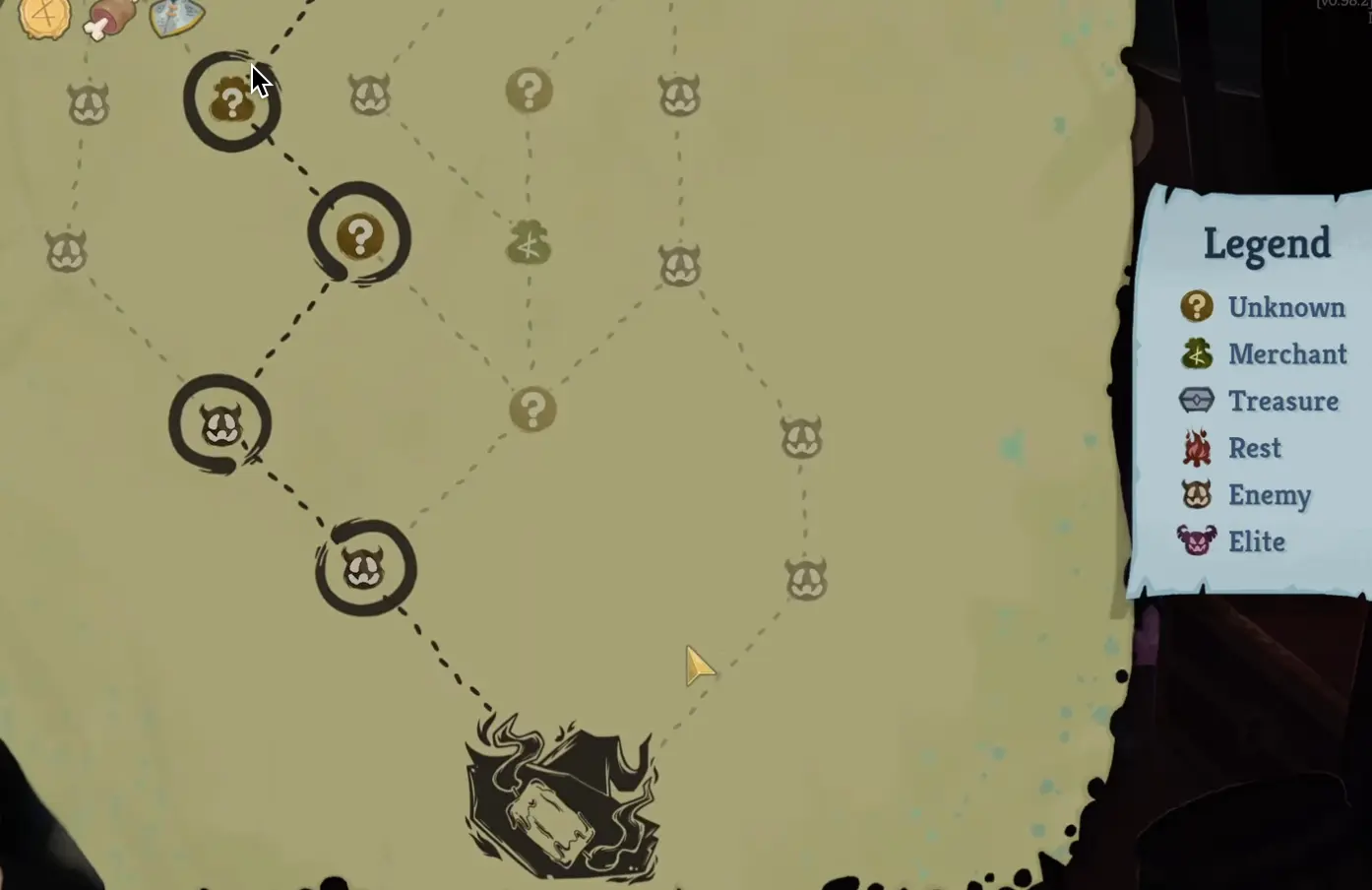
Fast Beginner Rules
| Rule | Why it matters |
|---|---|
| Build for the next fight first. | Dead runs never become scaling decks. |
| Keep your deck focused. | A smaller, cleaner deck finds its best cards faster. |
| Fight prepared elites. | Relics and rare rewards are how many runs snowball. |
| Use Weak and Vulnerable. | Weak reduces attack damage by 25%; Vulnerable increases damage taken by 50%. |
| Spend potions early. | Potions protect HP, upgrades, and elite routes. |
| Smith when safe, rest when dying. | Upgrades create future power; rests only prevent immediate death. |
| Replay seeds to learn. | Same seed means the same run structure, so you can test different decisions. |
Core Mechanics New Players Should Know
Slay the Spire 2 becomes much easier once you understand what each basic resource is doing.
| Mechanic | Beginner explanation | Why it matters |
|---|---|---|
| Attack cards | Usually deal damage. | You need enough early damage to end fights before enemies scale. |
| Skill cards | Usually block, draw, discard, or apply effects. | Skills help you survive dangerous turns and smooth bad hands. |
| Power cards | Usually create effects that last for the rest of combat. | Powers are strong in long fights, but can be too slow if played before your deck is stable. |
| Block | Protects you during enemy attacks, then normally disappears before your next turn unless an effect says otherwise. | Do not over-block if the enemy is not attacking; unused block usually does not carry forward. |
| Weak | Reduces attack damage by 25%. | Weak can act like free block across multiple attacks. |
| Vulnerable | Makes the target take 50% more attack damage. | Vulnerable turns average attacks into fight-ending tempo. |
The biggest beginner upgrade is learning to read enemy intent before playing cards. If the enemy is attacking, compare block, Weak, and killing damage. If the enemy is not attacking, spend the turn damaging, drawing, scaling, or setting up.
Epoch Unlocks: Why Your Early Runs May Look Smaller
Slay the Spire 2 uses an Epoch progression system. As you complete runs, defeat bosses, and reach character milestones, more cards, relics, and potions can enter future reward pools.
That means your first several runs may not show the same range of rewards you see in later videos or screenshots. This is not necessarily bad luck. The early reward pool is intentionally smaller while you learn the game.
For beginners, the practical lesson is simple:
- do not judge a character after one run
- expect the card and relic pool to expand over time
- use early Epoch runs to learn enemy patterns and route planning
- revisit characters after more unlocks enter the pool
Epoch progression does not replace good deck-building. It just means your first runs are also teaching runs.
Best Starting Character for Beginners
For most new players, Ironclad is the best first character.
Ironclad teaches the core fundamentals cleanly:
- HP as a resource
- elite routing
- frontloaded damage
- Vulnerable timing
- upgrade value
- deck thinning
Silent is excellent once you understand card flow and debuffs. Defect can become powerful, but weaker early turns punish messy drafting. Regent and Necrobinder have strong scaling potential, but they ask more from your setup turns.
If you want a deeper character page, read: Best Ironclad Builds in Slay the Spire 2
Act 1 Is About Tempo, Not Perfect Scaling
A common beginner mistake is trying to build an Act 3 deck on floor 3.
Act 1 asks a simpler question:
Can your deck kill enemies before they bleed you dry?
That means your early picks should usually solve immediate problems:
- efficient attacks
- cheap block
- Weak
- Vulnerable
- draw consistency
- elite damage
You usually do not want:
- expensive setup cards with no support
- narrow combo pieces
- scaling cards that do nothing immediately
- extra defensive cards if you already cannot kill enemies fast enough
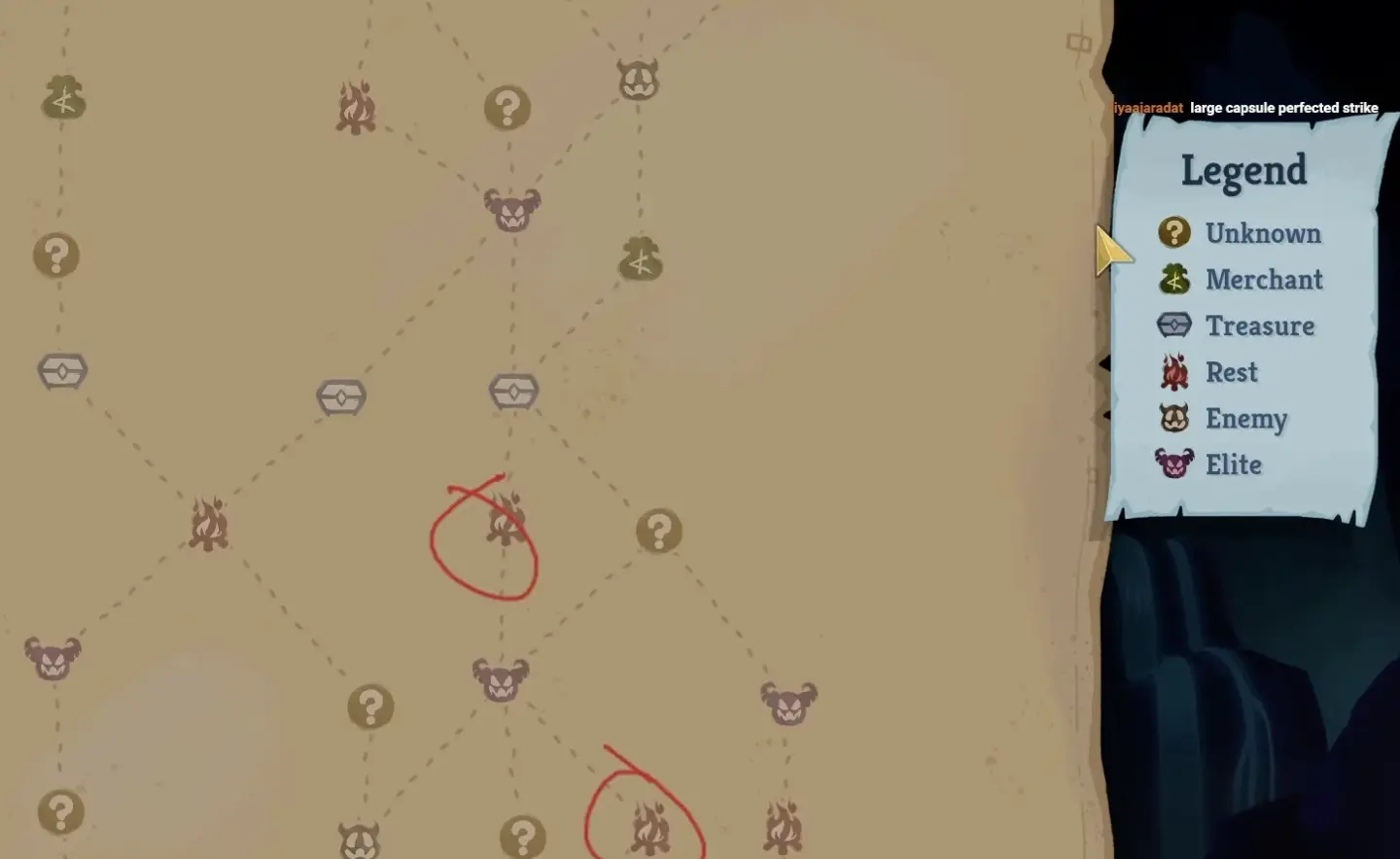
Act 1 is where most beginner runs are decided. For the full Act 1 checklist, elite prep, HP thresholds, and route examples, read: Why You Keep Dying in Act 1 in Slay the Spire 2
How to Plan Your Route
Before entering your first fight, look at the whole map.
Ask:
- Where are the elites?
- Where is the first campfire?
- Is there a shop before or after an elite?
- Can I pivot if my first rewards are weak?
- What happens if I need to rest instead of smith?
A good route gives options. It lets you fight elites if your deck spikes early, but still gives recovery if rewards are bad.
When to Fight Elites
Fight elites when most of these are true:
- you found strong early damage
- you have a useful potion
- your deck has Weak or Vulnerable
- you upgraded a key attack
- your HP can support the trade
- there is recovery or an escape path afterward
Avoid elites when most of these are true:
- your deck is mostly starter cards
- your scaling is too slow
- your route has no recovery afterward
- you cannot reliably block or kill
- your potion belt is empty
Avoiding every elite is one of the fastest ways to enter Act 2 underpowered. Fighting every elite blindly is one of the fastest ways to die.
Keep Your Deck Small Enough to Work
Deck-building is not about collecting cards. It is about making your best cards show up when they matter.
A useful beginner target is:
| Timing | Practical target |
|---|---|
| Early Act 1 | Add enough cards to escape the starter deck. |
| Act 1 boss | Usually around 15-20 cards. |
| Mid-run | Often around 15-25 cards, depending on draw and card quality. |
| Larger decks | Fine only with strong draw, discard, exhaust, or card selection. |
These numbers are not laws. A 25-card deck can be excellent if most cards are high-impact. A 12-card deck can be awful if it cannot block, deal damage, or scale.
Skip Cards at Reward Screens
The skip button protects future draw quality.
Skip more often when:
- the card does not solve your current weakness
- it needs support you do not have
- your deck already has enough attacks
- the card creates upgrade debt
- your best cards are becoming harder to draw
The question is not:
Is this card strong?
The better question is:
Will this card improve my next few fights?
For a full skip framework, including Rare counter, Enchantments, Token cards, and act-by-act skip standards, read: When to Skip Cards in Slay the Spire 2
Remove Cards at Shops
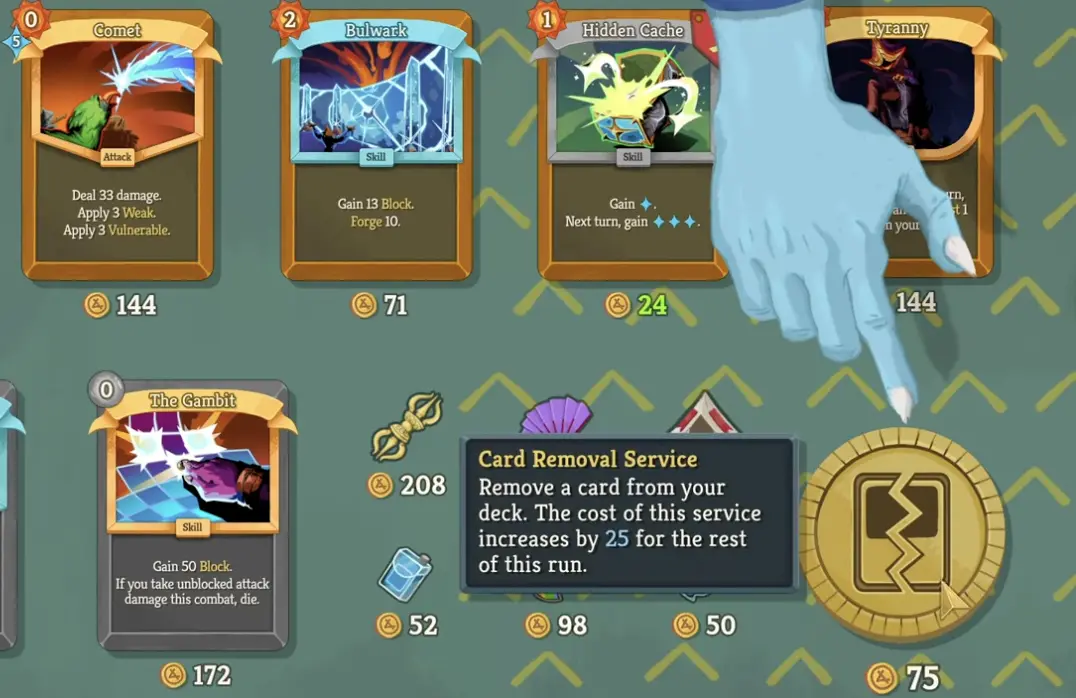
Removing weak cards improves:
- draw quality
- consistency
- scaling reliability
- combo frequency
In many beginner runs, your first removals are simply:
- Strike
- Strike
- another weak starter card
There are exceptions depending on relics and character mechanics, but the default idea is clear: remove cards that are worse than the average card you want to draw.
At shops, compare every purchase against removal:
- Does this card solve a real problem?
- Is removal stronger here?
- Am I adding another awkward draw?
- Will this card force more upgrades later?
- Do I need a potion for the next elite?
A boring removal is often better than a fun card that weakens deck consistency.
Rest, Smith, or Remove?
Rest, Smith, and Remove are connected decisions.
Weak decks rest more. Decks that rest more upgrade less. Decks that upgrade less stay weak.
Use this beginner framework:
| Situation | Usually correct |
|---|---|
| You may die before the next safe node. | Rest |
| You are stable and one upgrade changes fights. | Smith |
| Your deck works but feels inconsistent. | Remove |
| You are entering an elite with weak potion support. | Consider potion/shop prep |
| Your deck has too many starter cards. | Prioritize removal soon |
Simple Campfire Threshold
| Current HP | Default decision |
|---|---|
| 65%+ HP | Usually Smith |
| 40-65% HP | Decide based on the next node |
| 40% or lower | Usually Rest |
The best upgrades are not always the biggest numbers. Prioritize upgrades that reduce cost, hit damage breakpoints, improve block breakpoints, increase Weak/Vulnerable uptime, or make your scaling start faster.
For the full decision tree, read: Rest, Smith, or Remove? Slay the Spire 2 Decision Guide
Use Potions Earlier
Many beginner runs die while holding unused potions.
Potions should:
- protect elite fights
- save campfires
- preserve HP
- secure upgrades
- rescue bad draws
- let you take a stronger route safely
A potion that lets you smith instead of rest can be worth more than most card rewards. Do not hoard potions for a perfect future fight if the current fight is about to cost 20 HP.
Draw Is One of the Strongest Stats
A deck with strong cards still loses if it cannot find them.
Draw helps you:
- reach scaling faster
- find block on dangerous turns
- cycle upgraded cards more often
- turn removals into better average hands
- make key cards appear before fights snowball
This is also why oversized decks feel weaker than they look. The problem is not just deck size. The problem is how long it takes to find the cards that matter.
Use Seeds to Practice Faster
Slay the Spire 2 uses seed-based random generation. A seed controls the structure of a run, including many of the same rewards and events.
If you die and want to improve quickly, write down the seed from the run result screen and replay it in custom mode.
Then test one change:
- take a different first reward
- skip the speculative card
- route to the shop before the elite
- use the potion earlier
- smith instead of rest
- dodge the second elite
- remove a Strike instead of buying a card
This turns “I got unlucky” into a controlled experiment. Seeds are one of the fastest ways to learn why a run actually failed.
Co-op Fundamentals
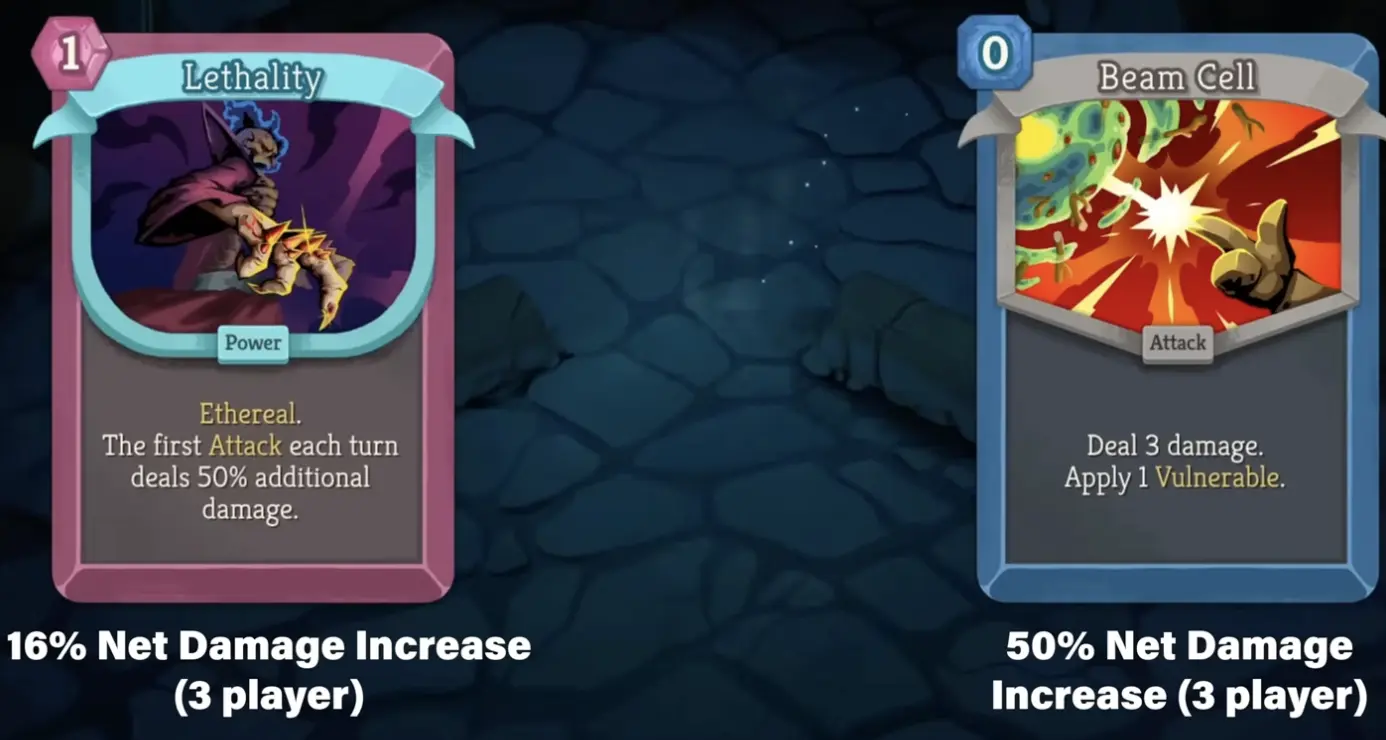
Co-op changes card value dramatically.
Cards that help the whole team become much stronger than selfish cards. Weak, Vulnerable, strength reduction, energy support, and protection effects scale across every player.
Good co-op teams:
- maintain shared debuffs
- communicate scaling plans
- divide roles naturally
- let one player scale while others stabilize fights
- use potions to protect the team route, not just one player
Bad co-op teams draft like separate solo runs sitting at the same table.
For death rules, revive behavior, co-op-only cards, routing votes, relic conflicts, desync tips, and team compositions, read: Slay the Spire 2 Co-op Guide
Common Beginner Mistakes
| Mistake | Why it loses runs |
|---|---|
| Taking too many cards | Your best cards become harder to draw. |
| Avoiding elites forever | Your deck never gains enough power. |
| Drafting dream combos too early | Act 1 kills you before scaling matters. |
| Hoarding potions | You lose HP that potions were supposed to save. |
| Ignoring Weak and Vulnerable | Fights last too long and cost too much HP. |
| Resting too often | Earlier drafting or routing decisions forced the rest. |
| Building huge decks without draw | Strong cards appear too late. |
| Never replaying mistakes | You repeat the same decision errors without noticing. |
Where to Go Next
Use these pages based on the problem you are trying to solve:
| If your problem is… | Read this next |
|---|---|
| You keep dying before the Act 1 boss. | Why You Keep Dying in Act 1 in Slay the Spire 2 |
| Your decks feel bloated or inconsistent. | When to Skip Cards in Slay the Spire 2 |
| You do not know whether to rest, smith, or remove. | Rest, Smith, or Remove? Slay the Spire 2 Decision Guide |
| You are playing multiplayer. | Slay the Spire 2 Co-op Guide |
| You want a beginner-friendly character path. | Best Ironclad Builds in Slay the Spire 2 |
FAQ
Is Slay the Spire 2 beginner-friendly?
Yes, but it punishes unclear deck-building quickly. New players improve fastest by learning enemy intent, route planning, card skipping, and when to fight elites.
What should I learn first?
Learn the combat basics first: Block, Weak, Vulnerable, card types, enemy intent, and why Act 1 needs frontloaded damage.
Why do I not see the same cards and relics as other players?
Epoch progression can unlock more cards, relics, and potions into future reward pools. Early runs may have a smaller reward pool than later runs.
How big should my deck be?
A useful beginner target is about 15-20 cards by the Act 1 boss and often 15-25 cards during the run, depending on draw quality and deck focus.
Should beginners always play Ironclad first?
Usually yes. Ironclad teaches routing, upgrades, blocking, Vulnerable, HP trading, and basic deck-building discipline very clearly.
Is skipping cards really that important?
Yes. Skipping is how you protect deck consistency. A card can be strong in general and still be wrong for your current deck.
How can I improve faster after losing?
Record the seed, replay the run, and change one decision at a time. This makes mistakes easier to identify than starting a completely random new run every time.
Slay The Spire 2 Guide Cluster
Explore the main Slay The Spire 2 guides, from beginner strategy to builds, tiles, Gambits, bosses, and first-win routes.
Learn exactly when to skip card rewards in Slay the Spire 2. Master deck building, the rare counter, Enchantments, and act-by-act drafting to avoid dead draws.
Beginner GuideWhy You Keep Dying in Act 1: Slay the Spire 2 GuideLearn why Slay the Spire 2 Act 1 ends so many runs. Master elite preparation, early card drafting, campfire decisions, and map routing to survive.
Deck BuildingRest, Smith, Remove? Slay the Spire 2 Campfire & Shop GuideLearn exactly when to rest, smith, remove cards, or spend gold in Slay the Spire 2. Master HP thresholds, upgrade priorities, and shop logic to win.
Co-op GuideSlay the Spire 2 Co-op Guide: Roles, Scaling & RoutingMaster Slay the Spire 2 co-op mode. Learn how multiplayer revives work, the best team roles, scaling allocation, co-op cards, and elite routing strategies.
Character GuideSlay the Spire 2 Ironclad Guide: Best Builds & StrategyMaster the Ironclad in Slay the Spire 2. Learn the best build paths including Strength, Exhaust, and Body Slam, plus Act-by-Act routing and relic priorities.