Space Haven Guide
Space Haven 1.0 Build Order: First 7 Days Guide
Survive the Space Haven 1.0 early game. Follow our exact first 7 days build order to set up life support, power nodes, and prep for your first jump.
The first week in Space Haven 1.0 is not about building a beautiful ship.
It is about stopping the death spiral: no oxygen, no temperature control, no water, no power, no food, no building materials, and crew wasting days hauling the wrong scrap.
This guide gives you a practical early build order for the first 7 days and the first sector. Use it as a priority list, not a rigid script. Different starts give you different starting rooms and resources, but the survival order is the same:
Life support → water → recycler → food → comfort → first jump.
Fast Answer
| Early question | Best beginner answer |
|---|---|
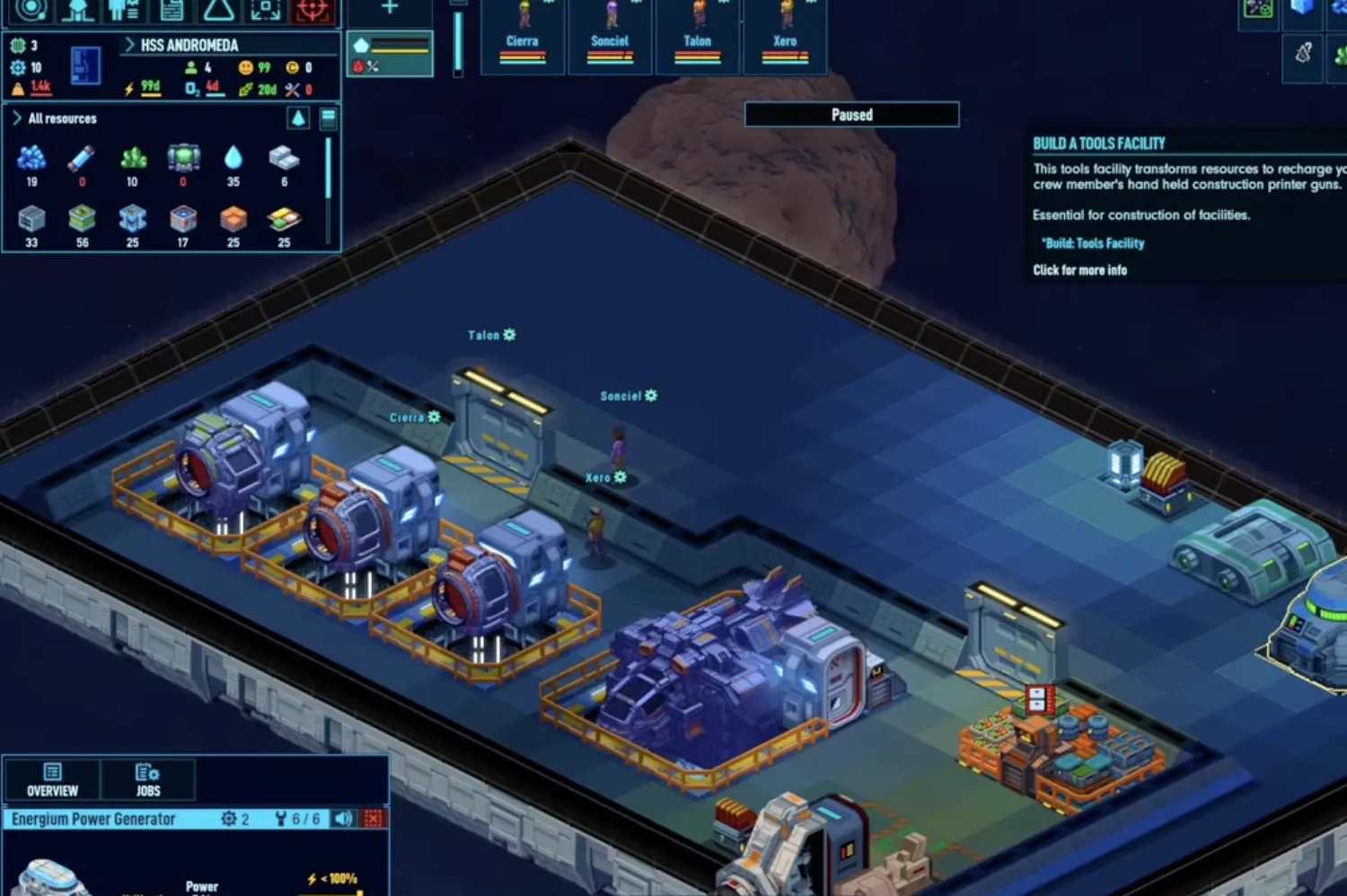
| What should I build first? | Tools Facility if missing, then oxygen, gas scrubber, thermal regulator, beds, toilet, and basic food. |
| When should I build Recycler? | Very early, after basic life support and water. It turns salvage scrap into usable building materials. |
| Do I need Power Nodes everywhere? | No. In 1.0, do not blanket the whole ship with nodes. Use them where the object actually needs a high-capacity grid or power connection. |
| What should I mine first? | Ice for water, then power/fuel resources and building materials depending on what your start lacks. |
| Should I salvage everything? | No. Prioritize valuable scraps and leave low-priority bulk scrap until your crew has time. |
| Should I expand the hull on Day 1? | Only enough to fit survival rooms. Over-expansion spreads power, heat, oxygen, and logistics problems. |
| Should Mining Station start follow the same order? | Mostly yes, but it should plan rooms first and stabilize station services before trying to become a full ship. |
| When should I jump? | When the first sector is no longer worth the fuel, risk, or crew time. Do not stay just to haul every piece of scrap. |
First 7 Days Overview
| Phase | Main goal | Build / action priority |
|---|---|---|
| Day 1-2 | Stop immediate survival failure | Tools, oxygen, gas scrubber, thermal regulator, beds, toilet, basic storage. |
| Day 3-4 | Create water and material loops | Water collector, water purifier, mine ice, build Recycler, start controlled salvage. |
| Day 5 | Stabilize crew comfort | Bedroom improvements, lights, dining, basic leisure, medical cabinet. |
| Day 6-7 | Prepare for mobility | Navigation console, hyperdrives, fuel check, first jump planning. |
| First sector | Avoid wasting days | Mine key resources, salvage selectively, trade if useful, leave before logistics stalls. |
This order assumes a normal ship start. If your scenario already has some facilities, skip them and move to the next survival problem.
Ship Start vs Mining Station Start
This guide is mainly written for Classic Ship Mode, but Mining Station start follows the same survival logic with a different opening mindset.
| Start type | What changes |
|---|---|
| Ship Start | You are trying to stabilize a moving ship and prepare for the first jump. Build only what you need to survive and leave the sector. |
| Mining Station Start | You have more room to plan, but you still need oxygen, water, power, food, beds, and logistics before expanding. |
| A Small Hope / preset ship | Some survival systems may already exist. Check what is missing instead of rebuilding everything. |
| Station Mode | You do not rush a hyperjump. You focus more on services, visitors, storage, defense, and long-term resource flow. |
If you choose Mining Station start, use the extra planning space to sketch a clean layout before committing to rooms. Do not turn it into a giant station before you have basic water, power, food, and building material loops.
For layout planning, use the Ship Layout Guide.
Day 1-2: Stabilize Life Support
Your first job is to stop the ship from becoming unlivable.
Depending on your start, some of these may already exist. Check the ship before you build duplicates.
| Priority | Build or check | Why it matters |
|---|---|---|
| 1 | Tools Facility | Keeps construction tools charged so crew can build. |
| 2 | Oxygen Generator | Stops oxygen failure. |
| 3 | Gas Scrubber | Controls CO2 and bad gas buildup. |
| 4 | Thermal Regulators | Keeps crew areas livable. |
| 5 | Beds | Prevents sleep and mood collapse. |
| 6 | Toilet | Starts basic crew hygiene and waste loop. |
| 7 | Basic storage | Prevents early hauling chaos. |
| 8 | Kitchen or Algae Dispenser | Gives emergency food stability. |
Do not build a huge hull shell on Day 1. A larger ship does not solve the survival problem. It spreads oxygen, temperature, power, and walking routes over more space.
Thermal Regulator Warning
Thermal Regulators are not “place one and forget it” objects.
If a regulator is constantly fighting a huge room, open space, bad insulation, or a room that is too large for early infrastructure, it can stay under heavy load and wear down. If temperature keeps drifting or the regulator looks overworked, do not just ignore it.
Check:
| Symptom | Fix |
|---|---|
| Room temperature keeps dropping or rising | Add another regulator or split the room. |
| One regulator is covering a huge area | Build smaller rooms with doors. |
| Regulator is constantly working hard | Reduce room size or add support. |
| Crew comfort drops from temperature | Separate living rooms from industry and greenhouse. |
| Greenhouse and bedrooms share a room | Split them. Crops and crew want different conditions. |
Early temperature control is easier in smaller rooms. Do not make one giant room and expect one regulator to fix it.
Power Node Rule for 1.0
Old Space Haven guides often tell players to cover everything with Power Nodes.
Do not copy that blindly in 1.0.
Many basic rooms do not need you to spam Power Nodes across the entire ship. Power Nodes are mainly important when the facility or system actually requires a high-capacity connection or power coverage, especially for things like production/manufacturing, engines, and combat systems.
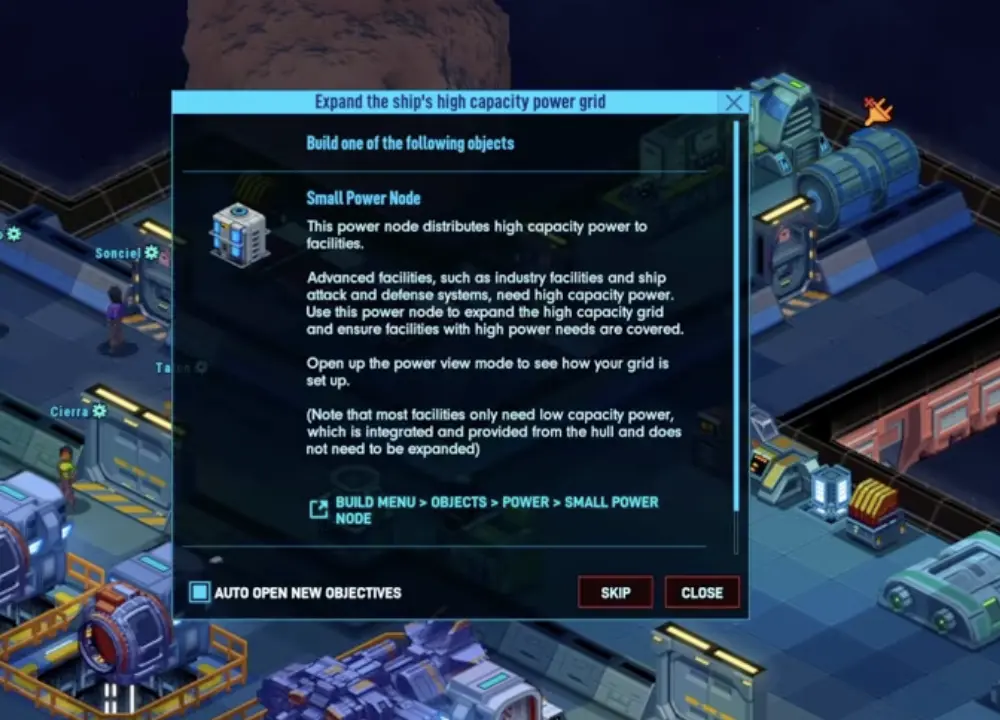
Use this rule:
| Situation | What to do |
|---|---|
| Facility says it is not on the high-capacity grid | Add or move a Power Node. |
| Production or manufacturing object is not powered | Check node coverage and power grid. |
| Engines / hyperdrive / combat systems need support | Plan nodes around those systems. |
| Basic room has no warning and works normally | Do not waste resources covering it with nodes. |
| Power keeps failing after expansion | Check fuel, generator capacity, node coverage, and logistics. |
Power Nodes are not decoration. Build them where the game tells you the system needs them.
For deeper blackout troubleshooting, use the Power and Blackout Guide.
Day 3-4: Water, Ice, and the Recycler
Once oxygen, temperature, beds, and toilet are stable, build the early resource loop.
You need water to support food, crew, and later farming. You also need building materials. The Recycler is what connects salvage to expansion.
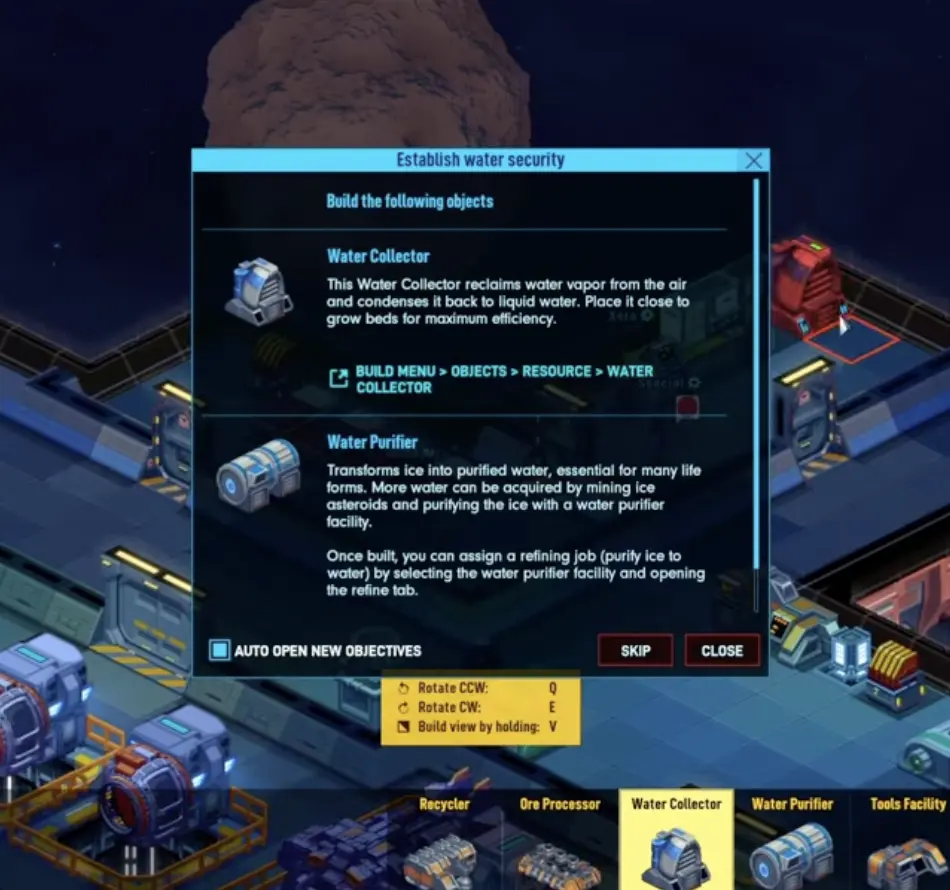
Water Loop
| Build / action | Why it matters |
|---|---|
| Water Collector | Supports early water handling. |
| Water Purifier | Turns ice into usable water. |
| Mine ice asteroid | Gives water input. |
| Set a production threshold | Prevents burning through ice without control. |
| Keep water near food production | Reduces hauling. |
Do not set every machine to run forever if you do not understand the resource flow. For water, use a production condition so the purifier only runs when your water stock drops below your chosen safety threshold.
Recycler Loop
Build the Recycler early.
The Recycler turns salvage scrap into usable resources. This is what lets the early game become self-sustaining instead of depending only on starting materials and trade.
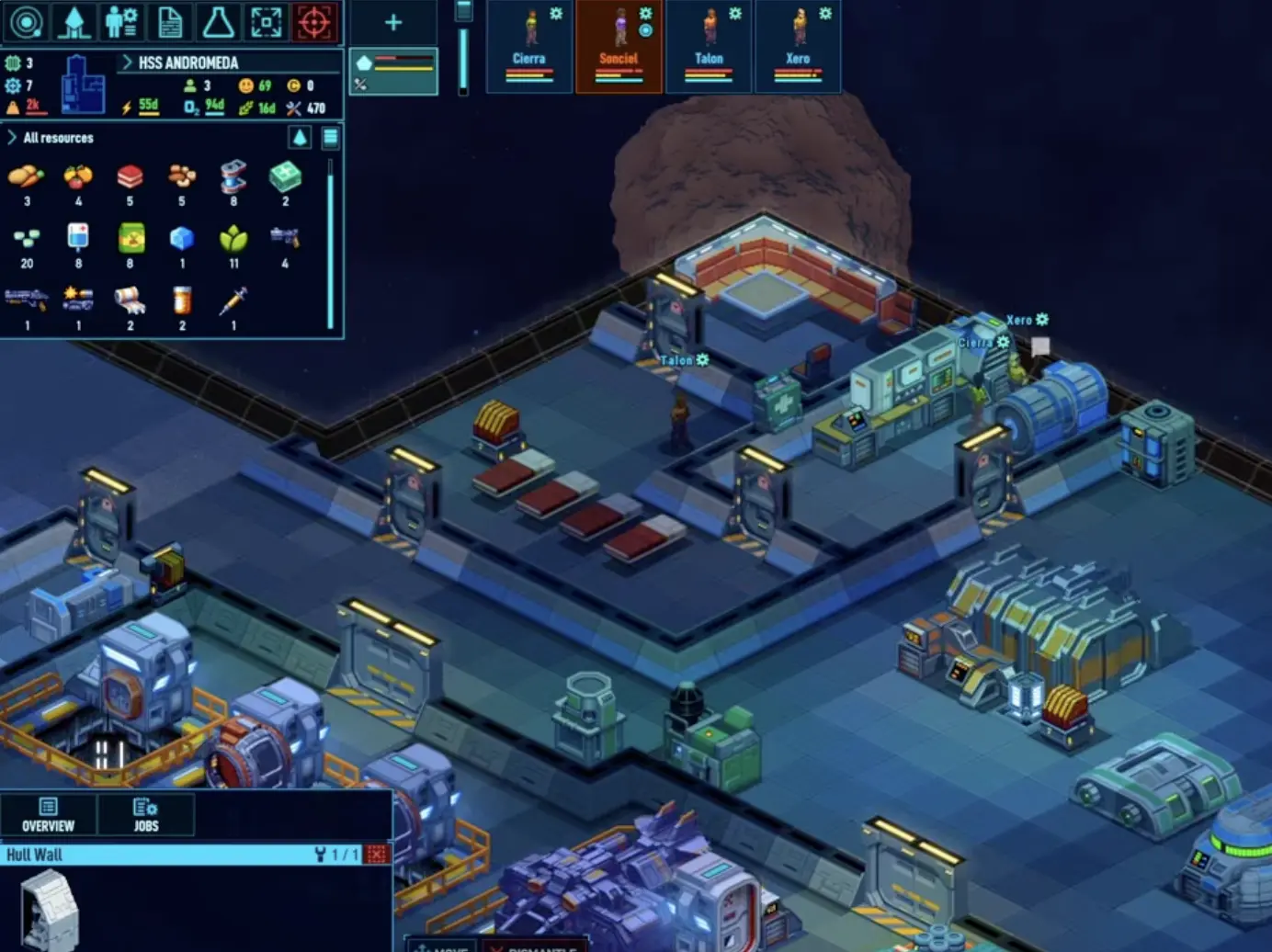
The early loop looks like this:
| Step | Result |
|---|---|
| Explore or salvage derelict | Get scrap. |
| Bring scrap to storage | Crew or logistics moves it. |
| Recycler processes scrap | Scrap becomes usable materials. |
| Use materials | Build hull, facilities, blocks, and repairs. |
Common scrap conversions include:
The Recycler does not make every scrap equally important. In the first week, use it to solve your current bottleneck instead of processing everything just because it exists.
Prioritize Recycler output like this:
| Priority | What to secure first | Why it matters |
|---|---|---|
| 1 | Infra Blocks | Many early facilities and utility systems depend on them. Running out slows the whole ship. |
| 2 | Hull Blocks / Steel Plates | Needed for expansion, repairs, and hull stability. |
| 3 | Soft Blocks | Useful for room building and comfort expansion, but usually less urgent than utility materials. |
| 4 | Tech / Energy materials | Important later, but do not let early survival stall while chasing future components. |
The simple rule is:
Recycle for the next build you actually need, not for a perfect stockpile.
If oxygen, water, power, or beds are still unstable, do not let the crew spend days processing low-priority scrap.
The Recycler should not be buried far from storage. Place it near your industrial storage so crew do not waste the whole day hauling.
Do Not Over-Salvage the First Sector
New players often lose the early game by trying to strip every derelict and every scrap pile.
That feels efficient, but it can trap your crew in hauling work for days.
The worst offender is bulk low-priority scrap. If your crew spend three days hauling huge piles of low-value material, your ship is not building, cooking, mining, researching, or preparing to jump.
Use this salvage priority:
| Priority | Salvage target |
|---|---|
| 1 | Food, water, medical supplies, weapons, useful blocks. |
| 2 | Energy / power-related resources. |
| 3 | Tech scrap and rare components. |
| 4 | Hull, soft, and infra scrap needed for current builds. |
| 5 | Extra bulk scrap only if crew have spare time. |
The rule is simple:
Salvage what solves your next problem. Do not salvage everything just because it exists.
If your ship is stable and you have idle logistics crew, take more. If oxygen, food, water, temperature, or power is unstable, stop hauling junk and fix the ship.
Day 5: Crew Rooms, Comfort, and Medical
Once the basic loops are working, stop treating the crew like machines.
Crew mood matters. Sleep comfort, leisure, food access, lights, temperature, and injury recovery all affect how reliable your workforce feels.
| Build / improve | Why it matters |
|---|---|
| Proper beds or small bedrooms | Improves sleep comfort. |
| Wall lights | Reduces poor room quality. |
| Dining table / chairs | Gives crew a real place to eat. |
| Small break area | Helps mood and leisure. |
| Medical cabinet | Gives basic treatment support. |
| Cleaner room separation | Keeps industry and greenhouse problems away from living rooms. |
Do not spend all resources on decoration. Add only enough comfort to stop mood collapse and bad sleep from slowing down the whole ship.
If crew are standing around or ignoring tasks, use the Crew Idle Fix Guide.
Day 6-7: Prepare for the First Jump
Your goal is not to live in the first sector forever.
Once the ship is stable, prepare to leave.
| Build / check | Why it matters |
|---|---|
| Navigation Console | Required for travel planning. |
| Hyperdrive / engines | Lets the ship jump. |
| Fuel / hyperfuel / hyperium check | Prevents being stranded. |
| Hull stability | Make sure expansion did not outpace support. |
| Power coverage | Engines and core systems must be supported. |
| Crew readiness | Injured, starving, or exhausted crew should recover before risk. |
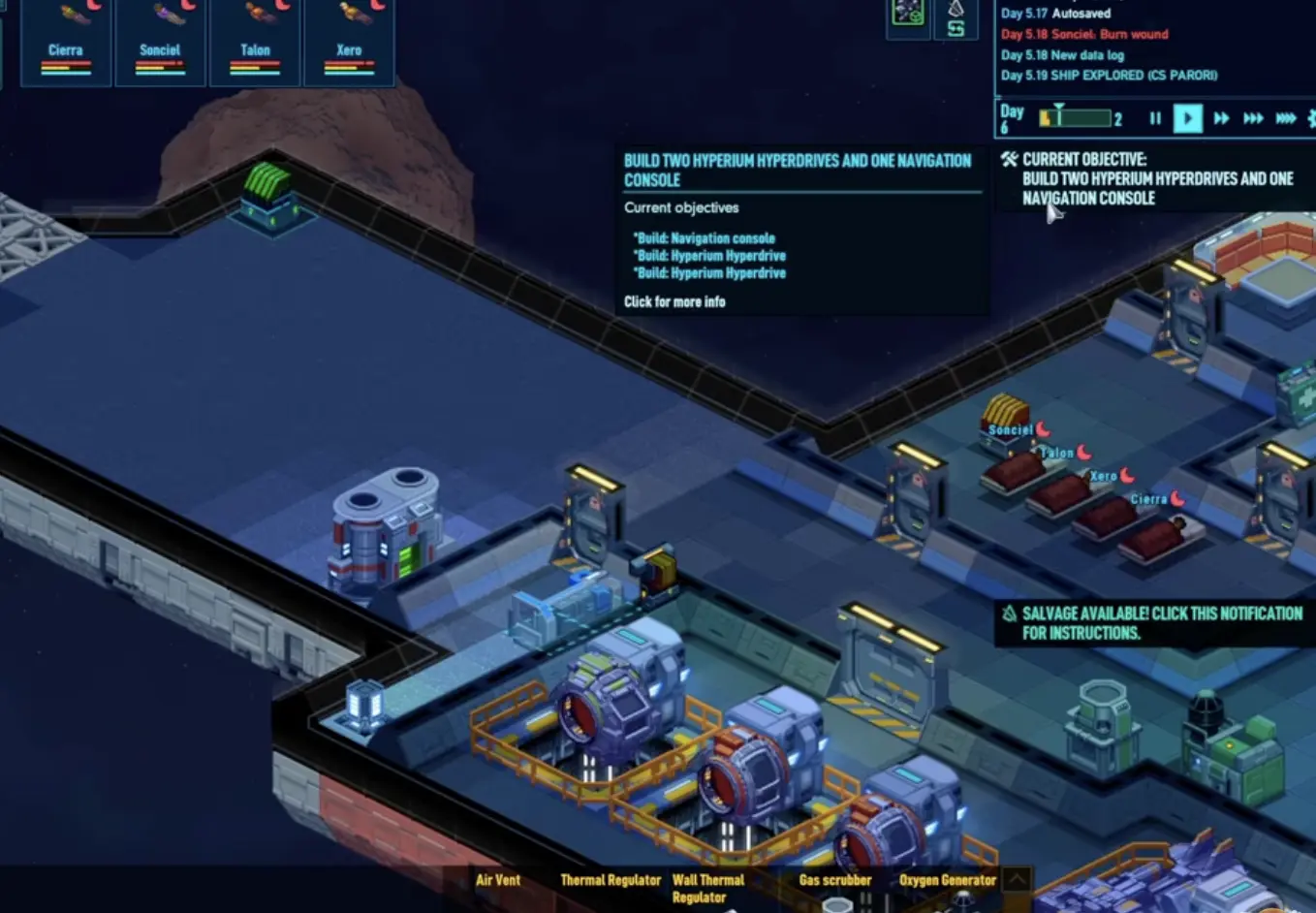
If the first sector has no more useful resources, leave. Do not stay just because some scrap remains. Time, food, water, and crew labor are resources too.
First Sector Priorities
The first sector is not only about ship building. You also need to choose what to do outside the ship.
Use this order:
| Situation | Recommended action |
|---|---|
| Ice asteroid available | Mine enough ice to support water. |
| Fuel resource available | Mine enough to avoid being trapped. |
| Derelict ship nearby | Scout carefully, but do not clear it blindly. |
| Trader arrives | Buy critical water, food, fuel, blocks, or medicine if affordable. |
| Pirate or dangerous enemy appears | Avoid fighting unless you are armed and ready. |
| Scrap piles are huge | Take what you need, leave the rest. |
| Crew are injured or exhausted | Pause external work and recover. |
Should You Board the First Derelict?
Only if the ship is stable enough.
Before boarding, check:
| Requirement | Why |
|---|---|
| Crew have weapons | Unarmed boarding can spiral fast. |
| Oxygen / food / water are stable | Your main ship should not collapse while the away team is gone. |
| Medical support exists | Injuries need recovery. |
| Shuttle and storage are ready | Loot needs a way back. |
| You know when to retreat | Clearing everything is optional. |
The first derelict is a resource opportunity, not a mandatory dungeon.
Hull Breach and Early Crisis Response
Hull breaches, fire, smoke, and bad gas can destroy an early run because your ship is still small and crew roles are not specialized.
When something breaks, stop building new rooms and fix the crisis first.
| Crisis | First response |
|---|---|
| Hull breach | Pause, locate the leak, draft only if needed, repair or seal the area. |
| Room losing oxygen | Close doors if possible, check life support, repair hull. |
| Fire | Isolate the room, stop spread, avoid sending unprepared crew into danger. |
| Smoke / hazardous gas | Use scrubbers, vents, room separation, and safe access. |
| Temperature failure | Add thermal support or shrink/split the affected room. |
| Power failure | Check generator fuel, power node coverage, and logistics. |
Do not let the whole crew run through a dangerous room. A small breach is manageable. A crew panic chain is worse.
Research Priorities
Do not treat research as a race to flashy combat tech.
In the early game, survival research is usually stronger than weapons research unless you are already being forced into combat.
Use this order as a practical priority list:
| Priority | Research direction | Why it matters |
|---|---|---|
| 1 | Botany / food stability | Gets you away from emergency food and reduces starvation risk. |
| 2 | Nutrition / better meals | Helps mood and prevents long-term food problems. |
| 3 | Water / waste / resource processing | Supports farming, algae, and survival loops. |
| 4 | Energy production / refinement | Prevents blackout and reduces panic fuel dependence. |
| 5 | Manufacturing / electronics / optronics | Lets you make the parts needed for expansion. |
| 6 | Medical support | Keeps injured crew from becoming dead weight. |
| 7 | Weapons / shields | Important, but can often wait until survival loops are stable. |
If pirates or hostile ships appear early, change the order. Fighting with no weapons is bad, but rushing combat while your crew starves is also bad.
A safe beginner rule:
Research what removes the next survival bottleneck.
Common Early Game Mistakes
| Mistake | Why it hurts | Fix |
|---|---|---|
| Expanding hull before utilities | More space means more oxygen, heat, power, and walking problems. | Build only the rooms you need. |
| Spamming Power Nodes everywhere | Wastes resources in 1.0. | Add nodes only where systems need them. |
| Delaying Recycler | You run out of usable building materials. | Build Recycler early after survival basics. |
| Salvaging every scrap pile | Crew waste days hauling low-priority material. | Salvage for your next problem. |
| Ignoring thermal load | Regulators struggle and rooms drift out of comfort range. | Split rooms and add thermal support. |
| Staying too long in first sector | Food, water, and fuel burn while crew haul junk. | Jump when the sector stops helping you. |
| Boarding too early | Injuries and deaths can end the run. | Stabilize ship and arm crew first. |
| Ignoring storage routes | Crew walk more than they work. | Put storage near airlock, kitchen, and industry. |
FAQ
What should I build first in Space Haven 1.0?
Build or check tools, oxygen, gas scrubber, thermal regulators, beds, toilet, storage, and basic food. Then move into water, Recycler, and first jump preparation.
Is Recycler really needed early?
Yes. The Recycler turns salvage scrap into usable building materials. Without it, early salvage does not fully solve your construction bottleneck.
Do I need Power Nodes everywhere?
No. Do not follow old guides that blanket the whole ship with Power Nodes. In 1.0, use nodes where the facility or system actually needs the grid connection, especially production, manufacturing, engines, and combat systems.
Should I salvage the entire first derelict?
Usually no. Take what helps your next survival problem. Do not spend days hauling low-priority bulk scrap while food, water, power, or temperature is unstable.
What should I mine first?
Mine ice if water is a concern. Then prioritize fuel/power resources and the raw materials you need for your next build or jump.
Should I expand my ship on Day 1?
Only a little. Expand enough to fit survival rooms, but do not build a huge hull before life support, water, power, and storage are stable.
What should Mining Station start do differently?
Use the same survival order, but plan more before building. See the Ship Start vs Mining Station Start section above.
What should I do if a hull breach happens?
Stop expansion and fix the emergency first. See the Hull Breach and Early Crisis Response section above.
Continue Reading in the Space Haven Guide Cluster
This article is part of our Space Haven strategy cluster. Use these guides to keep learning the game's core systems and routes.
Crew standing around in Space Haven 1.0? Use our troubleshooting guide to fix idle crew, correct work priorities, and resolve broken logistics fast.
Power GuideFix Space Haven Blackouts: 1.0 Power & Threshold GuideRunning out of power in Space Haven 1.0? Learn how to fix blackouts, set generator threshold links, manage power nodes, and produce energy rods.
Survival GuideSpace Haven Food and Water Guide: Algae, Ice, Grow BedsFix Space Haven food and water problems with algae, ice, grow beds, balanced meals, fertilizer, nutrient deficiency, and early farming tips.
Layout GuideSpace Haven Ship Layout Guide: Starter Tube and BlocksBuild a safer Space Haven ship with starter tube and mid-game block layouts, storage routes, industry rooms, greenhouse separation, and defense tips.