Rune Dice Guide
Rune Dice Rogue Build: Best Dice & Relics
Build a stronger Rune Dice Rogue with John Wickblade vs Romeo Deathbrew tips. Master Dodge stacks, Phantom Strike, best dice, runes, and relics to win.
The Rogue is one of the safest early classes in Rune Dice because it can defend itself while still dealing flexible damage. A good Rogue run does not need a perfect damage combo every turn. It needs steady Dodge access, one reliable damage plan, and enough board control to survive bad boss turns.
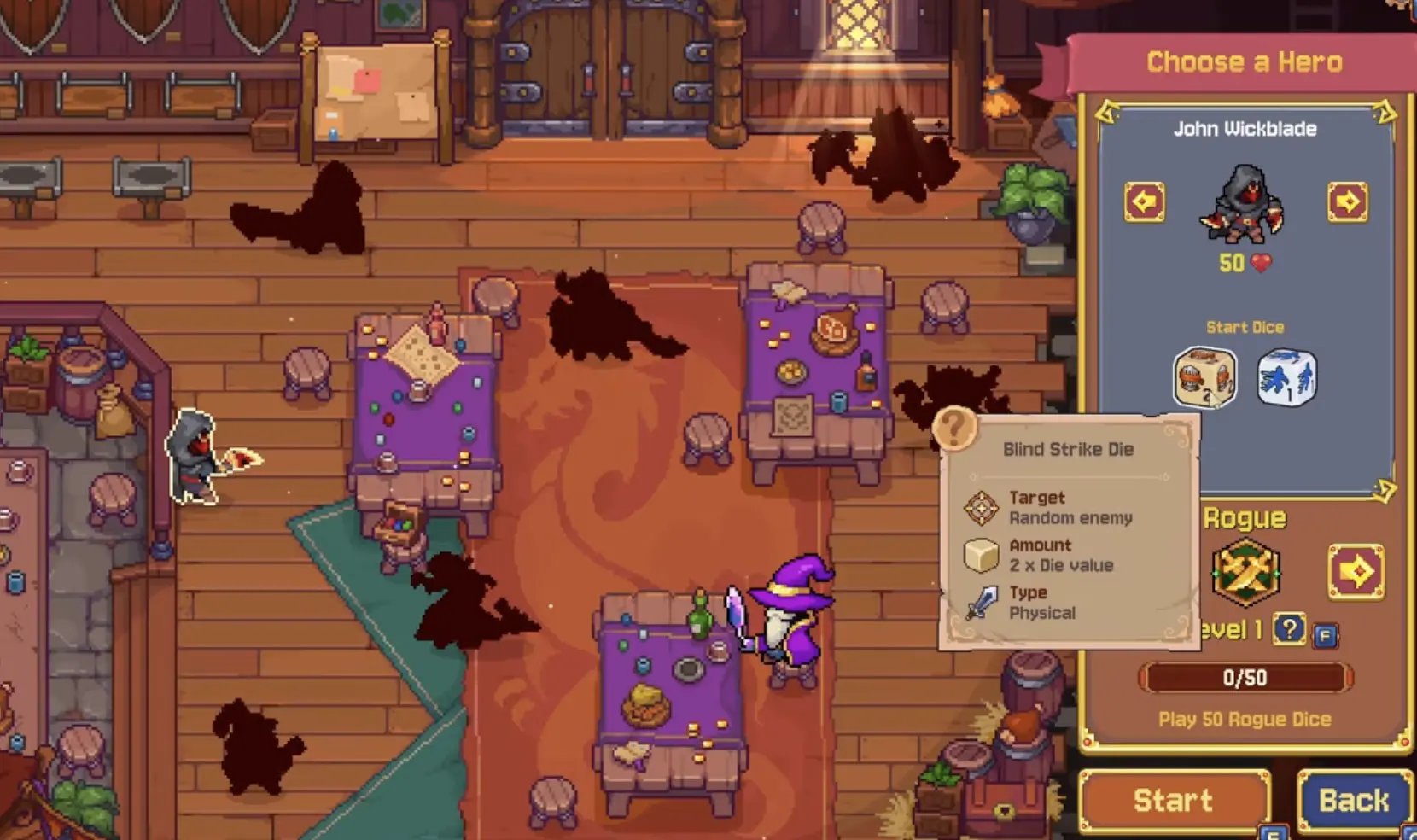
The best beginner Rogue setup is John Wickblade, because Blind Strike gives immediate damage while Dodge gives you a way to avoid physical pressure. Poison-focused Rogue starts can be strong later, but they need more time and more support before they feel safe.
This guide explains John Wickblade vs Romeo Deathbrew, the best Rogue dice, how Dodge stacks actually work, when to keep low-value Dodge dice, which relics matter most, and how to turn Phantom Strike into a real damage plan.
For general mechanics, read the Rune Dice Beginner Guide.
For advanced merge setups, read the Rune Dice Chain Merge Guide.
For class and variant progression, read the Rune Dice Class Unlock Guide.
Fast Answer
| Rogue decision | Best choice |
|---|---|
| Best beginner Rogue variant | John Wickblade |
| Best early plan | Keep Dodge easy to merge while adding Blind Strike, Bomb, or Backstab damage |
| Best Rogue damage core | Blind Strike + Bomb / Backstab |
| Best long-fight option | Poison, but only after you have enough defense |
| Best defensive tool | Dodge Die |
| Best Rogue relic example | Phantom Strike |
| Best shop buys | Phantom Strike, Dodge, Blind Strike, Bomb, Backstab, defensive runes |
| Biggest mistake | Turning the build into too many unrelated dice |
| Boss priority | Save Dodge, Weakness, Protection, Shuffle, or Gravity for bad turns |
The safest Rogue build is Dodge + Blind Strike + Bomb or Backstab. Add Poison when your defense is already stable.
John Wickblade vs Romeo Deathbrew
Rogue has character variants, and those variants can change your starting dice. That matters more than it looks. A Rogue variant with Dodge plays very differently from a Rogue variant focused mainly on poison or backstab damage.
| Rogue variant | Starting focus | Best for | Beginner verdict |
|---|---|---|---|
| John Wickblade | Blind Strike + Dodge | First clears, boss learning, safer early fights | Best first Rogue pick |
| Romeo Deathbrew | Poison-focused Rogue play | Longer fights, status damage, progression testing | Strong later, less forgiving early |
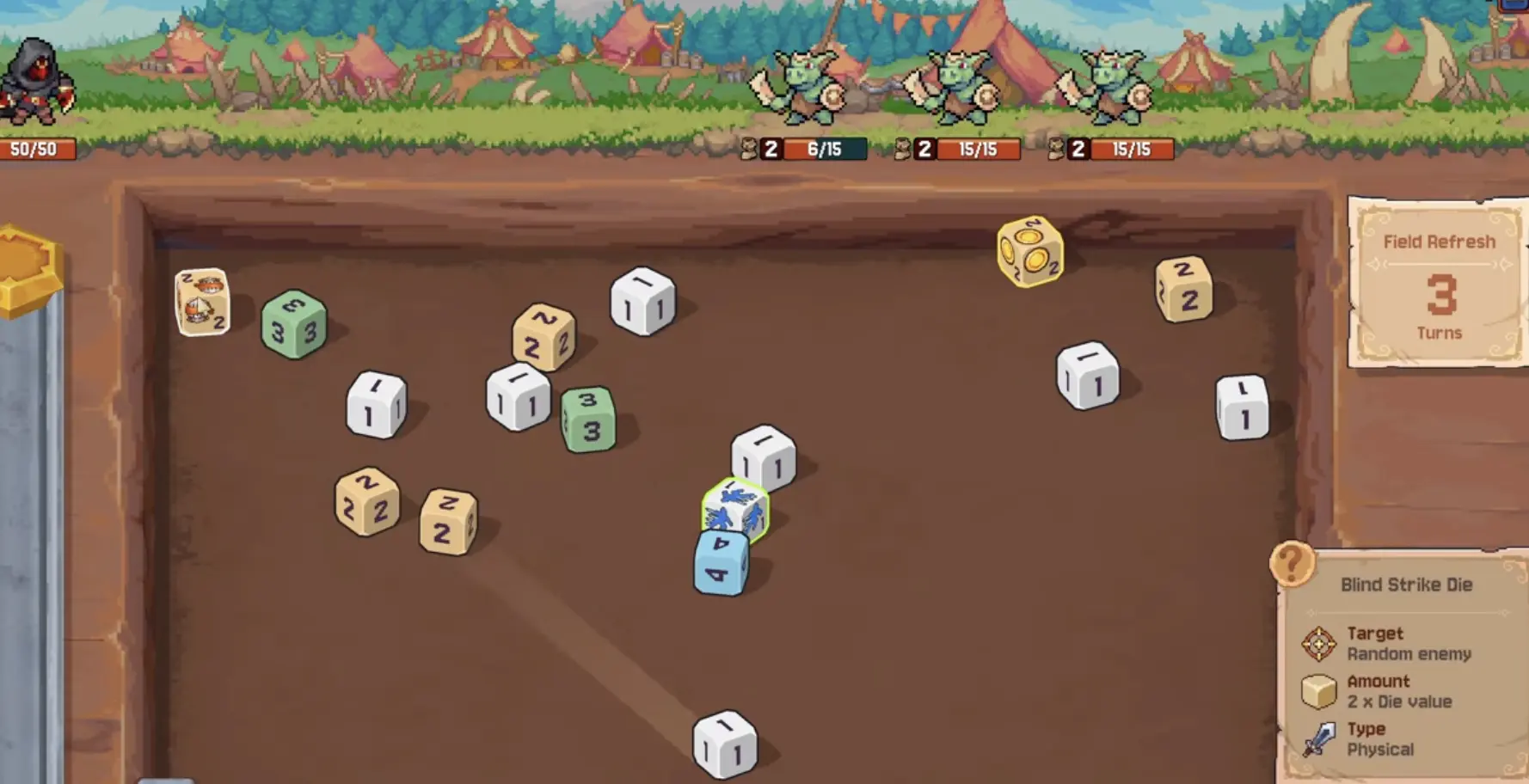
John Wickblade is the better beginner pick because his starting tools solve two problems at once. Blind Strike hits a random enemy for double die value, so it gives you damage without needing perfect target access. Dodge gives one Dodge stack when merged, which can block physical damage and buy another turn.
Romeo Deathbrew is more appealing once you want a poison-focused run. Poison can become excellent in longer fights, especially if you find support that keeps poison from falling off or helps you survive while the stacks tick. The problem is that poison does not always save you immediately. If enemies are already attacking and your board has no defense, poison may be too slow.
Use this rule:
| If you want… | Pick |
|---|---|
| Safest first Rogue clear | John Wickblade |
| Better boss learning | John Wickblade |
| More status damage | Romeo Deathbrew |
| A poison-focused challenge run | Romeo Deathbrew |
| A reliable beginner build | John Wickblade |
Rogue variants can unlock or improve as you progress. If you want more Rogue starts, keep using Rogue and merge Rogue class dice often. For broader progression, use the Class Unlock Guide.
Rogue Build Overview
Rogue is strong because it can survive while still pushing damage.
Your early Rogue plan should usually be:
- keep Dodge available
- take one strong damage die
- add AoE or backline reach
- save one defensive or board-fixing rune
- avoid filling the board with rewards that do not support the plan
| Tool | Role |
|---|---|
| Blind Strike | Random-target burst damage, usually 2x die value |
| Dodge | Blocks physical damage by giving Dodge stacks on merge |
| Backstab | Hits the last enemy, useful against backline threats |
| Poison | Adds damage over time for longer fights |
| Bomb | Deals AoE damage and clears crowded boards |
| Healing | Stabilizes after risky battles or bad boards |
Rogue feels forgiving, but it is not automatic. If you ignore enemy intent or spend every rune before a boss, Dodge will not save the run by itself.
Best Dice for Rogue
Rogue does not need every die. The best dice either keep you alive or solve a board problem.
| Dice | Priority | Why it is good |
|---|---|---|
| Dodge Die | Very high | Keeps Rogue alive against physical attacks |
| Blind Strike Die | Very high | Random-target damage that scales well with die value |
| Bomb Die | High | Clears multiple enemies and helps against summons |
| Backstab Die | High | Targets the last enemy and reaches dangerous backliners |
| Poison Die | Medium-high | Strong in longer fights if you have enough defense |
| Healing Die | Medium | Helps recover before bosses |
| Coin Die | Medium | Fuels shops and lets Rogue buy important relics |
| Basic damage dice | Low-medium | Useful only if they help chain into better dice |
A strong Rogue board usually has one defensive lane and one damage lane. If all your rewards are damage, the run becomes fragile. If all your rewards are defensive, boss fights drag too long.
Dodge Is Your Core Defense
Dodge is the main reason Rogue is beginner-friendly. When enemies are about to attack, a Dodge merge can prevent damage and keep the run stable.
Use Dodge when:
- ranged enemies are firing this turn
- a mini boss is about to hit
- you are low on HP
- you need time for Poison or Bomb to finish enemies
- the board is bad and you cannot end the fight immediately
Do not waste Dodge when enemies are only moving or reloading. If nothing dangerous is attacking this turn, use your shot to set up damage, collect coins, or improve the board.
Should You Merge Dodge Dice?
Do not blindly merge every Dodge die upward.
The key point is that a normal Dodge merge gives one Dodge stack per merge. That means a value 2 Dodge die does not automatically give two Dodge stacks just because its number is higher. If you have several easy low-value Dodge matches, they may be more useful than one high-value Dodge die that is hard to trigger.
| Dodge situation | Best choice |
|---|---|
| Enemies are attacking now | Take the easiest Dodge merge |
| You have several low-value Dodge dice | Keep them if they create frequent matches |
| One high-value Dodge die is hard to reach | Do not rely on it as your only defense |
| You have a relic that rewards value 3+ Dodge merges | Higher-value Dodge becomes more attractive |
| Boss is coming soon | Keep at least one easy Dodge merge available |
The exception is when you find a relic or upgrade that specifically rewards higher-value Dodge merges. For example, if an effect gives an extra Dodge stack when merging a value 3 or higher Dodge die, then building toward a larger Dodge die becomes more valuable.
The practical rule is simple: merge Dodge for access first, value second.
Blind Strike Is Your Reliable Damage
Blind Strike is one of Rogue’s best early damage tools because it does not need perfect enemy targeting. It can hit random enemies for double die value, which makes it useful when the board is messy or the front enemy is blocking the back line.
Blind Strike gets better when:
- you upgrade its value
- you can chain it into higher-value merges
- enemies are already weakened
- the fight has several low-HP enemies
- you have relics that improve direct attacks
- you find a version that also grants Dodge
The downside is randomness. If you must kill one specific enemy this turn, Blind Strike is not always reliable unless the odds are safe.
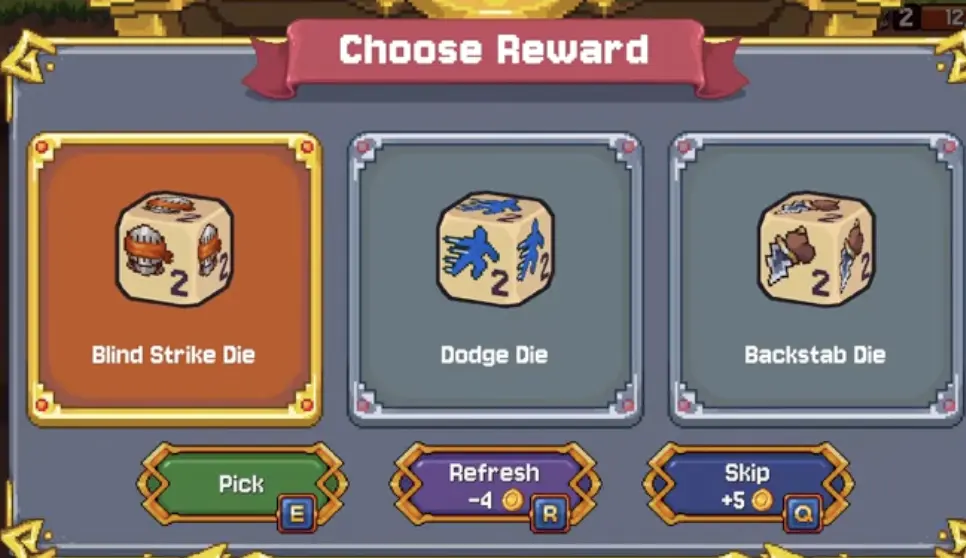
Bomb and Backstab Give Rogue Better Clear
Rogue can struggle if the enemy side becomes crowded. Bomb and Backstab help solve that problem in different ways.
Bomb is the safer general pick. It damages all enemies, clears summons, and helps when several enemies are preparing attacks.
Backstab is better when important targets sit behind the front line. It targets the last enemy and becomes much stronger if you find relics that improve backstab damage.
Use this rule:
| Situation | Better pick |
|---|---|
| Too many enemies | Bomb |
| Dangerous backline enemy | Backstab |
| Boss with summons | Bomb first, Backstab second |
| Need safer defense | Dodge |
| Need long-fight damage | Poison |
| Already have enough damage | Healing, rune, or economy |
Poison Rogue Strategy
Poison is strong, but it needs time.
Take Poison when:
- you already have Dodge or healing
- bosses are lasting too long
- you need damage that keeps working after the merge
- your build lacks single-target pressure
- the poison die appears at a useful value
A Poison value increase can be more important than it looks. If poison ticks down over turns, moving from value 2 to value 3 is not just one extra damage. It can mean a bigger total stack over multiple turns. That makes poison upgrades strong in long fights, especially once you can survive the early pressure.
Avoid overcommitting to Poison if you are dying before it matters. The best Poison Rogue setup is usually Poison + Dodge + Bomb or Blind Strike, not pure Poison.
Best Runes for Rogue
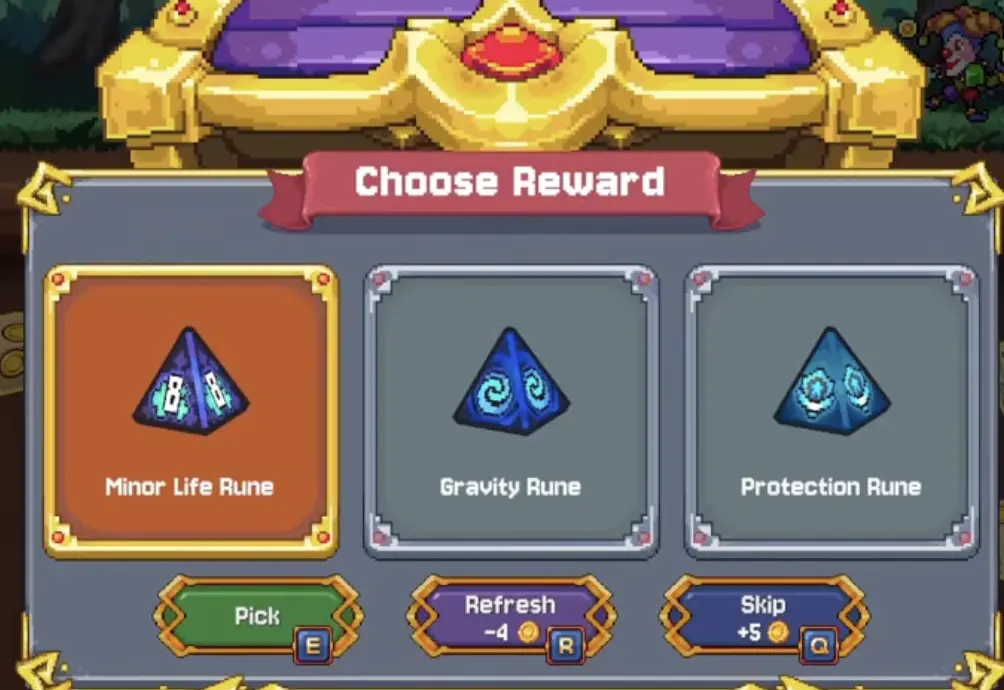
Rogue wants runes that either protect HP or fix bad boards.
| Rune | Priority | Best use |
|---|---|---|
| Protection Rune | Very high | Blocks a dangerous enemy turn or boss hit |
| Weakness Rune | Very high | Reduces incoming damage when multiple enemies attack |
| Gravity Rune | High | Pulls dice together for big Rogue merges |
| Shuffle Rune | High | Saves you from a bad board |
| Minor Life Rune | Medium-high | Restores HP before a boss or after a bad fight |
| Treasure-style Rune | Medium | Good when you are stable and want more rewards |
Do not use your best rune just to make an easy normal battle slightly faster. Rogue already has enough flexible damage for normal fights. Save runes for turns where they prevent real damage or create a major chain.
Best Relics for Rogue
The best Rogue relics are the ones that reward frequent merging, Dodge stacks, direct attacks, or shop scaling.
| Relic | Why Rogue likes it |
|---|---|
| Phantom Strike | Direct attacks gain +1 damage for each Dodge stack you currently have |
| Assassinate | Backstab die deals double damage |
| Dice Factory | Creates more dice over time, giving Rogue more merge options |
| Mercy Roll | Gives an extra throw if you fail to merge once per turn |
| Healing Coins | Lets coin dice heal for their merge value |
| Battle Aegis | Gives shields when entering combat |
| Personal Scales | Makes shop items cheaper, helping Rogue buy more key pieces |
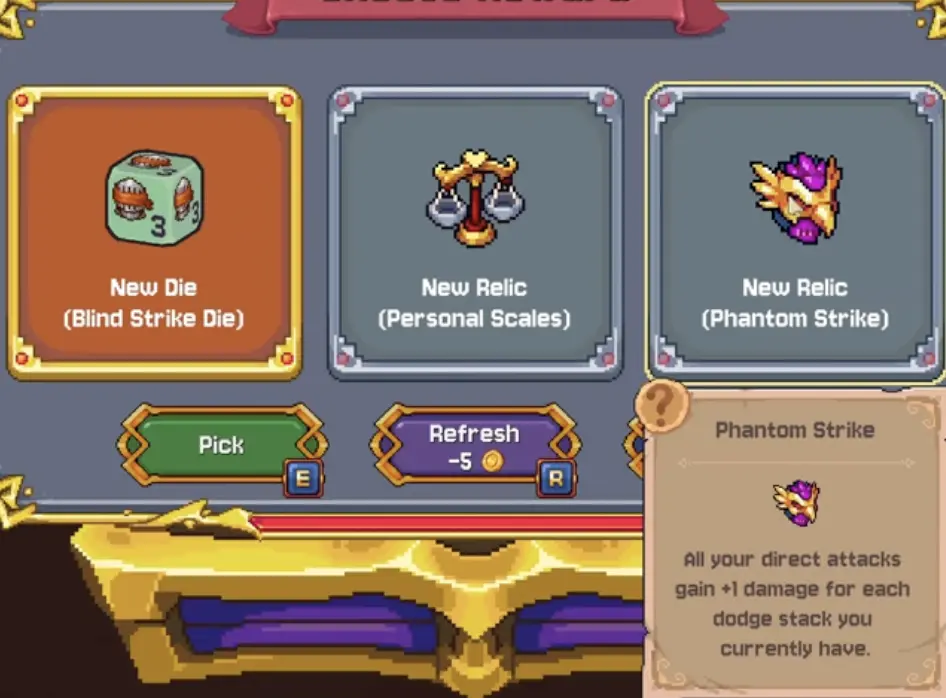
Phantom Strike is the clearest Rogue synergy. If your run is already stacking Dodge, Phantom Strike turns defense into damage by making direct attacks hit harder for each Dodge stack you currently have. This is exactly what Rogue wants: a relic that rewards the same behavior you already needed for survival.
Assassinate is strong if your run has Backstab. Dice Factory and Mercy Roll are strong because Rogue wants frequent merges and hates wasting turns. Healing Coins is good when your build already includes coin dice, because it turns economy into sustain.
Best Shop Priorities for Rogue
In shops, do not spend all your money on random dice just because they look interesting. Buy upgrades that solve your current problem.
| If your run needs… | Buy this |
|---|---|
| More defense | Dodge die, Protection Rune, Weakness Rune |
| More AoE | Bomb die or AoE support relic |
| More boss damage | Blind Strike, Poison, Backstab upgrade |
| More consistency | Mercy Roll, Dice Factory, Shuffle, Gravity |
| More scaling | Phantom Strike, Assassinate, direct-attack relics |
| More recovery | Healing die, Minor Life Rune, Healing Coins |
| Better future shops | Personal Scales or other discount effects |
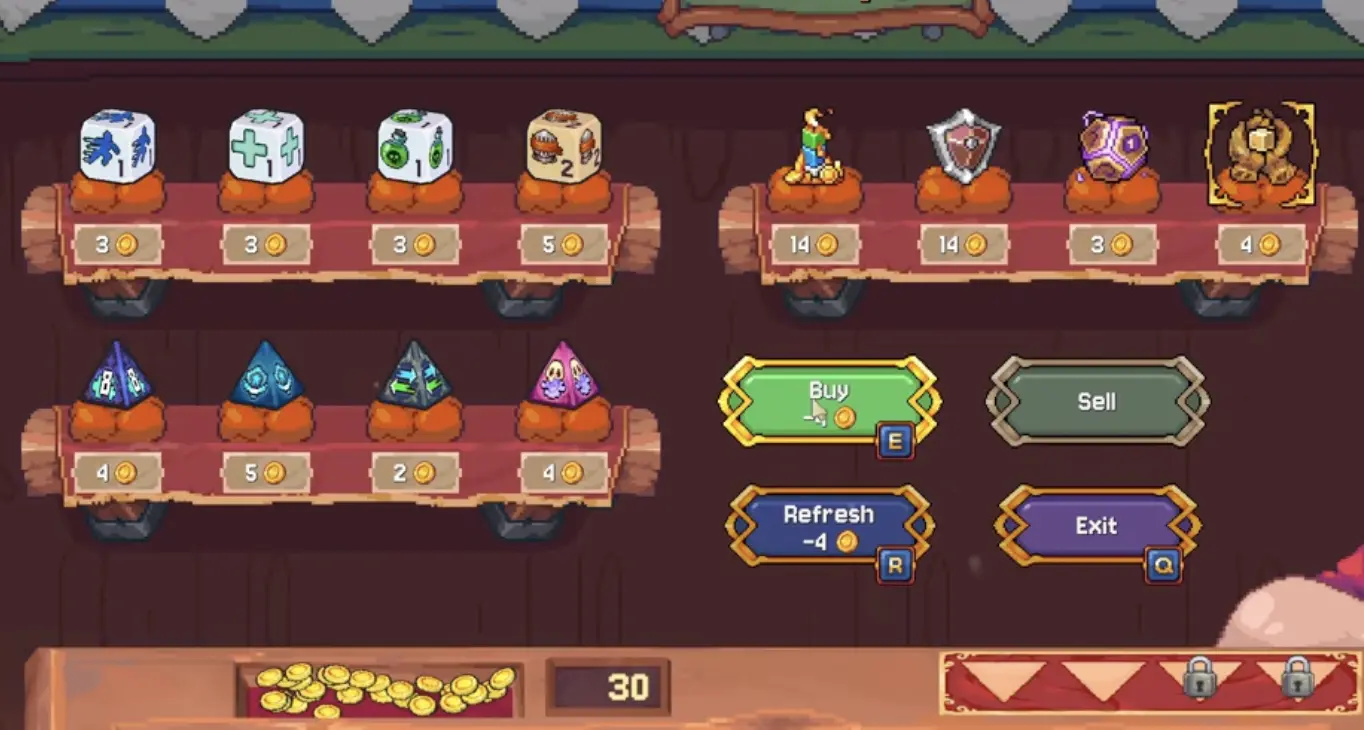
A good shop can decide the run. If you have enough coins, prioritize relics first, then dice that support your main plan, then runes that protect you before the boss.
Rogue Early Game Strategy
In the early game, your job is to build a stable base.
Focus on:
- merging every turn if possible
- collecting coin dice when safe
- taking one strong damage option
- adding Dodge or healing before risky nodes
- avoiding reward bloat
- upgrading the die you actually use most
Early Rogue does not need to take every tough battle. Tough battles can give better rewards, but they are only worth it if you can leave with enough HP and runes for the next fight.
Good early picks:
| Pick | Why |
|---|---|
| Dodge | Prevents unnecessary HP loss |
| Bomb | Clears multiple enemies |
| Blind Strike | Strong burst damage |
| Poison | Helps against tougher enemies |
| Coin dice | Gives shop power |
| Healing die | Lets you take riskier routes later |
Bad early habits:
- taking three different damage plans at once
- ignoring coin dice completely
- using defensive runes in easy fights
- taking a mini boss while low on HP
- upgrading a die that does not fit the build
Rogue Mid Game Strategy
In the mid game, enemy pressure increases and reward choices matter more.
Your priorities should shift toward:
- keeping Dodge easy to trigger
- upgrading your best damage die
- adding one board-fixing rune
- buying a relic that scales
- preparing for boss mechanics
If you already have Bomb, do not force another AoE option unless the enemy side is constantly crowded. If you already have good defense, look for boss damage. If you already have strong damage, buy protection or healing.
The best Rogue mid game runs feel balanced. You should not be only defensive, and you should not be only damage.
Rogue Boss Strategy
Boss fights are where Rogue players often lose because they keep playing like every turn is a normal fight.
Before the boss, try to have:
- one defensive rune
- one healing or shield option
- upgraded Dodge or Blind Strike
- at least one AoE or backline solution
- enough HP to survive a bad board
- a plan for enemy dice
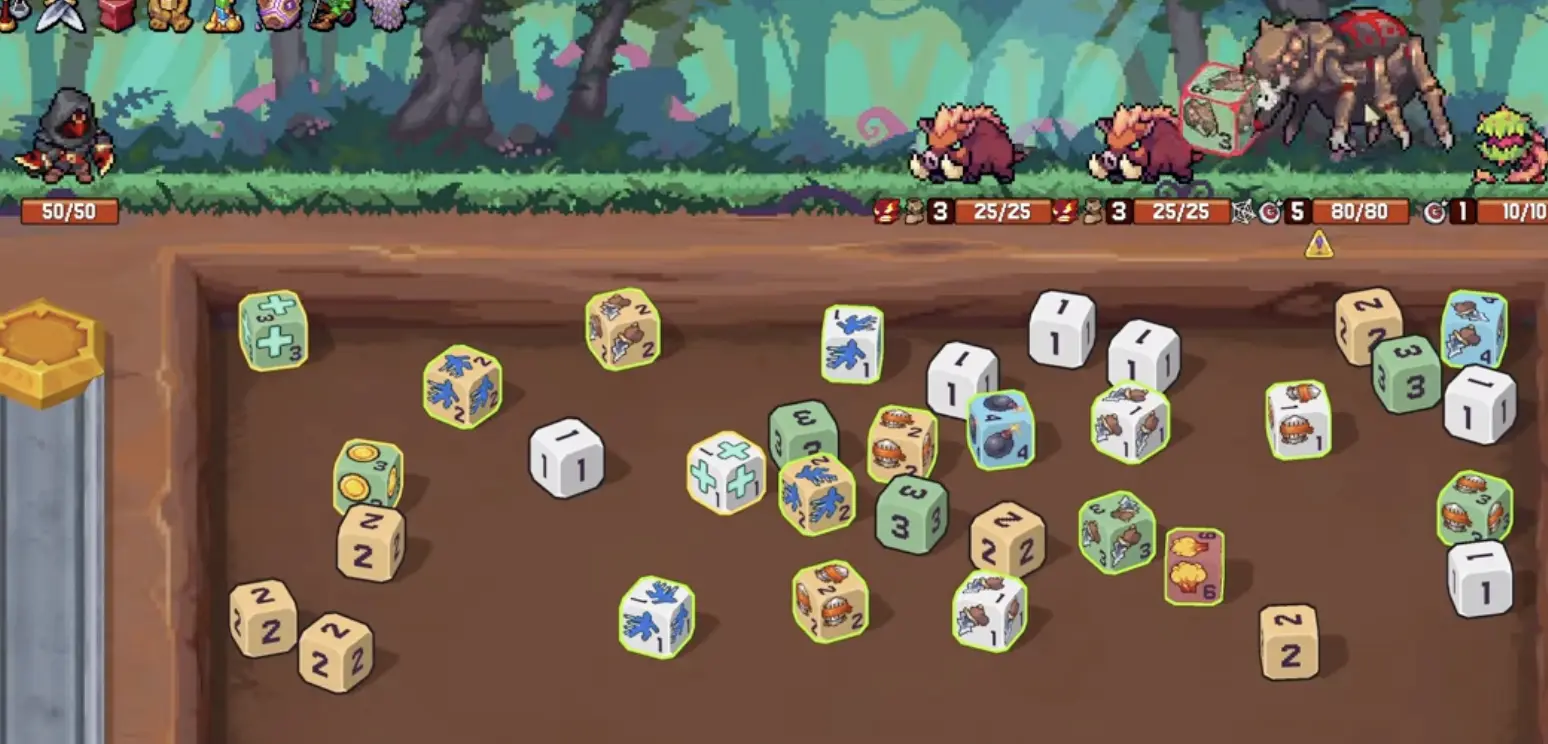
During the boss:
- check enemy dice before shooting
- avoid merging dice that strengthen the boss unless the payoff is worth it
- use Weakness before multiple attacks
- use Protection before big physical damage
- use Gravity or Shuffle when the board has no safe merge
- do not chase a huge combo if you need Dodge now
- clear summons before they clog the fight
Rogue can survive a lot, but only if you play around enemy intent. If several enemies are attacking, a small Dodge merge can be better than a big damage idea that might miss.
Common Rogue Mistakes
| Mistake | Why it hurts |
|---|---|
| Taking every Rogue-looking die | Makes your board unfocused |
| Merging every Dodge die upward | Can reduce easy Dodge match opportunities |
| Ignoring Dodge until too late | Causes avoidable HP loss |
| Taking Poison without defense | Poison needs time to work |
| Skipping coins | Makes shops much weaker |
| Using runes in easy fights | Leaves you weak against bosses |
| Fighting mini bosses too early | Burns HP before the build is ready |
| Building only defense | Boss fights last too long and punish you later |
The biggest Rogue mistake is thinking Dodge means you can play recklessly. Dodge is a safety tool, not permission to ignore the board.
Rogue Build Checklist
Before the first boss, your Rogue build should ideally have:
| Question | Good answer |
|---|---|
| Do I have Dodge available? | Yes |
| Do I have reliable damage? | Blind Strike, Bomb, Backstab, or Poison |
| Can I hit multiple enemies? | Bomb or strong chain merges |
| Can I handle backline enemies? | Backstab, Blind Strike, or Poison |
| Do I have a defensive rune saved? | Protection, Weakness, Shuffle, or Gravity |
| Do I have recovery? | Healing die, Minor Life Rune, Healing Coins, or enough HP |
| Did I buy something useful from a shop? | Ideally yes |
| Is my build focused? | Yes |
If most answers are no, take safer nodes and stabilize before forcing a mini boss or boss fight.
FAQ
Is Rogue good for beginners?
Yes. Rogue is one of the safest early classes because Dodge gives you room to make mistakes while Blind Strike, Bomb, Backstab, and Poison provide flexible damage.
Who is the best Rogue character in Rune Dice?
John Wickblade is the best beginner Rogue pick because Blind Strike and Dodge give both damage and defense immediately. Romeo Deathbrew is better if you specifically want a poison-focused run.
Should I merge Dodge dice?
Not always. A normal Dodge merge gives one Dodge stack per merge, so multiple easy Dodge matches can be better than one high-value Dodge die. High-value Dodge becomes better if you have a relic or upgrade that rewards value 3+ Dodge merges.
What is the best Rogue build in Rune Dice?
The safest Rogue build is Dodge plus Blind Strike, with Bomb or Backstab for extra damage. Add Poison if you can survive longer fights.
Is Phantom Strike good for Rogue?
Yes. Phantom Strike is strong on Rogue because direct attacks gain damage for each Dodge stack you currently have, turning your defensive plan into more offense.
Is Assassinate good for Rogue?
Yes, if you are using Backstab. Assassinate doubles Backstab damage, which makes backline targeting much more valuable.
Should I upgrade Dodge or damage first?
If you are taking too much damage, keep Dodge easy to trigger. If you are surviving but fights take too long, upgrade Blind Strike, Bomb, Backstab, or Poison.
Is Poison good on Rogue?
Poison is good when you have enough defense. Do not build only Poison if you are already losing HP too quickly.
Which runes are best for Rogue?
Protection, Weakness, Gravity, and Shuffle are the most useful early Rogue runes. Minor Life is also good when you need recovery.
What should I buy in shops as Rogue?
Prioritize Phantom Strike, Dodge, Blind Strike, Bomb, Backstab, defensive runes, and consistency relics such as Dice Factory or Mercy Roll.
How do I beat bosses as Rogue?
Enter with HP, Dodge, and at least one defensive rune. During the boss, clear dangerous enemy dice, use defense before big attacks, and avoid risky merges when survival matters more.
What should I read next?
Read the Rune Dice Chain Merge Guide if you want bigger combos, the Rune Dice Boss Guide if you are dying near bosses, and the Rune Dice Class Unlock Guide if you want more characters and variants.
Continue Reading in the Rune Dice Guide Cluster
This article is part of our Rune Dice strategy cluster. Use these guides to keep learning the game's core systems and routes.
Master Rune Dice chain merging. Learn push merges, ricochet angles, two-trigger turns, and rune timing to build 8-value dice and trigger massive combos.
Boss GuideRune Dice Boss Guide: How to Survive Boss Fights and Win More RunsLearn how to beat bosses in Rune Dice. Master boss mechanics, rune timing, route choices, and counter webbed dice to survive and win more runs.
ClassesRune Dice Beginner Guide: Tips, Runes & RelicsLearn how to win more runs in Rune Dice. Master dice merging, runes, relics, class choices, map routes, and boss prep with these essential beginner tips.
ClassesRune Dice Best Classes & Beginner Tier ListFind the best early classes in Rune Dice. Discover beginner tier lists, Rogue vs Mage tips, character variants, and Hard Mode picks to dominate your runs.