Game Hub
Rune Dice Beginner Guide: Best Tips, Runes, Relics, and How to Win Runs
Learn how to win more runs in Rune Dice with beginner tips for dice merging, runes, relics, class choices, map routes, boss preparation, and common mistakes.
Rune Dice is easy to understand in the first few fights, but it becomes much harder once enemy dice, field refreshes, boss pressure, and bad board layouts start stacking together.
If you have played Peglin, 2048-style merge games, pinball-like physics games, or roguelite deckbuilders, Rune Dice will feel familiar: you build a run through rewards and map choices, but the fight itself depends on physical dice collisions and chain merges.
The main mistake new players make is treating every shot like a simple match. A good run is not just about combining numbers. It is about setting up future merges, choosing rewards that keep your build alive, saving runes for dangerous turns, and reaching boss fights with enough HP to survive one bad board.
In a normal run, you choose a map node, fight by throwing and merging dice, then improve your build through rewards, shops, runes, relics, altars, and events. The strategy starts with one question before every shot: what happens after this die merges?
This beginner guide explains how to win more runs in Rune Dice, which early rewards are worth taking, how runes and relics work, when to take risky routes, and what to avoid before your first boss clear.
For deeper follow-up guides, read the Rune Dice Rogue Build Guide, Rune Dice Chain Merge Guide, and Rune Dice Boss Guide.
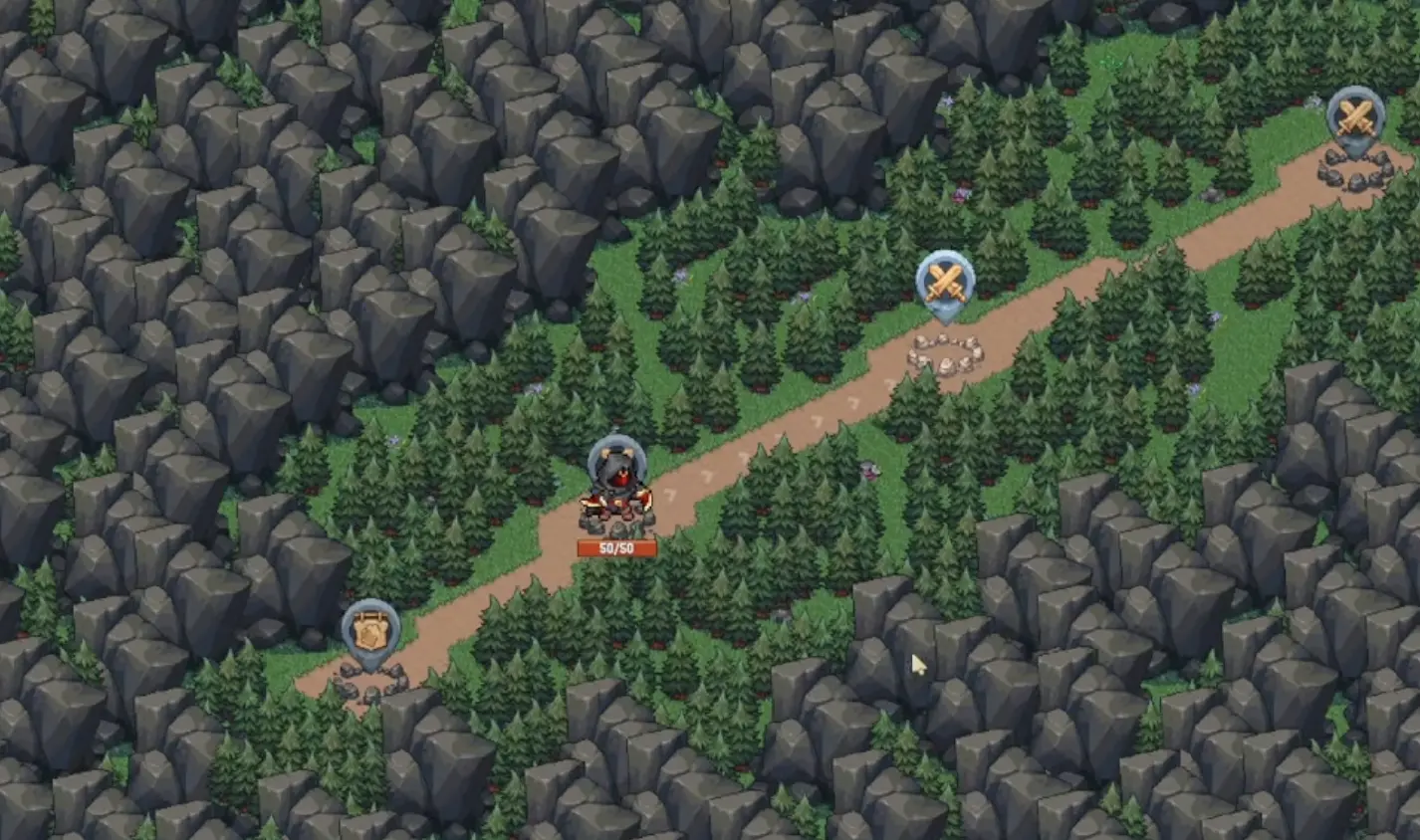
Fast Answer
| If you are struggling with… | Do this first |
|---|---|
| Losing too much HP | Take defensive runes, healing dice, and safer routes before bosses |
| Weak damage | Build higher-value dice instead of grabbing every random reward |
| Bad board layouts | Use walls, ricochets, and other dice to push matching values together |
| Boss fights | Save Protection, Weakness, Gravity, Shuffle, or healing runes |
| Running out of money | Prioritize coin dice early and take tough fights only when stable |
| Too many useless dice | Avoid rewards that do not fit your class or current build |
| Enemy dice causing problems | Clear or avoid enemy dice that move enemies forward or increase damage |
| Not knowing which class to play | Start with Rogue before switching to Mage |
The safest early plan is simple: merge consistently, collect coins, upgrade your best dice, take defensive tools, and enter boss fights with runes saved.
How Dice Merging Works
Dice merge when they hit another die with the same value. After a merge, the die increases in value and can jump toward another matching die.
For example, a value 1 die can merge into another 1, become a 2, then continue into a nearby 2, become a 3, and keep the chain going if the board allows it.
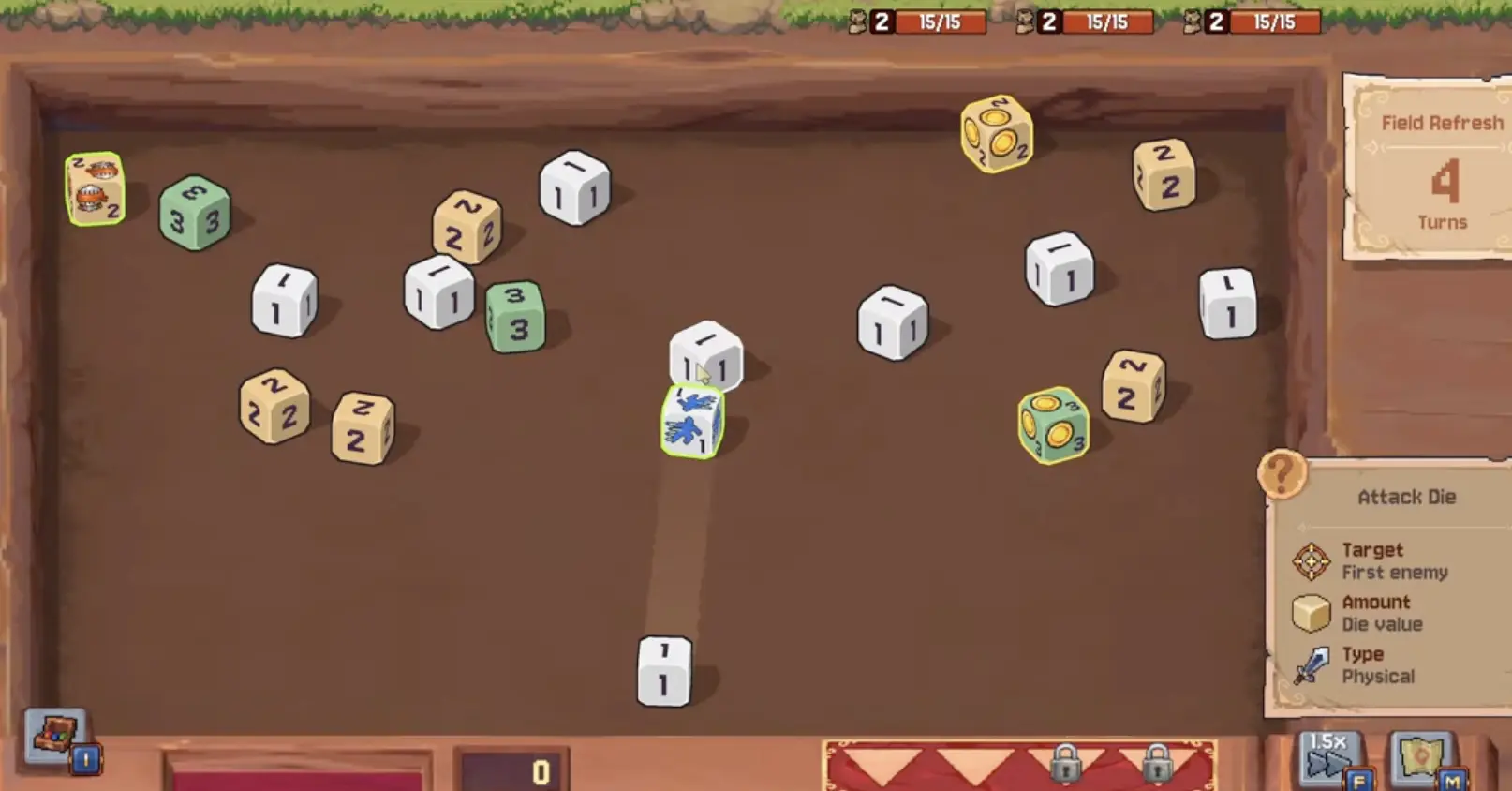
The important part is that your thrown die does not always need to be the one that merges. You can also shoot into another die and push it into a matching value. This is where Rune Dice becomes more tactical than it first looks.
Good merge habits:
- look for chains before taking the obvious match
- use walls to create ricochet angles
- push dice into each other when you cannot reach a match directly
- pay attention to where the upgraded die will travel next
- do not waste a high-value setup right before field refresh
- stop chasing a perfect combo if enemies are about to hit you hard
For advanced setups, read the Rune Dice Chain Merge Guide.
Regular Dice, Special Dice, and Class Dice
Regular dice deal damage equal to their value. Special dice add effects such as poison, coins, healing, dodge, stun, backstab, blind strike, bomb damage, and other class-specific tools.
| Dice type | What it is good for |
|---|---|
| Regular damage dice | Reliable basic damage |
| Coin dice | Early economy and shop power |
| Poison dice | Damage over time, especially useful in longer fights |
| Healing dice | Stabilizing before bosses |
| Dodge dice | Avoiding physical attacks and surviving bad turns |
| Backstab dice | Hitting enemies in the back |
| Blind Strike dice | Strong random-target damage |
| Bomb dice | Clearing multiple enemies |
| Stun dice | Delaying enemy movement or attacks |
| Shield dice | Defensive Warrior-style play |
The best dice are not always the highest-damage dice. Early on, economy and survival often matter more than raw burst. A run with decent damage, coins, and protection usually beats a greedy run that reaches the boss at low HP.
What Is Field Refresh?
Field refresh resets the dice on the board after a set number of turns. This prevents you from building one perfect layout forever.
Field refresh is easy to ignore early, but it matters a lot once you start setting up larger chains. If a refresh is about to happen, do not spend the whole turn preparing a combo that will disappear. Either take the value now or use the turn to grab healing, coins, or defensive value.
Use this rule:
| Field refresh timer | Best decision |
|---|---|
| 3+ turns left | Set up bigger merges if the board is safe |
| 2 turns left | Start converting your setup into value |
| 1 turn left | Take the best immediate merge, coin, heal, or defensive play |
| Refresh just happened | Look for new chain angles before shooting |
A bad refresh can save a messy board, but a bad habit around refreshes can also waste some of your best turns.
Runes vs Relics Explained
Runes and relics are different.
Runes are active tools you use during combat. They can help you survive, fix a board, reposition dice, heal, or weaken enemies. Many runes can be used without spending your normal dice throw, which makes them especially strong during boss fights.
Relics are passive upgrades. They change the way your build works over the whole run, such as improving shops, adding dice, increasing damage, adding shields, or giving extra value from certain effects.
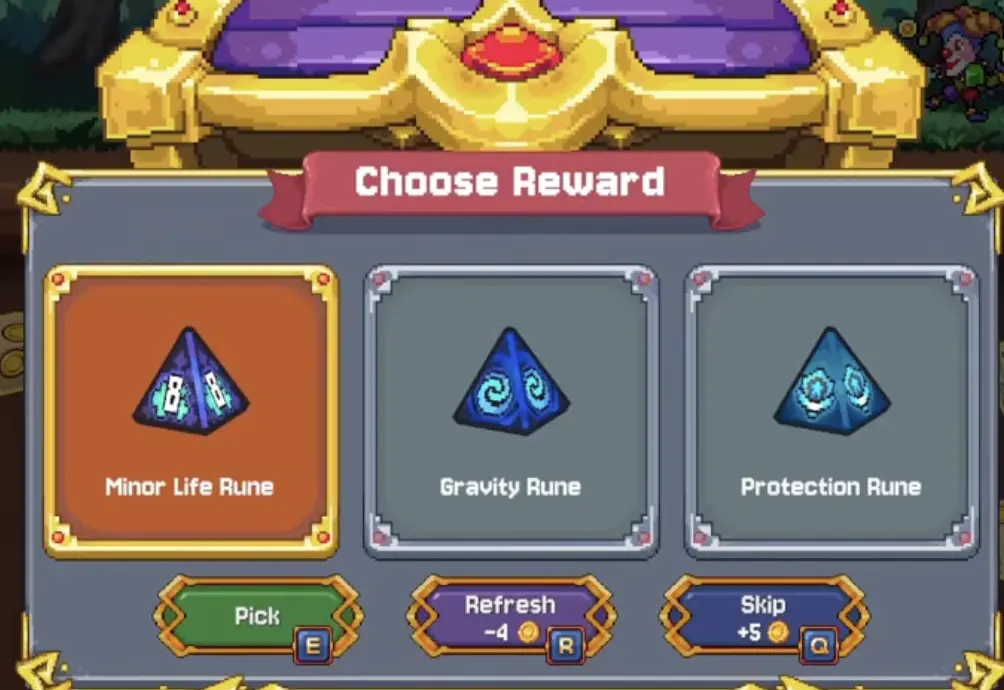
Useful beginner runes include:
| Rune | Best use |
|---|---|
| Gravity Rune | Pull dice together to create merges |
| Protection Rune | Block incoming damage before a dangerous turn |
| Weakness Rune | Reduce enemy attack pressure |
| Shuffle Rune | Fix a bad board by repositioning dice |
| Minor Life Rune | Recover HP before or during a hard fight |
Beginner rule: do not waste runes in easy fights just because they are available. Save at least one defensive or board-fixing rune for bosses, mini bosses, or turns where enemy dice will punish you.
Best Early Rewards to Take
Early rewards should help one of four things:
- damage
- survival
- economy
- consistency
The strongest early rewards usually fall into these categories:
| Reward type | Why it is strong |
|---|---|
| Coin dice | Lets you buy better relics, runes, and dice later |
| Healing dice | Helps you reach bosses safely |
| Bomb or AoE dice | Clears crowded enemy lines |
| Dodge or shield tools | Prevents sudden HP loss |
| Poison dice | Gives steady damage in longer fights |
| Dice Factory-style effects | Adds more merge options over time |
| Shop discount relics | Makes future shops much stronger |
| Extra throw effects | Helps recover from failed merges |
Do not take every reward. A reward that does not help your plan can make the board harder to control. If your build already has enough random damage, a healing die or defensive rune may be better than another flashy attack.
How to Choose Map Routes
Rune Dice maps usually give you different node choices. You may see normal battles, tough battles, mini boss fights, shops, magic altars, chests, jester-style events, and rune-related upgrade opportunities.
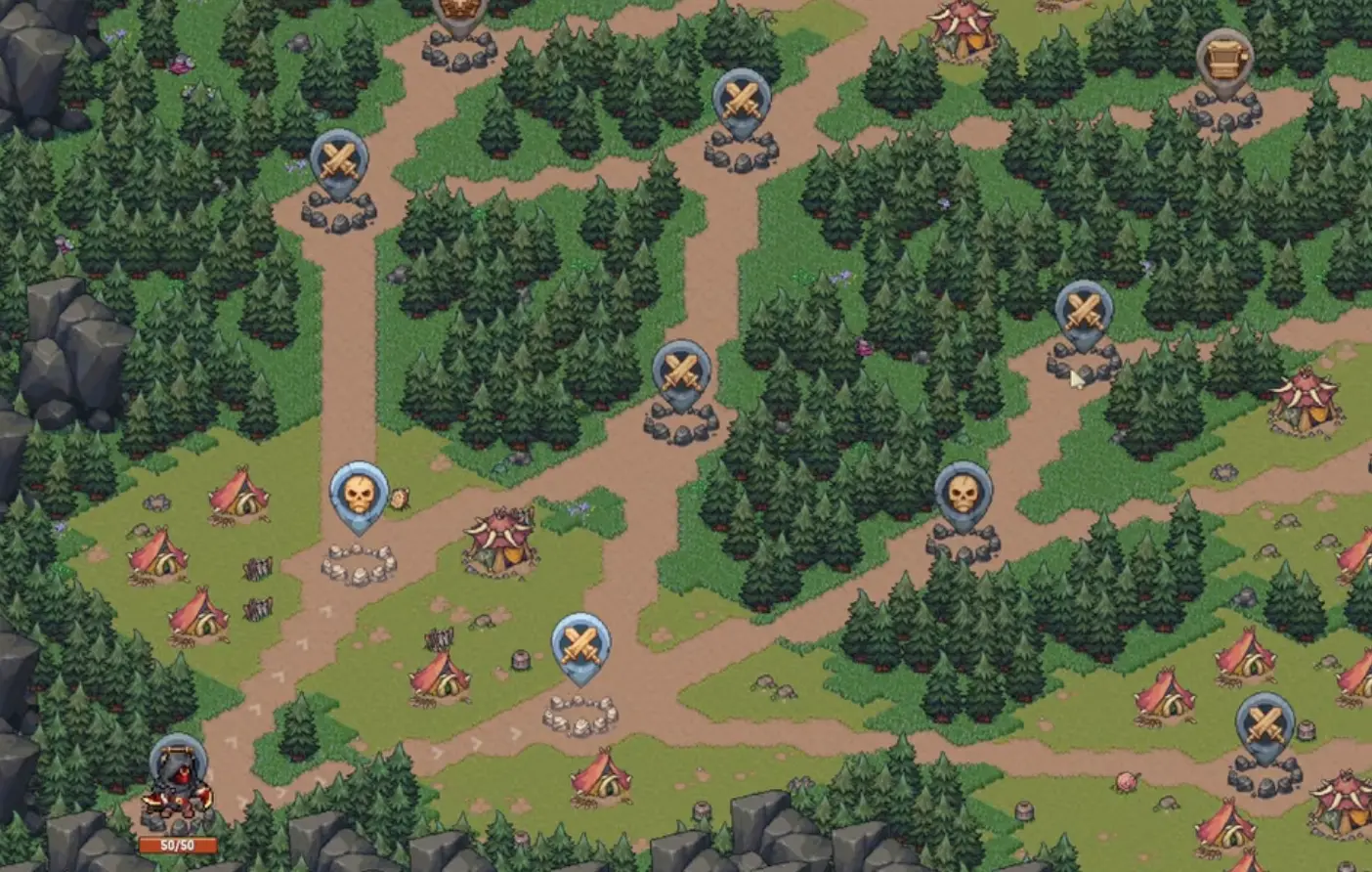
Here is how to think about each node:
| Node type | Take it when… | Avoid it when… |
|---|---|---|
| Normal battle | You need a safe reward or recovery | You are strong and need better rewards |
| Tough battle | You have good HP and want better rewards | Your build is weak or your HP is low |
| Mini boss | You have defensive tools and strong damage | You lack healing or runes |
| Shop | You have enough coins to buy meaningful upgrades | You are broke |
| Magic altar | You have a die worth enhancing and can survive the risk | A failed roll would leave you too weak for the boss |
| Chest | You want low-risk value | Rarely bad unless route is terrible |
| Jester | You can afford some randomness | Your run already needs a specific fix |
| Rune fusion / rune upgrade | You have a rune that can solve a boss problem | You need healing, damage, or a shop more urgently |
The best route is not always the hardest route. Early tough battles can be worth it because they give more coin dice and better rewards, but only if you can survive without burning all your resources before the boss.
Shops, Altars, and Jester Nodes
Shops are one of the main reasons to care about coins. A good shop can give you a build-defining relic, a defensive rune, a stronger class die, or a missing utility effect.
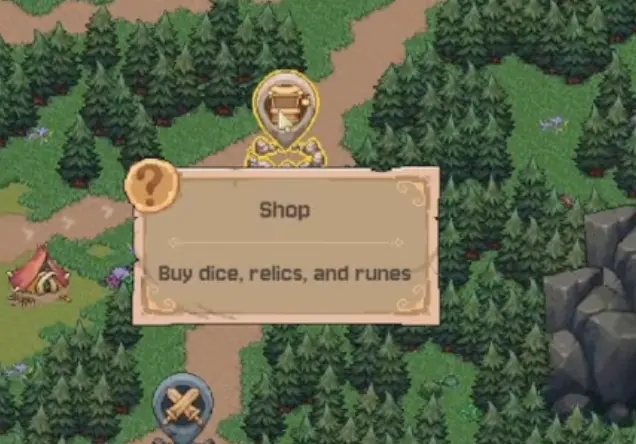
Good shop priorities:
- build-defining relics
- defensive tools before bosses
- dice that match your class plan
- economy relics early in the run
- healing only when you need it
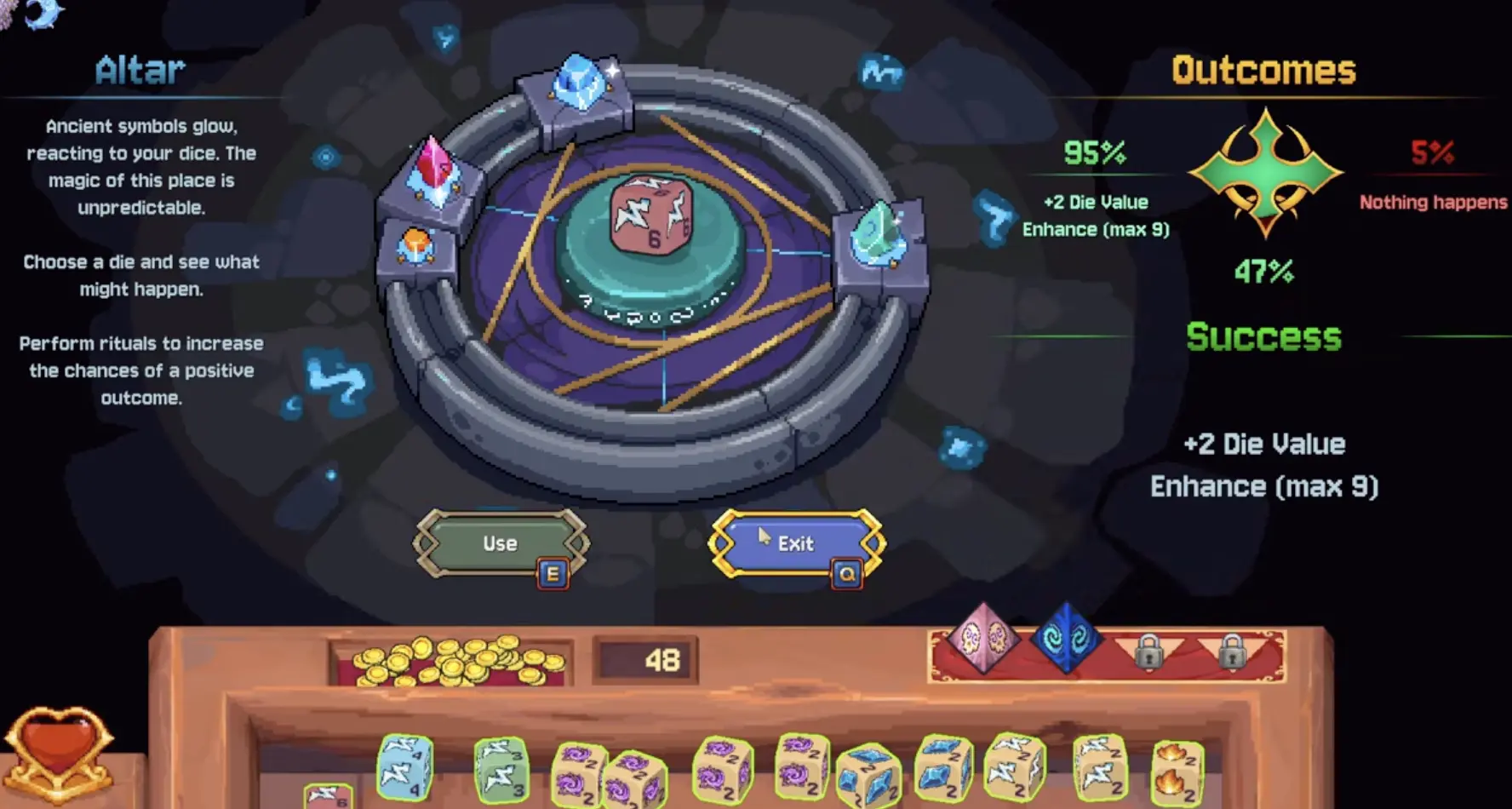
Magic altars can enhance, transform, or clone dice. They are powerful, but they are not automatically safe. Before a boss, only use an altar when the die you are upgrading already matters to your build. If the altar preview says failure means nothing happens, the risk is usually lost HP, coins, or opportunity. If the altar offers a different failure result, follow the current panel text and do not gamble your only good die unless the reward would save the run.
A good altar target is a die you already plan to merge often, such as your main damage die, a key healing die, or a class die that drives your build. A bad target is a random low-impact die that only looks tempting because the upgrade number is high.
Jester nodes are useful when your run can accept randomness. They may offer healing, dice, coins, ore, enhancements, or other rewards. The strongest Jester turns happen when your current build can benefit from several possible outcomes instead of needing exactly one fix.
Treasure Rune-style effects pair well with Jester or reward-heavy routes because they turn a good reward node into a bigger value spike. Use that kind of route when your HP is stable and you can afford to chase extra dice, upgrades, or economy. Do not force it when you are already low on HP before a boss.
Best Beginner Class Choice
For early runs, defensive consistency is more important than peak damage.
Rogue-style builds are beginner-friendly because dodge, blind strike, poison, backstab, and bomb dice give you flexible ways to survive while still dealing damage. Mage-style builds can become very powerful, but they often depend more on finding the right synergy. Warrior-style builds are easier to understand once unlocked because shields and stun are naturally defensive.
For a full class comparison, read the Rune Dice Best Early Classes Guide.
| Class style | Beginner value |
|---|---|
| Rogue | Strong first choice; good dodge and flexible damage |
| Mage | High upside, but more synergy-dependent |
| Warrior | Durable and easier to stabilize once unlocked |
| Archer | Likely better after you understand chain setups |
| Bard / Druid / Paladin / Necromancer | Better evaluated after unlocks and more run data |
If you are still learning, pick the class that helps you survive bad turns. You can optimize damage later.
How to Win More Runs
Winning in Rune Dice is mostly about avoiding three types of failure:
- reaching the boss with too little HP
- building too many unfocused dice
- wasting runes before the hard fights
Use this early run plan:
| Stage | What to focus on |
|---|---|
| First few fights | Learn merge angles, collect coins, avoid unnecessary damage |
| Early rewards | Take one or two strong damage tools, then add survival |
| First shop | Buy a relic or die that improves your main plan |
| Mid-map | Take tougher nodes only if HP and runes are stable |
| Before boss | Heal, save defensive runes, and upgrade your best dice |
| Boss fight | Stop being greedy; clear dangerous enemy dice and protect HP |
A good beginner build usually has:
- one main damage plan
- at least one defensive tool
- some way to heal or block damage
- enough coin income to use shops
- a rune that can fix a bad board
- one or two high-value dice that can carry boss damage
Boss Fight Tips
Boss fights punish greedy play. You can get away with messy shots in normal battles, but bosses often add extra pressure through enemy dice, summons, webs, movement, or high-damage turns.
Before entering a boss, try to have:
- good HP
- at least one defensive rune
- at least one healing option or shield option
- upgraded damage dice
- a way to handle enemy dice
- enough board control to avoid dead turns
During bosses, your priority changes. Do not chase a big combo if the boss is about to hit you for lethal damage. Use Protection, Weakness, Shuffle, Gravity, or healing tools before the board becomes impossible.
For more detail, read the Rune Dice Boss Guide.
Common Beginner Mistakes
| Mistake | Why it hurts |
|---|---|
| Taking every reward | Makes your build unfocused and harder to control |
| Ignoring coin dice | Leaves you too weak to buy key shop upgrades |
| Spending runes too early | Leaves you helpless in boss fights |
| Chasing every huge merge | Causes unnecessary HP loss |
| Entering mini bosses too weak | Burns the run before your build is ready |
| Healing too late | One bad turn can kill you before you recover |
| Ignoring field refresh | Wastes planned combos |
| Building only damage | Fails when enemies start hitting harder |
The best mindset is not “make the biggest number every turn.” It is make the best turn for the current board.
Sometimes that means a huge chain. Sometimes it means taking a small heal, using Weakness, buying a defensive rune, or skipping a risky angle.
Beginner Build Checklist
Before the first boss, quickly check:
| Question | Yes / No |
|---|---|
| Do I have one reliable damage source? | |
| Do I have at least one defensive tool? | |
| Do I have a useful rune saved? | |
| Have I upgraded or improved one important die? | |
| Do I have enough HP for one bad turn? | |
| Can I handle multiple enemies or summons? | |
| Can I fix a bad board with Gravity, Shuffle, or safe angles? | |
| Is my build focused instead of full of random dice? |
If too many answers are no, take safer nodes and stabilize before forcing a hard fight.
FAQ
Is Rune Dice more about luck or skill?
Both matter, but skill matters more than it first appears. The dice and rewards are random, but your route choices, reward choices, rune timing, and merge angles decide how much value you get from each board.
Is Rune Dice similar to Peglin?
Yes, Rune Dice can feel familiar if you like Peglin or other physics-based roguelites, but the main difference is the merge system. You are not just hitting pegs or targets. You are building chains by combining dice values and using physics to push dice into better positions.
What should I prioritize early?
Prioritize coins, consistent damage, and survival. A flashy damage die is useful, but a run often fails because you did not have enough HP, runes, or shop value before the boss.
Are coin dice worth taking?
Yes. Coin dice are very useful early because shops can give you relics, runes, upgraded dice, and build-defining effects. Do not ignore economy just because it does not deal immediate damage.
Should I take tough battles?
Take tough battles when your HP is stable and your build already has a good damage or defense base. Avoid them when you are low on HP or have no rune backup.
When should I use runes?
Use runes when they prevent major damage, create a strong merge, fix a terrible board, or help you survive a boss. Do not spend them just to slightly improve an easy fight.
What is the best beginner class?
Rogue-style builds are a strong early choice because dodge and flexible damage make mistakes less punishing. Mage can be stronger with the right synergy, but it is less forgiving.
How do I stop losing before the boss?
Stop taking every risky route, save defensive runes, pick healing or dodge tools earlier, and do not chase every big merge when enemies are about to attack.
Should I upgrade dice or take new dice?
Upgrade dice that already fit your build. Take new dice only when they add something your build needs, such as AoE, healing, poison, dodge, stun, or economy.
Are relics better than runes?
They do different jobs. Relics improve your whole run passively. Runes solve specific combat problems. A good run usually needs both.
What should I read next?
Start with the Rune Dice Rogue Build Guide if you want a safe first build, the Rune Dice Chain Merge Guide if you want bigger combos, and the Rune Dice Boss Guide if you are dying near the end of runs.
Rune Dice Guide Cluster
Explore the main Rune Dice guides, from beginner strategy to builds, tiles, Gambits, bosses, and first-win routes.
Build a stronger Rune Dice Rogue with John Wickblade vs Romeo Deathbrew tips. Master Dodge stacks, Phantom Strike, best dice, runes, and relics to win.
Advanced TipsRune Dice Merge Guide: Big Combos & 8-Die MergesMaster Rune Dice chain merging. Learn push merges, ricochet angles, two-trigger turns, and rune timing to build 8-value dice and trigger massive combos.
Boss GuideRune Dice Boss Guide: How to Survive Boss Fights and Win More RunsLearn how to beat bosses in Rune Dice. Master boss mechanics, rune timing, route choices, and counter webbed dice to survive and win more runs.
ClassesRune Dice Beginner Guide: Tips, Runes & RelicsLearn how to win more runs in Rune Dice. Master dice merging, runes, relics, class choices, map routes, and boss prep with these essential beginner tips.
ClassesRune Dice Best Classes & Beginner Tier ListFind the best early classes in Rune Dice. Discover beginner tier lists, Rogue vs Mage tips, character variants, and Hard Mode picks to dominate your runs.