Rune Dice Guide
Rune Dice Best Classes & Beginner Tier List
Find the best early classes in Rune Dice. Discover beginner tier lists, Rogue vs Mage tips, character variants, and Hard Mode picks to dominate your runs.
The best early class in Rune Dice is the one that helps you finish runs consistently, not the one with the highest damage ceiling.
For most new players, that means starting with Rogue, learning how to survive with Dodge, then moving into Mage once you understand rune timing, board control, and when to take risky rewards. Warrior becomes one of the best defensive options after you unlock it, especially if you keep losing runs to enemy pressure instead of bad damage rolls.
This guide ranks the best early classes, explains the Rogue vs Mage debate, covers known character variants, and gives a simple recommendation for Hard Mode attempts.
For general mechanics, start with the Rune Dice Beginner Guide.
For unlock routes, use the Rune Dice Class Unlock Guide.
For Rogue-specific build details, read the Rune Dice Rogue Build Guide.
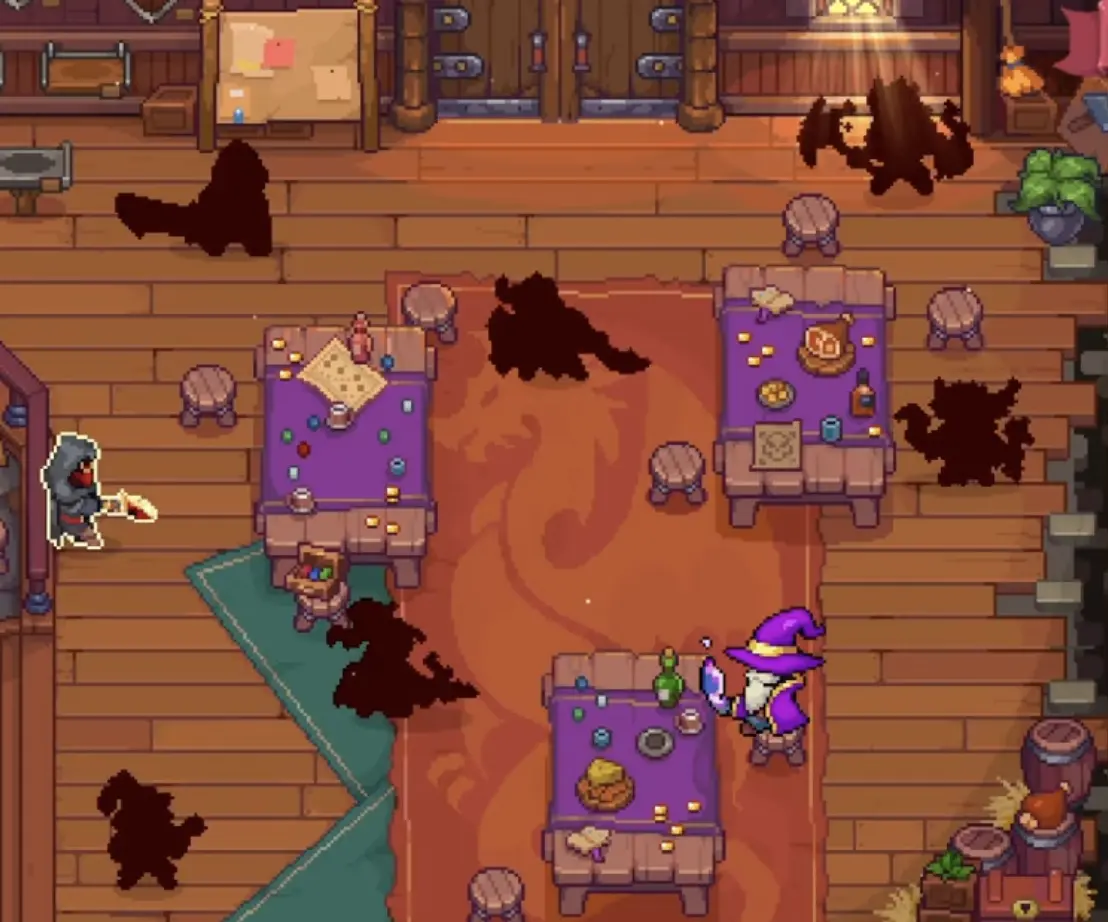
Fast Answer
| Question | Best answer |
|---|---|
| Best first class for new players | Rogue |
| Best early character pick | John Wickblade, if available |
| Best high-ceiling starter | Mage |
| Riskiest early build | Mage Burn without support |
| Safest unlock target | Warrior |
| Best class for learning bosses | Rogue |
| Best class for Hard Mode attempts right now | Rogue first, Warrior after unlock |
| Should you rank every locked class yet? | No. Unlock and test them before treating them as tier-list staples |
The short version: play Rogue first if you want consistency, play Mage if you want higher upside, and unlock Warrior when you want a safer defensive option.
Early Class Tier List
This is an early-game ranking, not a final full-roster tier list. It prioritizes survival consistency over peak damage ceiling, because new players usually gain more from finishing runs than from occasional high-roll wins.
| Tier | Class | Best for | Main reason |
|---|---|---|---|
| S | Rogue | First clears, boss learning, safe early runs | Dodge gives room for mistakes while Blind Strike and Backstab provide flexible damage |
| A | Mage | High-roll damage, players who understand synergy | Arcane-style starts can be strong, but the class needs better reward alignment |
| A- | Warrior | Defensive runs after unlock | Shield and Stun tools make it easier to stabilize once available |
| Watchlist | Archer | Later testing | Needs more reliable run data before ranking |
| Watchlist | Bard, Druid, Paladin, Necromancer | Post-unlock testing | Too many unknowns for a fair early ranking |
Do not overread the Watchlist tier. It does not mean those classes are bad. It means they should not be the main recommendation for a new player until you have unlocked and tested their starting variants.
Classes vs Character Variants
Rune Dice does not only have classes. A class can also have different character variants, and the starting dice can change a lot between variants.
This matters because “best Rogue” and “best Rogue character” are not always the same question. A class can be strong overall, while one specific variant is much easier or harder to start with.
| Class | Known early variant / start | Why it matters |
|---|---|---|
| Rogue | John Wickblade | Strong beginner start because Dodge and Blind Strike give both safety and damage |
| Rogue | Romeo Deathbrew | More poison-focused; less beginner-safe if the start lacks immediate defensive value |
| Mage | Default Mage start | Arcane and Freeze-style tools can be strong, but they rely more on good follow-up picks |
| Warrior | Unlockable defensive class | Rank it by its Shield / Stun starting tools once you have the class available |
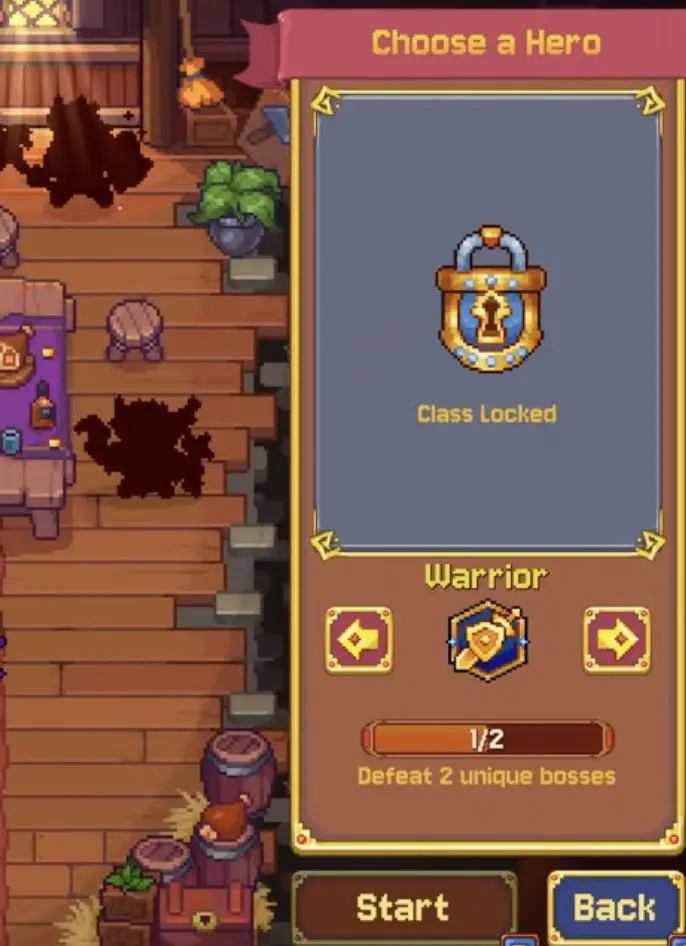
If you are choosing within the same class, look at the starting dice before you start the run. A defensive starting kit is usually better for learning, while a damage-only or synergy-heavy kit is better after you already understand boss pressure.
Best Beginner Class: Rogue
Rogue is the best first recommendation because it has the most forgiving early loop.
The class gives you enough defense to survive bad turns and enough damage to keep fights moving. That combination matters more than raw damage when you are still learning how enemy dice, field refreshes, and boss boards work.
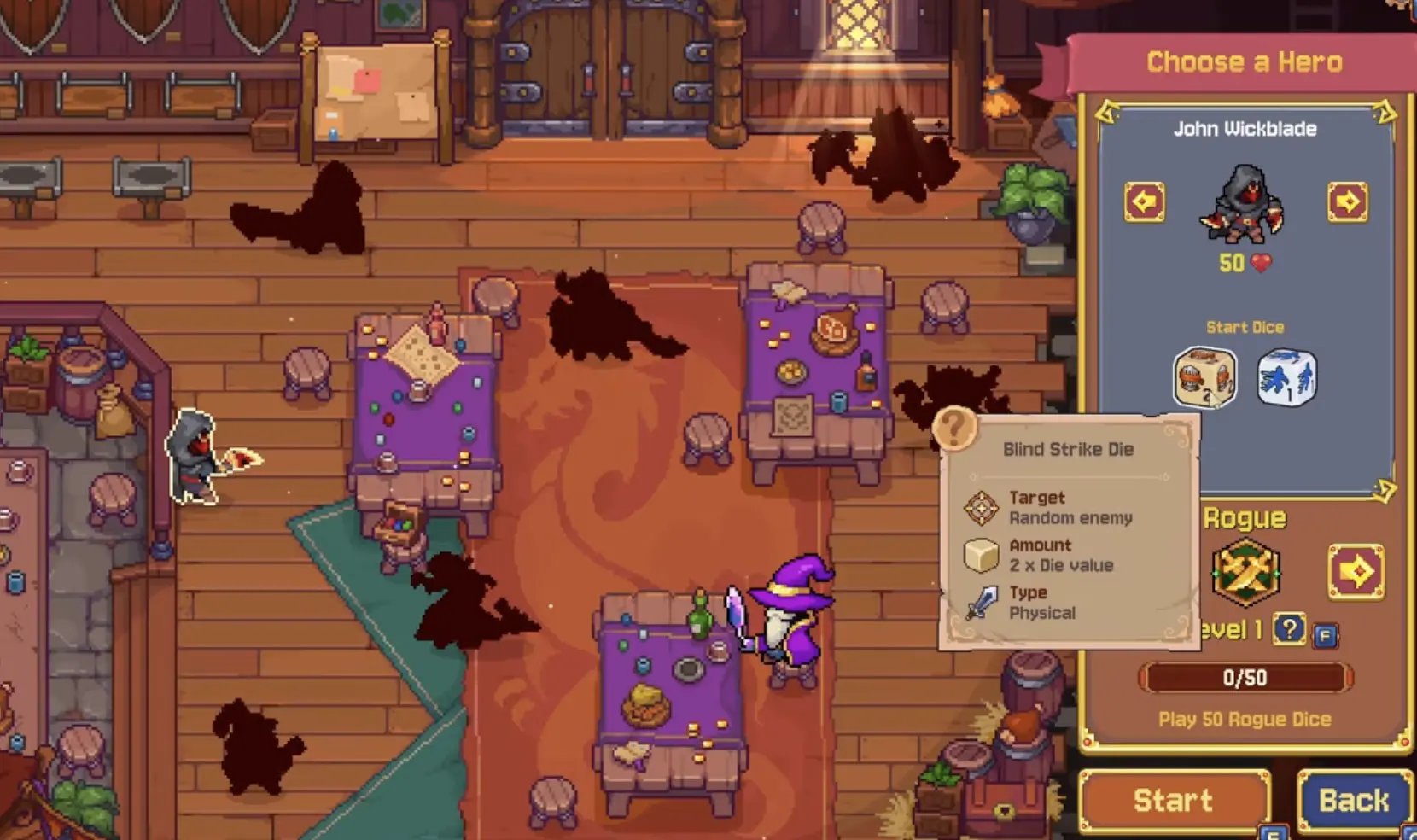
Why Rogue Works Early
| Rogue tool | Why it helps |
|---|---|
| Dodge | Blocks physical pressure and gives you more room to recover |
| Blind Strike | Deals strong random-target damage without perfect aiming |
| Backstab | Helps reach enemies behind the front line |
| Poison | Adds long-fight pressure when you already have defense |
| Bomb / AoE picks | Clears crowded enemy boards |
| Defensive runes | Make boss fights much less punishing |
A common Rogue turn looks like this: two enemies are about to attack, but the board also has a tempting damage merge. If you can merge Dodge first, that defensive play is usually better than chasing damage, because it prevents HP loss while still advancing your dice cycle. Once the incoming hit is covered, you can use the next turn to take Blind Strike, Backstab, or Bomb value.
Rogue teaches the right habits:
- checking enemy intent before shooting
- using defensive turns instead of chasing every merge
- keeping at least one rune for bosses
- adding damage without bloating the build
- using safer routes when HP is low
The main weakness is that Rogue can feel too safe. If you keep adding random dice without upgrading your best ones, your build may survive normal fights but lack enough boss damage.
Why Some Players Prefer Mage
Some players will argue that Mage is stronger than Rogue, and they are not completely wrong.
Mage can start very strong because its early tools can combine damage, control, and recovery. An Arcane-style die with a damage-or-heal outcome can feel better than Rogue when the rolls go your way, and Freeze-style tools can buy time when enemies are about to pressure you.
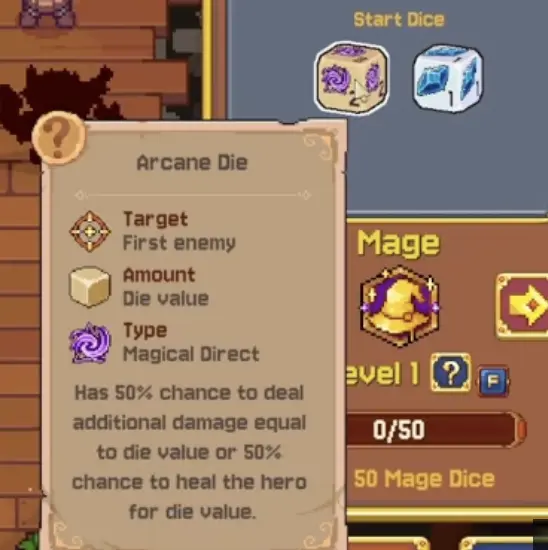
The reason this guide still recommends Rogue first is consistency.
| Point | Rogue | Mage |
|---|---|---|
| Beginner safety | More predictable | More dependent on reward quality |
| Bad board recovery | Dodge can save turns | Needs the right rune, freeze, heal, or damage outcome |
| Boss learning | Easier | Stronger when the build comes together |
| Damage ceiling | Medium-high | High |
| First-clear recommendation | Better | Good, but less forgiving |
Mage is at its best when you already know how to read a board before shooting. For example, if an enemy is one step away from hitting you and your only good merge is a setup piece, Mage may need Freeze, healing, or a rune to stay safe. Rogue can often solve the same turn with Dodge, which is why Rogue is easier to recommend before you know the enemy patterns.
If you already understand how to route safely and manage bad boards, Mage can absolutely outperform Rogue. If you are still losing runs before or during the first boss, Rogue is the better first recommendation.
Why Mage Burn Builds Can Feel Bad
Mage Burn-style builds are tempting because they promise scaling damage, but they can feel unreliable early.
The problem is not that Burn is useless. The problem is that Burn usually needs several pieces to line up:
| Burn problem | What it means in a run |
|---|---|
| Needs the right dice | If your early rewards do not support fire damage, the build feels weak |
| Needs time | Burn wants enemies to survive long enough for the damage to matter |
| Needs protection | If you are taking too much damage, Burn does not save you immediately |
| Needs board control | Bad merges delay the setup and make boss turns dangerous |
| Competes with safer picks | Taking Burn pieces may mean skipping Dodge, healing, Weakness, or Protection |
The practical issue is timing. If Burn needs multiple turns to outvalue a direct damage die, it is not helping when a front enemy is already attacking this turn. Burn becomes much better when you have Freeze, healing, Protection, Weakness, or enough HP to let the damage tick.
A Mage Burn start is best when you already have defense or control. If your run has no protection, no healing, and no way to fix bad boards, do not force Burn just because one fire reward appears.
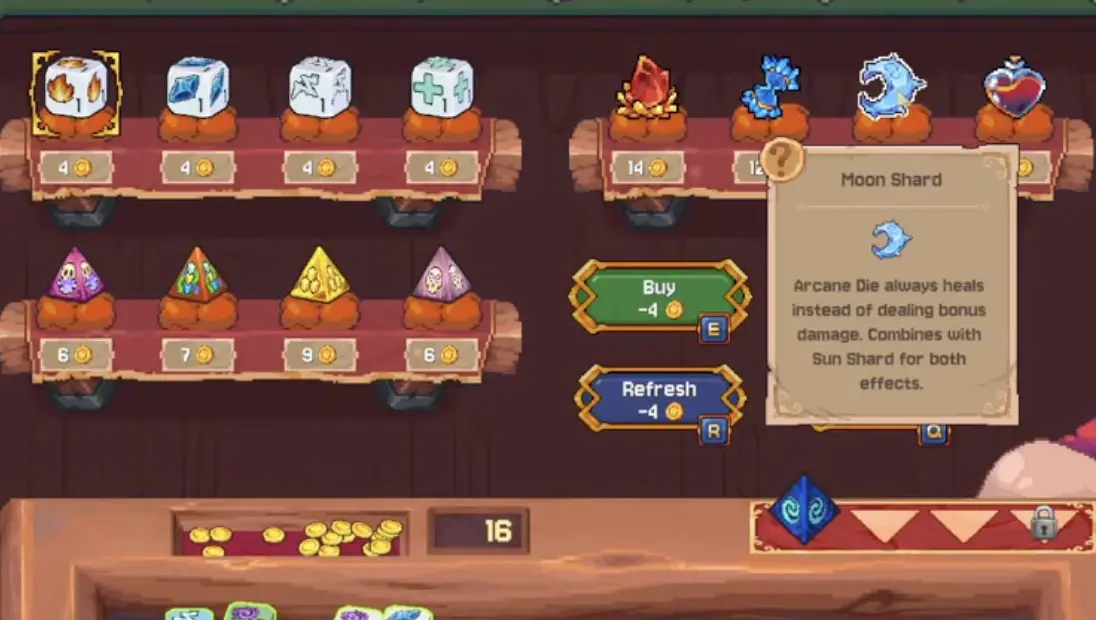
Use this rule:
| Situation | Mage decision |
|---|---|
| You have Freeze, healing, or defensive runes | Burn / elemental scaling becomes safer |
| You only have damage rewards | Take immediate value before forcing synergy |
| You are losing HP every fight | Stabilize before taking more setup pieces |
| You are already ahead | Mage scaling can snowball hard |
| You are near a boss | Pick survival over another greedy synergy piece |
Warrior: Best Defensive Unlock Target
Once unlocked, Warrior is one of the best early defensive options.
The reason is simple: Shield and Stun-style tools are easier to understand than high-synergy damage plans. A new player can look at incoming damage, build defense, delay enemies, and survive longer boss turns.
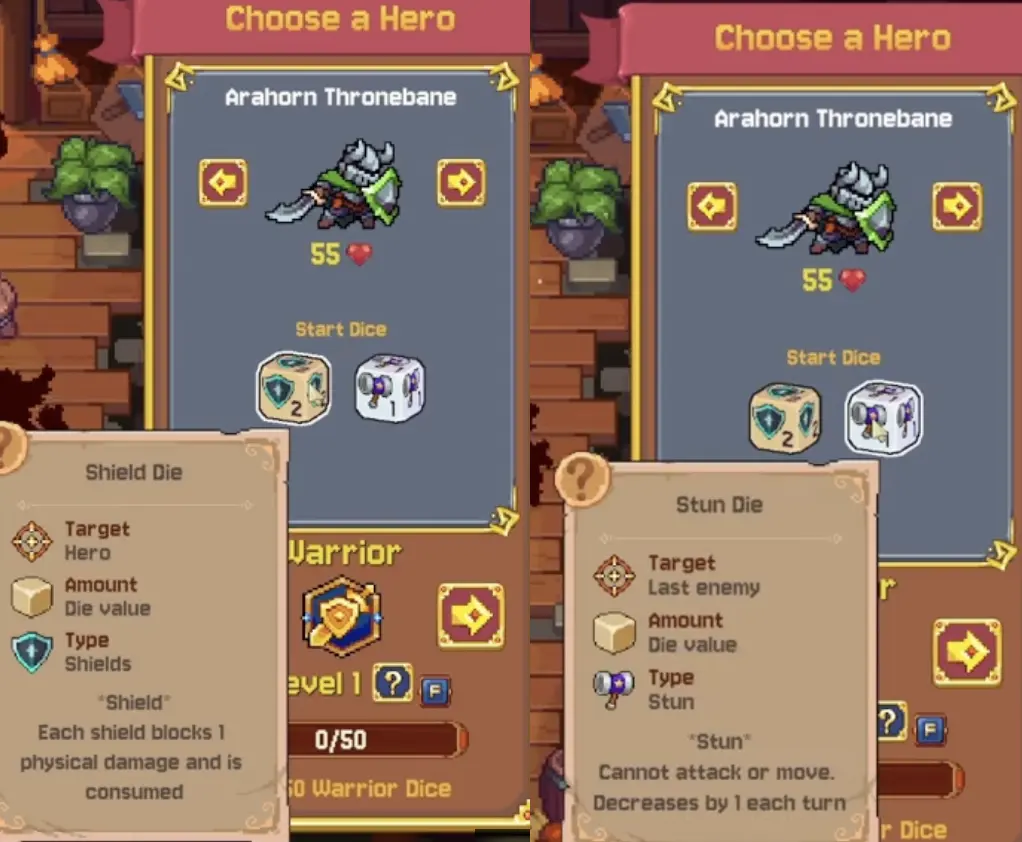
Warrior is useful if you are losing because:
- enemies reach you too quickly
- bosses hit too hard
- Mage setups feel too random
- Rogue damage feels too scattered
- you want a more defensive route through the map
The trap is building Warrior too defensively. If every reward goes into shields, stuns, or delay, you can survive several turns and still lose because enemies keep filling the board or the boss outscales your damage. A good Warrior run still needs at least one clear damage plan, such as upgraded attack dice, AoE, or a reliable way to finish backline threats.
If you do not have Warrior yet, continue with Rogue and follow the Class Unlock Guide for updated unlock notes.
Rogue vs Mage vs Warrior
Use this table instead of thinking of the classes as a simple “best to worst” list.
| Situation | Best class | Why |
|---|---|---|
| First serious clear attempt | Rogue | Most forgiving when you make mistakes |
| You already understand boss turns | Mage | Higher ceiling if rewards support the build |
| You keep dying to physical pressure | Rogue or Warrior | Dodge, Shield, and Stun help stabilize |
| You want the safest unlock target | Warrior | Defensive tools are easier to build around |
| You want explosive high-roll runs | Mage | Elemental and Arcane setups can snowball |
| You want to learn the game systems | Rogue | Teaches merge timing, rune saving, and boss survival without being too punishing |
For most players, the path should be:
- start with Rogue
- learn boss preparation and chain merges
- test Mage once you understand synergy
- unlock Warrior and use it for safer defensive runs
- revisit other classes after you have more class variants available
Best Early Class for Hard Mode
For early Hard Mode attempts, start with the class that gives you the most control over bad turns.
Right now, that usually means Rogue first. Dodge gives you a way to survive early mistakes, and Rogue can still build enough damage through Blind Strike, Backstab, Bomb, Poison, and relic support.
After Warrior is unlocked, it becomes a strong Hard Mode candidate because defensive tools are valuable when enemy pressure increases. Mage can work, but it is better when you already know how to route, when to skip greedy rewards, and how to keep a synergy build alive before it pays off.
| Hard Mode need | Best early answer |
|---|---|
| Survive bad turns | Rogue |
| Learn boss patterns | Rogue |
| Defensive consistency after unlock | Warrior |
| Highest damage ceiling | Mage |
| Safest first Hard Mode testing | Rogue |
If you are failing Hard Mode because you die before your build comes online, do not switch to a greedier class. Pick the class that gives you more defensive turns. For general situation-based class picks, use the Rogue vs Mage vs Warrior table above.
Common Class Choice Mistakes
Keep these in mind when choosing your early class:
| Mistake | Better approach |
|---|---|
| Choosing only by damage ceiling | Pick the class that helps you survive enough turns to use that damage |
| Treating all variants in a class as identical | Check the starting dice before judging the class |
| Forcing Mage Burn without support | Take defense, freeze, healing, or board control first |
| Ignoring unlock progression | Use Rogue to unlock more options, then test defensive classes |
| Switching classes after one bad run | Separate bad RNG from a bad build plan |
The goal is not to prove one class is always best. The goal is to choose the class that gives you the cleanest path to your next clear.
FAQ
What is the best class in Rune Dice for beginners?
Rogue is the best early recommendation because it has the safest mix of defense and damage. Dodge helps you survive mistakes while Blind Strike, Backstab, Poison, and Bomb-style rewards give you enough offense.
Is Mage better than Rogue?
Mage can be stronger when its synergy works, especially if Arcane, Freeze, elemental damage, or healing tools line up. Rogue is still the better first recommendation because it is more consistent for new players.
Why does Mage Burn feel weak?
Burn-style Mage builds usually need support. If you take fire damage without healing, freeze, protection, or enough time for Burn to matter, the build can fall behind before it scales.
Is Warrior worth unlocking?
Yes. Warrior is a strong defensive target because Shield and Stun-style tools are easy to understand and useful when enemy pressure gets higher.
Should I use Rogue or Warrior for Hard Mode?
Use Rogue first if you are still learning Hard Mode. Try Warrior after unlock if you want a more defensive approach. Mage is better for high-ceiling runs once you are comfortable with risk.
Does the character variant matter?
Yes. Different variants within the same class can start with different dice, which changes the whole early run. A safer starting kit is usually better for new players.
Should I level a class before judging it?
Yes, but this page focuses on early class choice. Leveling and unlock progression can change starting options over time. For updated unlock notes, use the Rune Dice Class Unlock Guide.
What should I read next?
Read the Rune Dice Rogue Build Guide if you want the safest first build, the Rune Dice Boss Guide if you are dying near bosses, and the Rune Dice Chain Merge Guide if you want better combo setups.
Continue Reading in the Rune Dice Guide Cluster
This article is part of our Rune Dice strategy cluster. Use these guides to keep learning the game's core systems and routes.
Build a stronger Rune Dice Rogue with John Wickblade vs Romeo Deathbrew tips. Master Dodge stacks, Phantom Strike, best dice, runes, and relics to win.
Advanced TipsRune Dice Merge Guide: Big Combos & 8-Die MergesMaster Rune Dice chain merging. Learn push merges, ricochet angles, two-trigger turns, and rune timing to build 8-value dice and trigger massive combos.
Boss GuideRune Dice Boss Guide: How to Survive Boss Fights and Win More RunsLearn how to beat bosses in Rune Dice. Master boss mechanics, rune timing, route choices, and counter webbed dice to survive and win more runs.
ClassesRune Dice Beginner Guide: Tips, Runes & RelicsLearn how to win more runs in Rune Dice. Master dice merging, runes, relics, class choices, map routes, and boss prep with these essential beginner tips.