Rune Dice Guide
Rune Dice Boss Guide: How to Survive Boss Fights and Win More Runs
Learn how to beat bosses in Rune Dice. Master boss mechanics, rune timing, route choices, and counter webbed dice to survive and win more runs.
Boss fights in Rune Dice are where most promising runs fall apart. Normal battles let you recover from sloppy shots, but bosses punish low HP, wasted runes, weak damage, and bad board control.
The biggest mistake is reaching a boss with no emergency tools left. Save at least one defensive or board-fixing rune, enter with enough HP to survive a bad turn, and treat dangerous enemy dice as part of the boss mechanic instead of ignoring them.
This guide covers how to prepare for bosses, which boss mechanics matter most, how to handle webbed dice and blocking dice, when to choose or skip a boss, and what to do when your board is already going wrong.
For general basics, read the Rune Dice Beginner Guide.
For bigger board setups, read the Rune Dice Chain Merge Guide.
For class choice, read the Rune Dice Best Early Classes Guide.
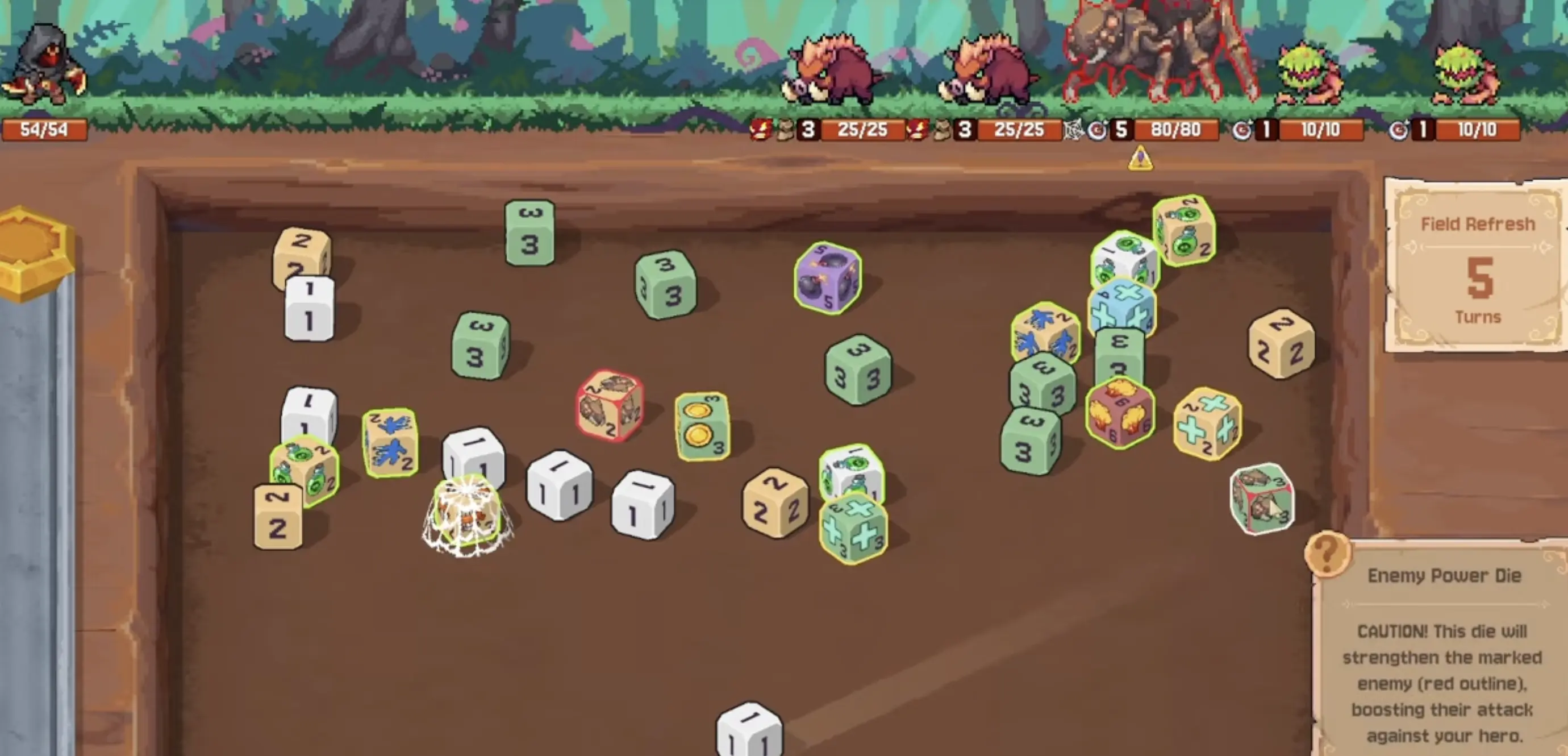
Fast Answer
| Boss problem | Best response |
|---|---|
| Low HP before boss | Take healing, safer nodes, or defensive runes before entering |
| Main die is webbed | Use Shuffle, Gravity, or another board-fixing tool instead of wasting a weak turn |
| Enemy dice are powering up the boss | Clear or avoid those dice unless the merge payoff is worth the risk |
| Board is blocked by obstacles | Use ricochet angles, AoE, Shuffle, or Gravity to open the board |
| Boss has summons | Prioritize Bomb, AoE damage, Backstab, or multi-target effects |
| Boss hits too hard | Save Protection, Weakness, Dodge, Shield, or Stun tools |
| Damage is too low | Upgrade one core damage die before the boss instead of adding more random dice |
| Unsure which boss to pick | Choose the boss your build can answer, not the one that looks easiest |
The safest boss plan is: enter with HP, save one defensive rune, bring one board-fixing tool, and keep one reliable damage plan.
Known Boss Mechanics by Type
Most early boss losses come from board-control mechanics, not just raw damage. Use the mechanic type to decide which rune or backup plan you need before entering the fight.
| Mechanic type | What it does | Best response |
|---|---|---|
| Webbed dice | Traps key dice and breaks planned merges | Shuffle, Gravity, backup damage dice, and avoiding overreliance on one die |
| Slime or puddle zones | Creates awkward board states that make clean merges harder | Board-fixing runes, patient angles, and AoE cleanup |
| Stone or blocking dice | Blocks throw paths and makes direct shots harder | Ricochet shots, Bomb / AoE dice, Shuffle, and Gravity |
| Summons | Fills enemy space and increases incoming pressure | Bomb, multi-target damage, Backstab, Poison, and fast target clearing |
| Power-up enemy dice | Strengthens enemies or the boss if merged carelessly | Avoid bad merges unless the damage payoff is worth the penalty |
| Movement enemy dice | Moves enemies closer and reduces your breathing room | Kill front enemies quickly or use defensive turns before they attack |
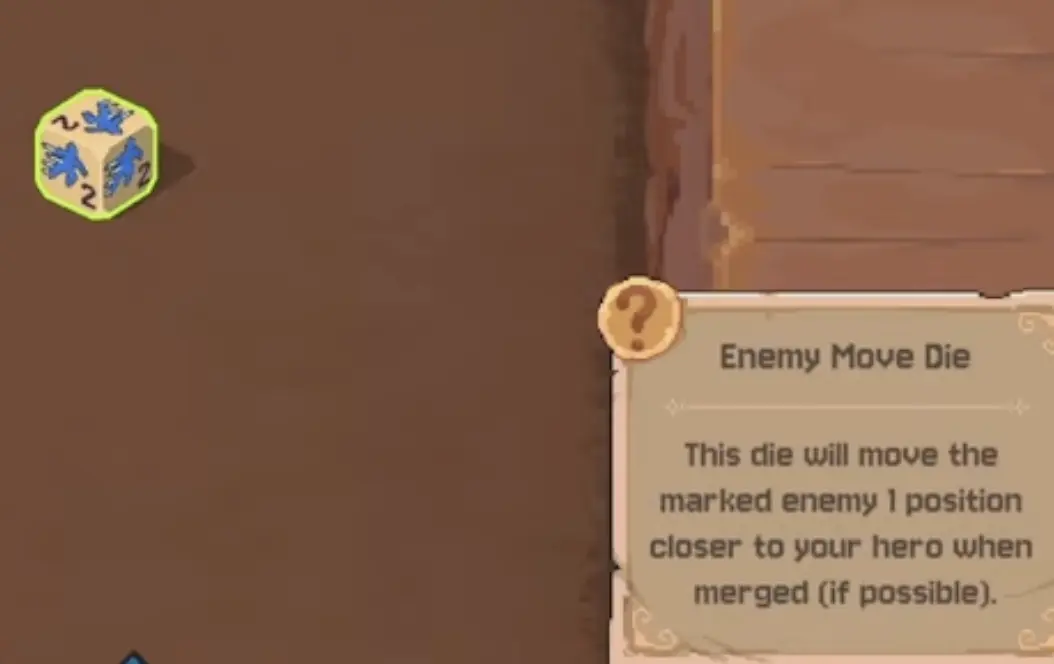
Do not wait until a boss mechanic has already ruined the board. If your main damage die gets trapped or blocked, use a rune before the fight becomes unrecoverable.
Boss Preparation Checklist
Before you enter a boss fight, check four things: HP, runes, damage, and board control.
| Checklist item | Good sign |
|---|---|
| HP | You can survive at least one bad enemy turn |
| Defensive tool | Protection, Weakness, Dodge, Shield, Stun, or healing is available |
| Board-fixing tool | Shuffle, Gravity, or enough ricochet options to recover bad layouts |
| Damage plan | One upgraded damage die or one clear status / AoE plan |
| Enemy control | You can handle summons, backline enemies, or enemy dice |
| Route stability | You did not spend every rune and heal just reaching the boss |
If you are low on HP before the boss, stop treating the next node like a damage race. Take healing, buy a defensive rune, or choose a safer route. A small heal before the boss is often worth more than another greedy damage reward.
Best Runes to Save for Bosses
Runes are strongest when they prevent a losing turn. Do not spend your best rune just to make an easy fight faster.
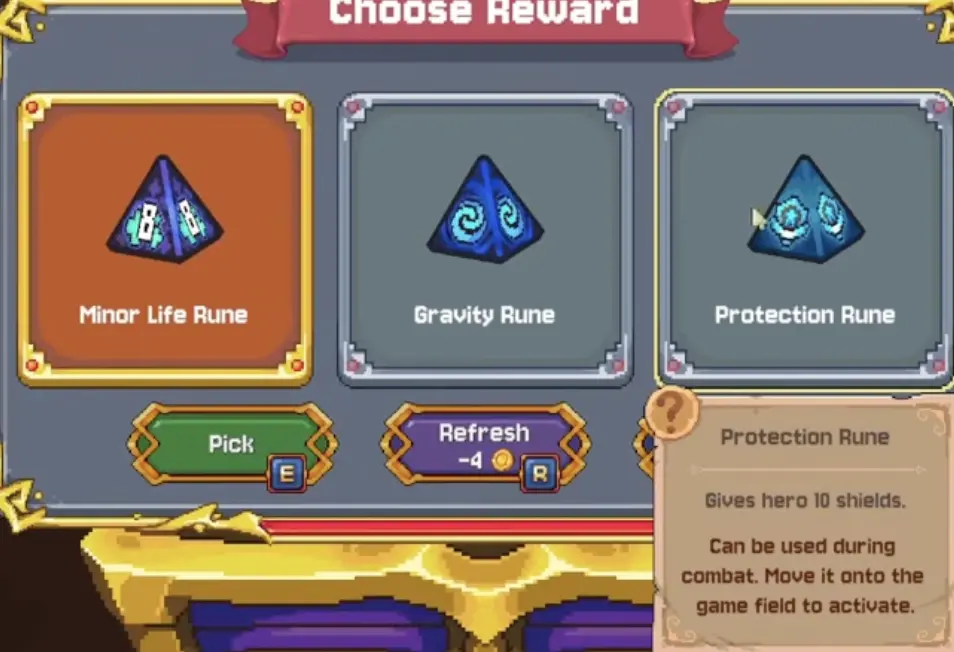
| Rune type | Best boss use |
|---|---|
| Protection | Blocks a dangerous hit or buys one safe turn |
| Weakness | Reduces damage when several enemies are attacking |
| Shuffle | Resets a board where your main options are trapped or blocked |
| Gravity | Pulls scattered dice together and can free a stuck setup |
| Minor Life / healing | Repairs HP before a lethal boss turn |
| Treasure / reward-focused rune | Good only if your run is already stable |
A practical rule: if the boss is attacking next turn and your board has no clean merge, use a defensive or board-fixing rune now. Saving it for a “better” turn can lose the run before that turn arrives.
How to Handle Webbed Dice
Webbed dice are one of the most punishing boss mechanics because they attack your setup directly. If the die you planned around gets webbed, your board can look playable while actually being dead.
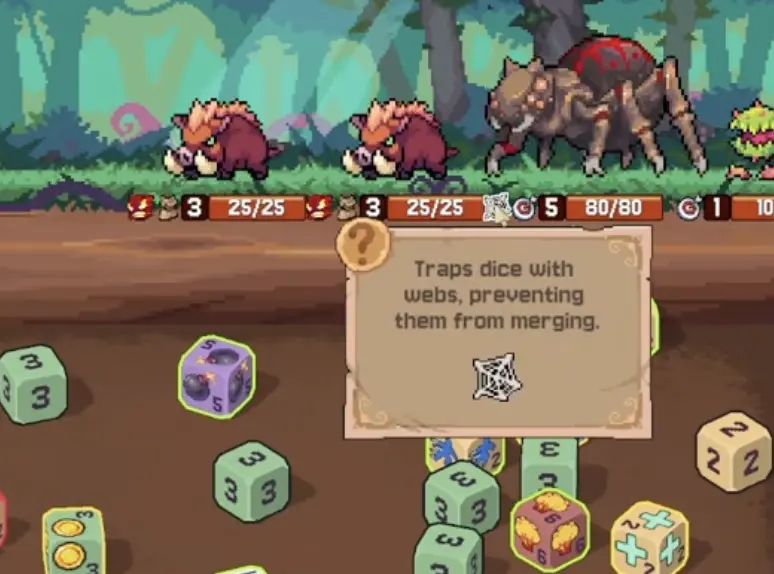
When your main die is webbed, do not autopilot into the smallest available merge. Ask what the next enemy turn looks like.
If your main damage die is webbed, the remaining dice are low-value, and the boss is about to attack, the correct play is often to use Shuffle or Gravity immediately. A tiny merge that does not fix the board only spends your turn and lets the boss keep control.
Good answers to webbed dice:
- use Shuffle before the board becomes fully locked
- use Gravity to pull useful dice into merge range
- keep a second damage type instead of relying on one die
- use Bomb or AoE to keep pressure while your main die is trapped
- avoid taking too many setup-only rewards before a web boss
- save Protection or Weakness in case the web ruins your attack turn
The best prevention is build diversity. You do not need five damage plans, but you do need a backup if one die gets trapped.
Enemy Dice and Blocking Dice
Boss fights often include dice that are not simply good or bad. Some enemy dice move enemies forward, strengthen a boss, summon pressure, or block the path of your shot.
The mistake is merging them just because they are matchable. If an enemy power die would make the boss hit harder, and the merge does not kill anything important, leave it alone or shoot around it.
Use this approach:
| Enemy die problem | Correct response |
|---|---|
| It moves an enemy closer | Only merge it if you can kill or control that enemy soon |
| It powers up the boss | Avoid it unless the damage payoff is worth the risk |
| It blocks your path | Use ricochet, Shuffle, Gravity, or AoE |
| It sits near a valuable merge | Compare the merge payoff against the boss penalty |
| It appears before field refresh | Take safe value instead of forcing a risky setup |
Stone or blocking dice are especially annoying because they reduce your throwing lanes. When that happens, look for wall bounces and indirect pushes. You do not always need to hit your target die directly; pushing another die into the match can be safer.
Best Dice and Relics for Boss Fights
You do not need a huge boss-specific shopping list. For early boss fights, three dice types matter more than the rest:
| Tool | Why it matters |
|---|---|
| Dodge / Shield / Stun | Keeps you alive through dangerous boss turns |
| Bomb / AoE | Clears summons and prevents the enemy side from filling up |
| Healing | Lets you recover from one bad board before the fight snowballs |
After that, prioritize upgrades that improve your existing plan. A stronger Blind Strike, Backstab, Poison, Arcane, Shield, or Bomb die is usually better than a random new die that does not fit your build.
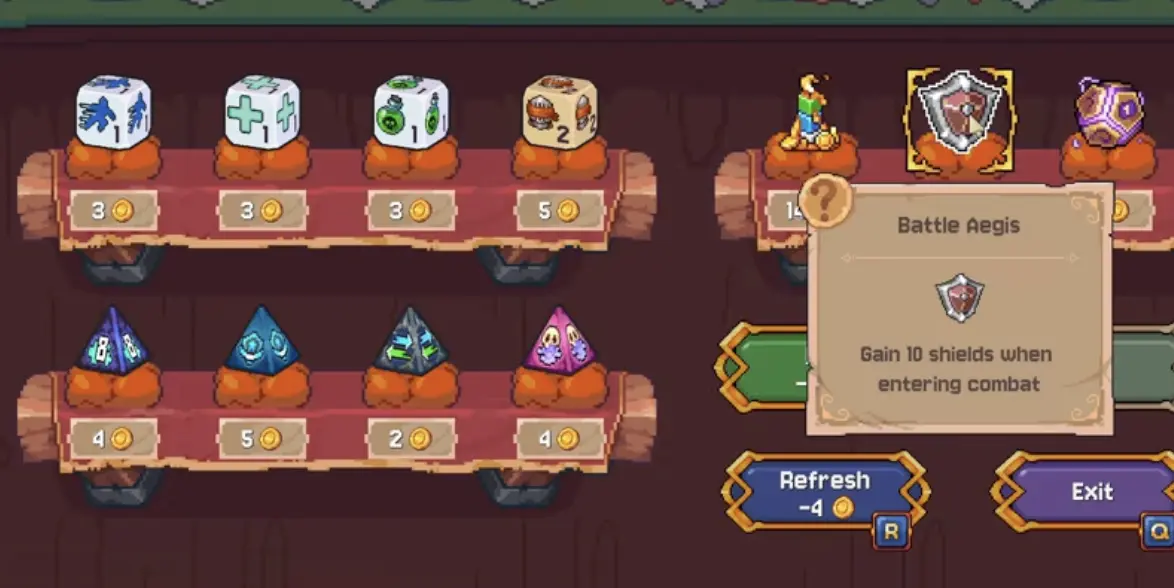
Good boss relics usually do one of these things:
- give shield or damage prevention
- reward frequent merging
- improve direct attacks
- create more dice or extra throws
- improve shop value before bosses
- help recover from failed turns
If a relic only helps when you are already winning, it is less important than a relic that saves a bad boss turn.
When to Choose or Skip a Boss
If Rune Dice gives you a boss choice, do not pick only by appearance. Pick the boss your current build can actually answer.
A Rogue run with Bomb or another AoE tool should usually prefer summon-heavy fights, because one good AoE merge can clear several enemies at once. The same Rogue run may feel worse into a single tough boss if your only boss damage is random Blind Strike and you have no poison, backstab, or upgraded direct damage.
A Mage run with Freeze, healing, or strong elemental scaling can take longer fights more safely. A Mage run with only greedy fire pieces and no defensive rune should avoid bosses that attack quickly, because Burn needs time before it pays off.
A Warrior run with Shield and Stun can handle predictable pressure well, but it still needs damage. If your Warrior build only blocks and delays, avoid bosses that keep filling the board or outscale you over time.
Use this rule: choose the boss that attacks your strength, not your weakness. If your build has AoE, pick fights where AoE matters. If your build has control, pick fights where extra turns matter. If your build has low HP and no defensive rune, skip risky boss paths even if the reward route looks better.
Route Choices Before Bosses
The last few nodes before a boss matter more than most early decisions.
A risky route is worth taking only if it improves your boss odds. If it costs too much HP or forces you to spend your last rune, it may make the final fight worse even if the reward looks good.
Rune Fusion Before Bosses
Rune Fusion-style nodes are valuable because bosses often come down to one emergency turn. Upgrading or improving a rune before the boss can matter more than adding another low-impact die.
Use rune fusion when:
- you already have a rune that solves your boss problem
- you need a stronger defensive option
- your damage is fine but your emergency tools are weak
- the next boss is likely to trap, block, or overwhelm the board
Skip it when your run needs immediate healing, a shop purchase, or a core damage upgrade more than rune value.
Magic Altar Before Bosses
Magic Altar is a high-risk, high-upside node. Before a boss, the question is not “can this upgrade be good?” The question is “can my run survive if this goes badly?”
Use the altar when:
- you have one clear die worth upgrading
- the run has enough HP or backup tools
- the upgrade would solve your boss damage problem
- you can afford the risk of a bad result
Skip the altar when:
- you are already low HP
- your build depends on too few dice
- a failed result would remove your only good plan
- you still need healing, Protection, Weakness, or Shuffle more
Selling weak dice before the boss can also be correct if your board is too bloated. A smaller pool with better dice can outperform a larger pool full of low-impact rewards.
Low HP Boss Strategy
If you enter a boss fight low on HP, your goal changes. You are no longer trying to build the perfect combo. You are trying to survive long enough for any damage plan to work.For example, if you enter a boss with 18 HP and the boss can deal 12 damage next turn, do not spend the turn chasing a risky chain that might not connect. Use Weakness, Protection, Dodge, Shield, or healing first, even if your actual merge is only a small value 2 or 3. A weak damage turn that keeps you alive is better than a perfect setup you never get to use.
Play low-HP boss turns like this:
- use defensive runes before the incoming hit, not after
- clear immediate attackers before chasing boss damage
- take small safe merges if they prevent lethal damage
- use Shuffle or Gravity before a bad board becomes fatal
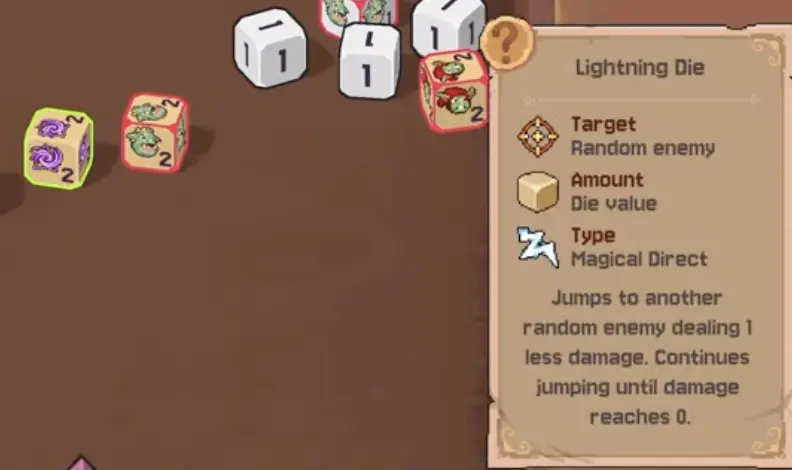
At low HP, a safe turn that deals mediocre damage is often better than a risky turn that could deal huge damage. You only get to benefit from the big combo if you survive long enough to use it.
Best Classes for Boss Fights
For early boss learning, Rogue is the safest class because Dodge can cover mistakes while Blind Strike, Backstab, Poison, and Bomb-style picks give flexible damage.
Mage can beat bosses quickly when the synergy works, especially with Freeze, Arcane, healing, or elemental scaling. The problem is consistency: if the board is bad and the build has no defensive backup, Mage can lose before the damage plan pays off.
Warrior becomes a strong defensive boss class once unlocked. Shield and Stun help stabilize hard turns, but Warrior still needs enough damage to end the fight.
| Class | Boss strength | What it needs |
|---|---|---|
| Rogue | Safest early boss learner | Dodge plus one reliable damage plan |
| Mage | Highest early ceiling | Freeze, healing, or enough support to survive setup turns |
| Warrior | Best defensive unlock target | Shield / Stun plus enough damage to finish fights |
For class details, read the Best Early Classes Guide and Rogue Build Guide.
Common Boss Mistakes
| Mistake | Better approach |
|---|---|
| Spending all runes before the boss | Save at least one defensive or board-fixing rune |
| Entering with low HP and no healing | Take safer nodes or buy recovery first |
| Merging enemy dice without checking the effect | Avoid powering up the boss unless the payoff is worth it |
| Relying on one damage die | Keep a backup plan for webs, blocks, or bad boards |
| Taking every reward before the boss | Upgrade your best tools instead of bloating the board |
| Chasing a huge merge while lethal damage is incoming | Survive first, then build damage |
| Ignoring boss choice | Pick the boss your current build can answer |
FAQ
How do I beat bosses in Rune Dice?
Enter with enough HP, save at least one defensive or board-fixing rune, and bring one reliable damage plan. During the fight, check enemy dice and boss pressure before chasing big merges.
What should I save for boss fights?
Save at least one tool that prevents a losing turn: Protection, Weakness, Shuffle, Gravity, healing, Dodge, Shield, or Stun. Boss fights are not only damage checks. They are usually lost because of low HP, trapped dice, enemy dice, bad board control, or wasted runes.
What do I do when my dice get webbed?
If your key die is webbed and the boss is about to attack, use Shuffle, Gravity, or a defensive rune. Do not waste a turn on a tiny merge that does not fix the board.
Should I take a mini boss before the main boss?
Only if your HP, damage, and defensive tools are stable. Mini bosses can give strong rewards, but a risky mini boss that costs your last rune can make the real boss much harder.
Does boss choice matter?
Yes. If the game gives you multiple boss options, choose based on your current build. AoE builds prefer summon-heavy fights, defensive builds prefer predictable pressure, and low-HP builds should avoid bosses that punish slow starts.
Is Rogue good for boss fights?
Yes. Rogue is one of the best early boss-learning classes because Dodge helps cover mistakes while Blind Strike, Backstab, Bomb, and Poison give flexible damage options.
Is Mage good for boss fights?
Mage can be excellent when Freeze, Arcane, healing, or elemental synergy comes together. It is less forgiving if you have no defensive backup.
Is Warrior good for boss fights?
Yes, once unlocked. Warrior’s Shield and Stun tools are useful for surviving boss pressure, but the build still needs enough damage to end the fight.
Should I choose the easiest-looking boss?
Not always. Choose the boss your current build can handle. A summon-heavy boss is easier with Bomb or AoE. A board-control boss is easier with Shuffle or Gravity.
What should I read next?
Read the Rune Dice Chain Merge Guide to improve your board control, the Rune Dice Rogue Build Guide for a safer first boss build, and the Rune Dice Class Unlock Guide for progression routes.
Continue Reading in the Rune Dice Guide Cluster
This article is part of our Rune Dice strategy cluster. Use these guides to keep learning the game's core systems and routes.
Build a stronger Rune Dice Rogue with John Wickblade vs Romeo Deathbrew tips. Master Dodge stacks, Phantom Strike, best dice, runes, and relics to win.
Advanced TipsRune Dice Merge Guide: Big Combos & 8-Die MergesMaster Rune Dice chain merging. Learn push merges, ricochet angles, two-trigger turns, and rune timing to build 8-value dice and trigger massive combos.
ClassesRune Dice Beginner Guide: Tips, Runes & RelicsLearn how to win more runs in Rune Dice. Master dice merging, runes, relics, class choices, map routes, and boss prep with these essential beginner tips.
ClassesRune Dice Best Classes & Beginner Tier ListFind the best early classes in Rune Dice. Discover beginner tier lists, Rogue vs Mage tips, character variants, and Hard Mode picks to dominate your runs.