Hotel Architect Guide
Hotel Architect NY Guide: Bootstrap vs Loan vs Investment
Complete Hotel Architect New York guide. Compare Bootstrap, City Loan, and Investment. Master the 10x10 footprint, 25-floor limit, and 10th-floor rush method.
New York is the first Hotel Architect scenario where the opening financing choice changes the way you play the map.
You start on a compact 10x10 footprint, but the map can rise up to 25 floors. That means New York looks tiny on the ground and huge in total buildable capacity. The scenario asks you to reach the 10th floor, but the 10th floor is not the limit. The extra floors are where New York becomes a skyscraper hotel: more rooms, stronger late-game income, and premium guest stacking.
For most first clears, City Loan is the safest financing option. Bootstrap is the tight challenge route. Investment gives more early funding but adds dividend timing and hotel-value pressure.
The numbers in this guide are written for the current Standard / Normal-style scenario data. If a future balance patch changes objective values, follow the objective text shown in your in-game financing screen.
Fast Answer
| Question | Answer |
|---|---|
| Best financing option for a first clear | City Loan. It gives the most comfortable balance between starting cash and manageable objectives. |
| Hardest route | Bootstrap, because $150,000 leaves little room for bad layouts or overhiring. |
| Most tempting but risky route | Investment, because $275,000 feels generous, but dividends and hotel value still create pressure. |
| New York footprint | 10x10 per floor. The ground footprint is small, so every tile matters. |
| Maximum height | 25 floors. The 10th floor is a scenario objective, not the maximum. |
| Total buildable logic | 10x10x25 means New York can have more total stacked hotel space than wider low-rise maps. |
| Climate | Temperate. New York is not a heat or cold puzzle. |
| Guest types | All guest types can appear, but do not target all of them early. |
| Best long-term plan | Build a repeatable vertical core, then stack profitable rooms and premium guest floors above it. |
New York Map and Scenario Data
New York is a vertical-efficiency test.
| Rule | Value / impact |
|---|---|
| Footprint | 10x10 per floor |
| Maximum floors | 25 floors |
| Climate | Temperate |
| Guest types | All |
| Scenario type | Empty plot / skyscraper hotel |
| Main theme | Financing choice, vertical design, profitability |
| Height objective | Expand the hotel to the 10th floor |
| Full height potential | Continue up to 25 floors after the 10th-floor objective |
| Shared late objective | Reach a daily net worth change of at least +$50,000 |
| First two objectives | Change depending on Bootstrap, City Loan, or Investment |
The footprint number and the total-tile number can feel contradictory at first. The map is only 10x10 on each floor, but 25 floors gives it a lot of stacked capacity. That is why New York is small for layout planning but huge for vertical growth.

Financing Objectives Compared
The first two New York objectives depend on your financing choice. Read these before choosing, because each route changes what the scenario expects from you.
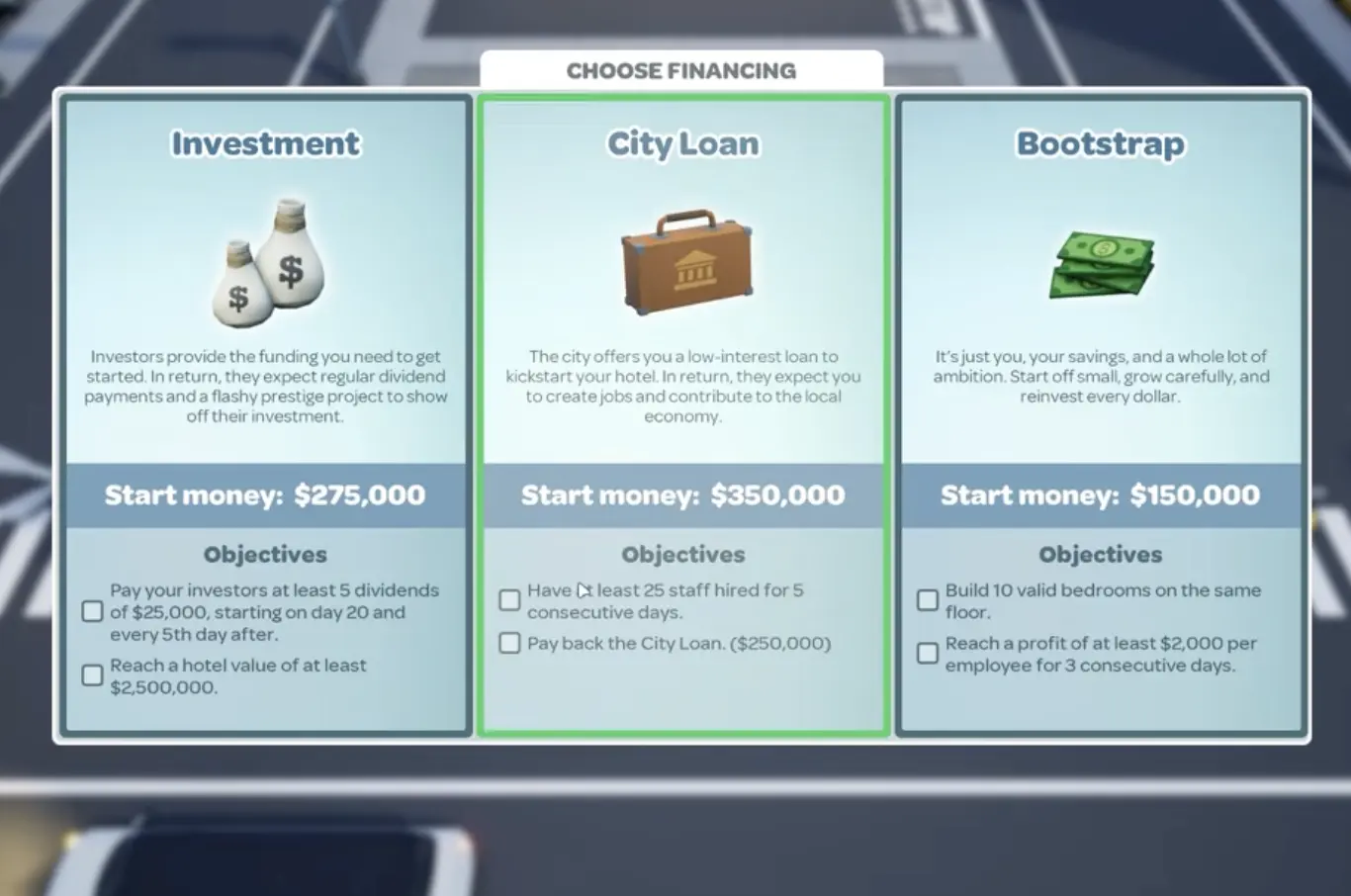
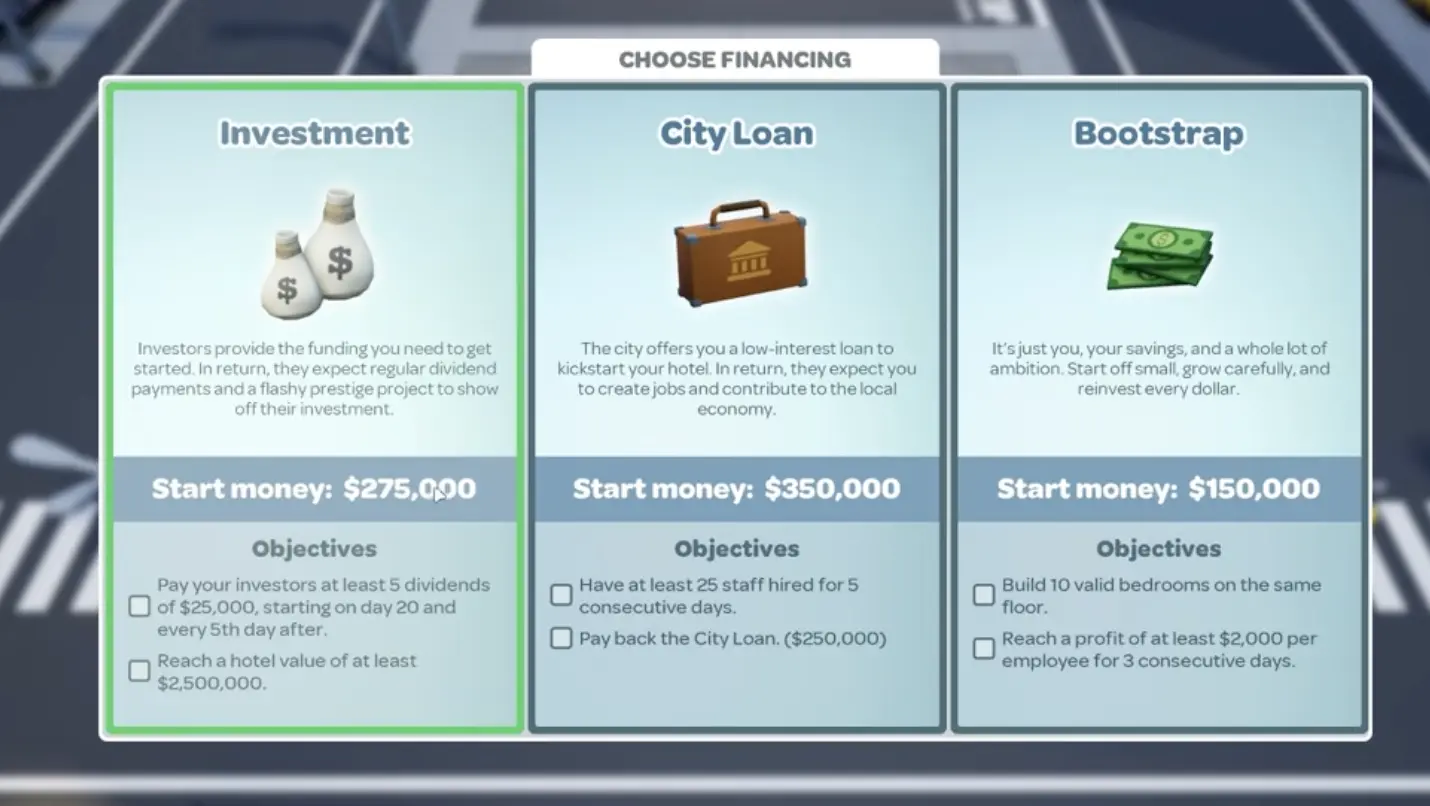
| Financing route | Starting money | Route-specific objectives | What it really tests |
|---|---|---|---|
| Investment | $275,000 | Pay at least 5 dividends of $25,000, starting on day 20 and every 5th day after; reach a hotel value of at least $2,500,000. | Scaling, prestige, value growth, and cash timing. |
| City Loan | $350,000 | Have at least 25 staff hired for 5 consecutive days; pay back the City Loan of $250,000. | Safe growth, job creation, and debt repayment. |
| Bootstrap | $150,000 | Build 10 valid bedrooms on the same floor; reach at least $2,000 profit per employee for 3 consecutive days. | Lean building, low staffing, and high efficiency. |
The shared New York objectives then push you toward height and financial performance:
| Shared objective | Reward / purpose |
|---|---|
| Complete an objective tied to your funding choice | Unlocks a progression reward. |
| Complete an objective tied to your funding choice | Unlocks a progression reward. |
| Expand your hotel to the 10th floor | Tests vertical planning. |
| Reach a daily net worth change of at least +$50,000 | Tests whether the skyscraper is actually profitable. |
Which Financing Route Should You Pick?
Use this table instead of choosing by starting money alone.
| Route | Pick it if… | Main risk | First-clear rating |
|---|---|---|---|
| City Loan | You want the smoothest first clear and enough money to build properly. | You may overhire for the 25-staff objective before rooms can support payroll. | Best default. |
| Bootstrap | You like tight cash-flow challenges and compact layouts. | One bad layout or unnecessary staff hire can stall the run. | Hardest. |
| Investment | You want a bigger start and can convert cash into hotel value quickly. | You need cash ready for dividends while still growing hotel value. | Strong but risky. |
For a blind run, take City Loan. It lets you learn New York’s vertical layout without the starvation of Bootstrap or the dividend pressure of Investment.
For a quick choice, use this decision tree:
Is this your first New York clear?
├─ Yes → Pick City Loan.
└─ No
   ├─ Do you want a strict low-cash challenge?
   │  ├─ Yes → Pick Bootstrap.
   │  └─ No
   │     ├─ Can you protect $25,000+ before dividend days?
   │     │  ├─ Yes → Pick Investment.
   │     │  └─ No → Pick City Loan.
What Each Route Changes in Practice
All three routes need vertical planning, compact rooms, staff control, and cash flow. The difference is where the pressure comes from.
| System | City Loan | Bootstrap | Investment |
|---|---|---|---|
| Cash pressure | Medium | High | Easier early, stricter when dividends start |
| Staff pressure | You eventually need 25 staff for the route objective. | Keep staff count low because profit per employee matters. | Staff can grow, but only if value and dividend cash stay safe. |
| Room pressure | Build enough income to repay the loan. | 10 valid bedrooms on one floor is a key route target. | Build value without bloating costs. |
| Expansion style | Balanced floors and steady repayment. | Compact, low-waste rooms. | Higher-value rooms and faster scaling. |
| Biggest trap | Treating the loan as free money. | Building too slowly or hiring too much. | Missing dividend timing or building value without profit. |
Investment Dividend Timing
Investment is not just “more money.” It creates future payment pressure.
The objective asks for at least 5 dividends of $25,000, starting on day 20 and then every 5th day after. That means you should prepare before day 20, not react on day 20.
Use this rule:
| Timing | What to do |
|---|---|
| Before day 15 | Stop spending every spare dollar. Start building a cash buffer. |
| Day 15–19 | Make sure you can cover the first $25,000 dividend plus wages and service costs. |
| Dividend days | Keep enough cash to pay without pausing room upgrades or staff operations. |
| If you are short | Stop expansion and protect income. Do not sell useful assets unless the objective is blocked. |
A missed dividend may not mean the whole scenario instantly fails, but it blocks or delays route progress. Treat each dividend date like a bill you know is coming.
A safer Investment cash plan looks like this:
| Day range | Cash plan |
|---|---|
| Days 1–10 | Build income-producing rooms and keep the hotel lean. Do not spend the full $275,000 on construction. |
| Days 11–15 | Stop optional upgrades and start protecting dividend cash. |
| Days 16–19 | Aim to hold at least $25,000 plus operating cash. A safer buffer is closer to $35,000–$50,000 if wages and service costs are high. |
| Day 20 | Let the first dividend go out without interrupting room cleaning, maintenance, or guest service. |
| After Day 20 | Rebuild the buffer before the next 5-day dividend cycle. |
Bootstrap: What Counts as a Valid Bedroom?
Bootstrap asks for 10 valid bedrooms on the same floor. Do not treat this as “draw 10 bedroom zones and hope.”
For a safe valid-bedroom target, each room should be:
| Requirement | Why |
|---|---|
| Properly zoned as a bedroom | The game must recognize the room. |
| Reachable by guests and staff | A room without usable access is not a working bedroom. |
| Enclosed correctly | Broken walls or invalid room shape can prevent recognition. |
| Equipped with required bedroom items | At minimum, use the required bed, wardrobe, and luggage rack logic from normal bedrooms. |
| Not blocked by service pathing | Staff must be able to clean and maintain it. |
| On the same floor | The objective is not “10 bedrooms total”; it is same-floor density. |
For Bootstrap, do not make these rooms luxurious at first. Make them valid, cheap, and serviceable. Then improve value once income is stable.
Opening Build Order
Use this as a safe first-clear opener. For Bootstrap, build smaller. For Investment, keep the same logic but prepare for value and dividends sooner.
| Step | Build / action | Why |
|---|---|---|
| 1 | Build a compact reception. | Guests need to check in before anything earns. |
| 2 | Add a tiny staff room. | Keep staff functional but do not waste the ground floor. |
| 3 | Add maintenance space. | Repairs matter in a tall hotel. |
| 4 | Place stairs and reserve elevator space. | New York is about vertical planning from the start. |
| 5 | Build the first small room floor. | Finished rooms earn; empty structure does not. |
| 6 | Use compact bathrooms. | Private bathrooms help room quality without wasting the whole floor. |
| 7 | Add laundry before room count grows. | Tall hotels collapse if sheets and towels cannot keep up. |
| 8 | Add cheap seating, refreshments, and entertainment. | These solve early complaints without a luxury rebuild. |
| 9 | Check cash flow before expanding again. | New floors should be funded by income, not panic debt. |
| 10 | Copy the working room template upward. | Repeatable layouts are the point of New York. |
Research Tree Priority for New York
New York has tighter space and taller service routes than earlier maps, so research should help you reduce friction.
| Priority | Research / upgrade type | Why it helps New York |
|---|---|---|
| 1 | Larger Shelves / storage efficiency | Space is tight on a 10x10 footprint. Better storage can save valuable tiles. |
| 2 | Financial / credit support if cash flow is genuinely blocked | Useful on New York because route objectives can create temporary financing pressure. Treat it as a bridge, not permission to expand debt. |
| 3 | Speedy Builders | Faster construction helps when stacking floors upward. |
| 4 | Laundry upgrades | More floors mean more sheets and towels. |
| 5 | Elevator unlock / vertical access | Important for tall hotels, but reserve space before you can build it. |
| 6 | Staff training | Good after the hotel is stable and staff are worth investing in. |
| 7 | Luxury unlocks | Save these for after cash flow, rooms, and service routes work. |
Elevator Planning: When Do You Actually Get Elevators?
Do not expect elevators to be available instantly at the start of New York. Treat elevators as a research / upgrade-tree milestone.
The safe approach is:
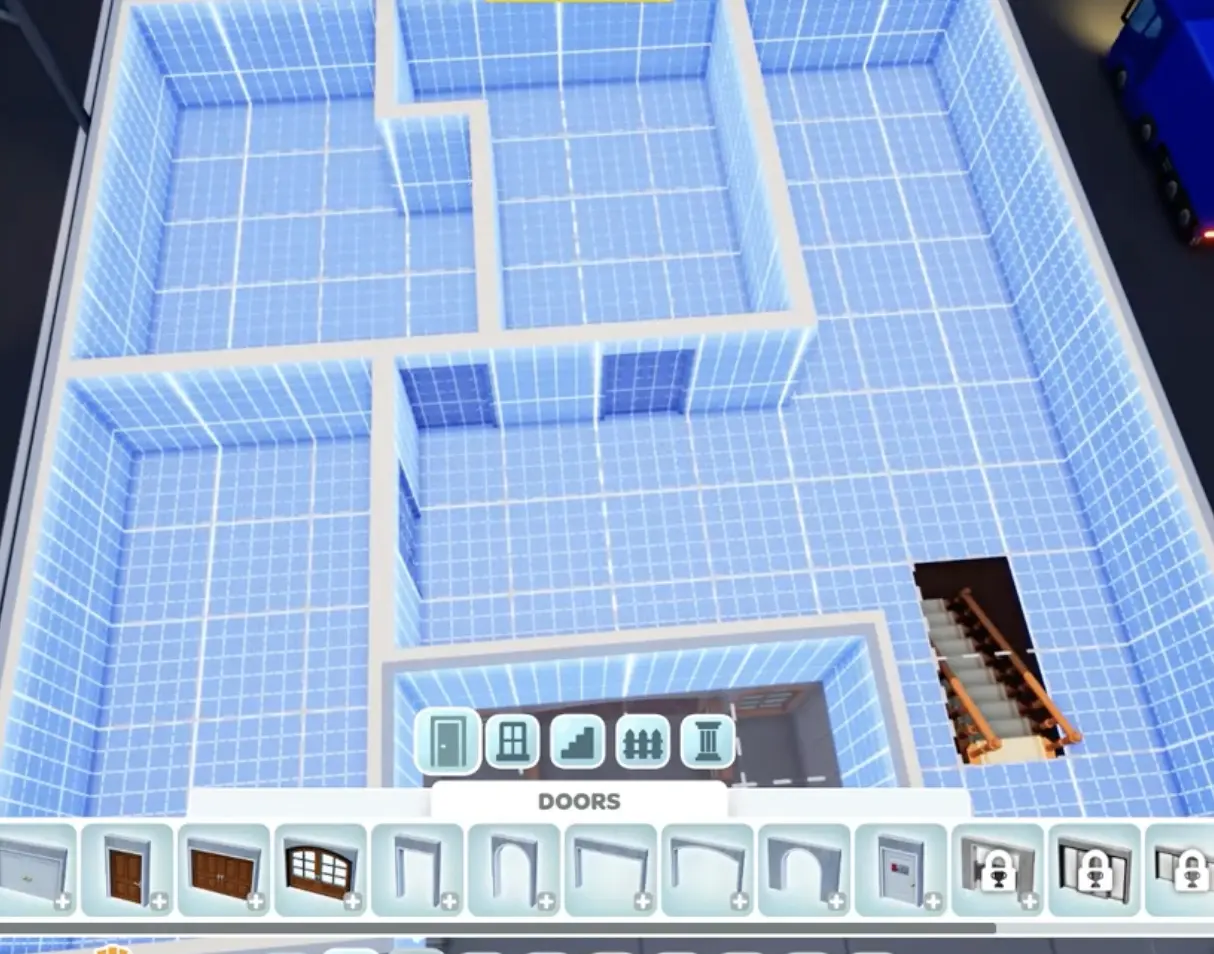
- Leave a 3x3 or similarly clean shaft area near your stairs.
- Use stairs for the first floors.
- Keep corridors aligned around the future vertical core.
- Spend research points toward elevator access when the tree allows it.
- Add elevators before guest and staff travel time becomes painful.
The exact point cost can vary by build or balance patch, so check the current upgrade tree in your game. The important thing is not the number; it is reserving the space before your hotel shape blocks it.
The 10th Floor Objective vs the 25-Floor Limit
New York has two height ideas:
| Height | Meaning |
|---|---|
| 10th floor | Scenario objective. You need to reach this to progress. |
| 25th floor | Maximum New York height. This is for long-term skyscraper building and late-game strategies. |
You do not need to fully furnish floors 1 through 10 just to trigger the height objective. If you only want the objective quickly, use the stair-shaft method below.
4x4 Stair-Shaft Rush to the 10th Floor
If your economy is stable and you only want to complete the height objective, you can build a narrow vertical shaft instead of full floors.
Use this method:
- Reserve a 4x4 area for stairs / vertical access.
- Build only the minimal foundations needed to continue upward.
- Stack stairs upward floor by floor.
- Stop when the hotel reaches the 10th floor.
- Do not furnish every floor unless you actually need those rooms.
This is a rush method, not a good hotel design. It completes the height requirement, but it does not create income by itself. Use it when you have enough cash and only need the objective.
The same idea also matters for post-10th-floor goals: New York can reach 25 floors, and some late objectives or achievement-style challenges care about the top floor.
Floor Function Template
Here is a practical way to think about the 25-floor skyscraper.
| Floor range | Recommended use | Notes |
|---|---|---|
| Ground floor | Reception, compact guest seating, basic staff/service access | Do not waste it on huge decoration early. |
| Floors 2–4 | Standard guest rooms | Use repeatable bedrooms and compact bathrooms. |
| Floors 5–8 | More rooms + laundry/service support | Add support before staff travel becomes painful. |
| Floors 9–10 | Objective push floors | Finish the 10th-floor objective, but do not overbuild empty floors. |
| Floors 11–18 | Profitable room stacking | Expand only if cleaning, laundry, and reception can keep up. |
| Floors 19–25 | Premium / Upper Crust strategy | Good area for high-value rooms once your hotel rating and services are ready. |
This is a template, not a rule. The real rule is that every new floor must either earn money, support service flow, or complete an objective.
Compact Room Layout Tips
New York rewards rooms that are small, complete, and easy to copy.
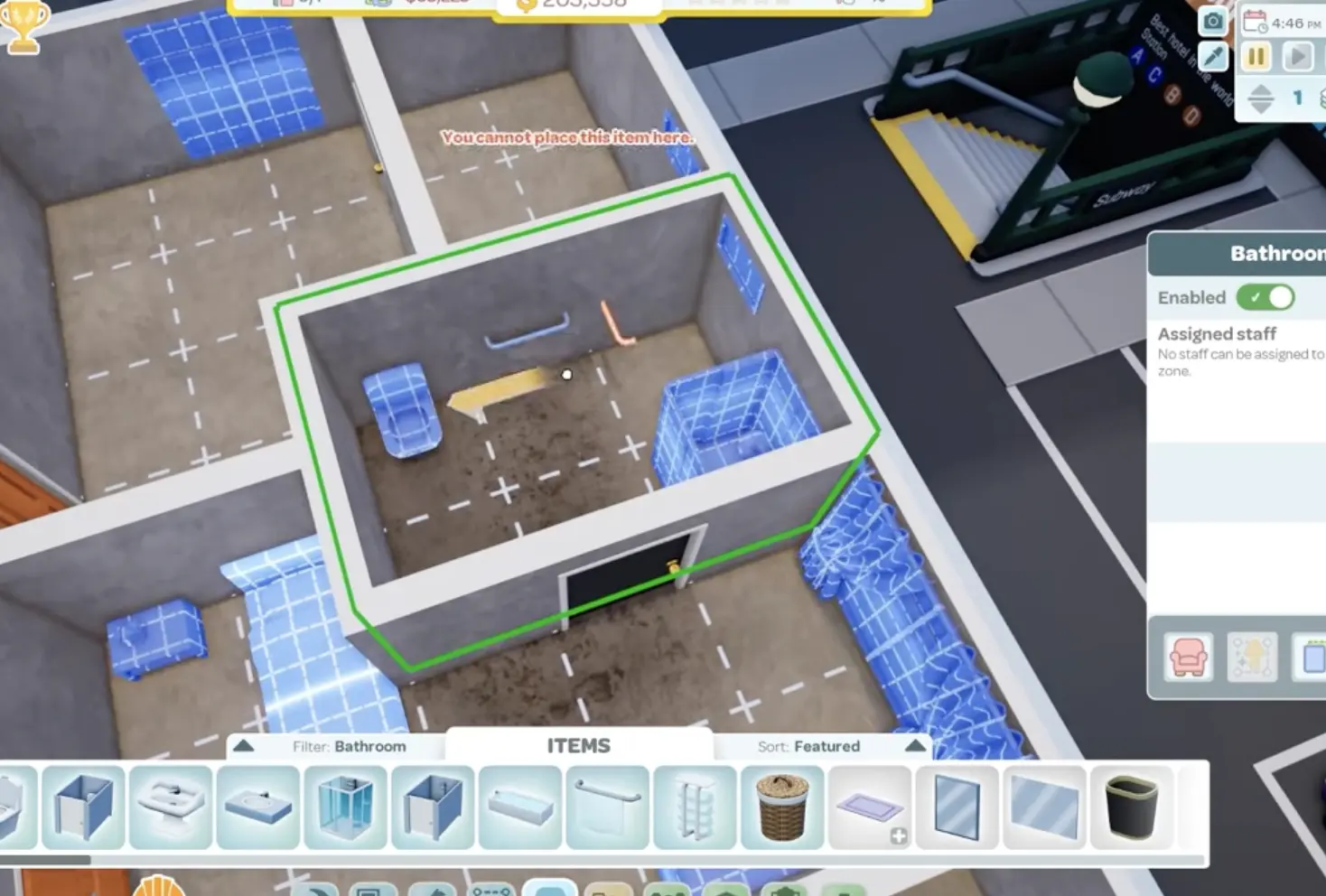
A good early room should include:
- bed
- wardrobe
- luggage rack
- bedside table if affordable
- compact bathroom
- shower
- sink
- toilet
- towel rail
- reachable door
- window if the layout allows it
For Bootstrap, keep these rooms lean and cheap. For City Loan, use them to stabilize income. For Investment, upgrade room value sooner, but only after the room template works.
Reserve the Vertical Core
The worst New York layout mistake is filling the whole 10x10 footprint with rooms and then realizing you have no clean route for stairs, elevators, laundry, and staff.
Reserve:
- stair space
- future elevator space
- a clear vertical core
- short corridors
- service access
- laundry / waste planning
- room-copy paths
Retrofitting elevators into a bad tower is much more painful than reserving the core early.
Laundry, Waste, and Temperate Climate
New York’s climate is temperate, so the map itself is not a heat or cold puzzle. Do not spend early money as if you are solving Santorini heat or St. Anton cold.
Your real environmental problems are service problems:
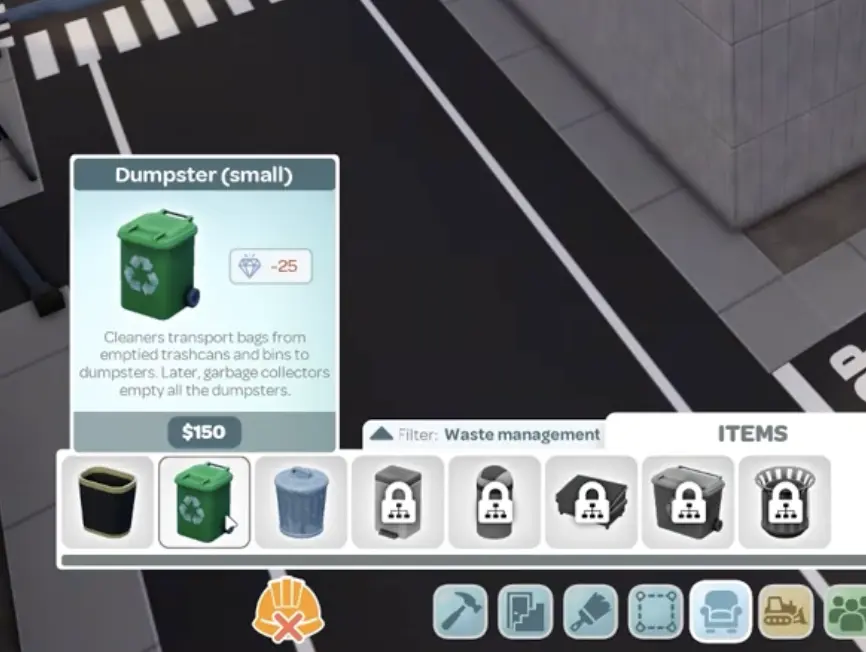
| System | Why it matters in New York |
|---|---|
| Laundry | More floors mean more sheets, towels, and cleaner travel. |
| Waste | Trash piles up fast when services are stacked vertically. |
| Staff routes | Every extra floor makes walking time more expensive. |
| Elevators / stairs | Guests and staff need short, logical routes. |
| Service rooms | Upper floors may need support instead of one overloaded ground-floor room. |
Add service capacity before the hotel becomes too tall to manage.
Upper Crust Stacking Strategy
Once the hotel is stable, New York’s 25-floor limit gives you room for a high-value premium strategy.
A practical late-game pattern is to use upper floors for small premium clusters, such as three Upper Crust rooms per floor around a compact vertical core. This is not an opening strategy. It works after you have:
- better star rating
- premium room items
- strong cleaning and laundry
- bar / spa / restaurant support where needed
- enough elevators or short travel routes
- cash flow that can survive expensive rooms
Use the Business and Upper Crust guest guide before converting many upper floors into premium rooms.
Improve the First Critic Review
Your first critic may complain about basic things: no seating, no gym, weak entertainment, poor refreshments, bad sleep quality, trash, or low attractiveness.

Fix the cheapest missing categories first.
| Critic complaint | Fast fix |
|---|---|
| No seating | Add a small seating area near reception or guest paths. |
| No refreshments | Add water or coffee before building a full bar or restaurant. |
| No entertainment | Add one simple activity item that matches your guests. |
| Poor sleep quality | Improve beds, room decor, bathrooms, and cleanliness. |
| Low attractiveness | Upgrade visible guest-facing floors, walls, art, plants, and lighting. |
| Trash / dirty areas | Add bins, cleaners, and laundry capacity. |
| No gym | Build a compact gym once Sporty guests or star progress need it. |
Do not respond to one bad critic visit by rebuilding the whole hotel. Fix the missing category, then let the next review catch up.
Recommended First-Clear Route
This route assumes City Loan. If you choose Bootstrap, reduce room count and staff. If you choose Investment, keep a dividend buffer.
| Phase | What to do |
|---|---|
| 1 | Choose City Loan. |
| 2 | Build a compact reception, staff room, maintenance room, and stair core. |
| 3 | Reserve elevator space before filling the footprint. |
| 4 | Build a repeatable bedroom + bathroom template. |
| 5 | Open enough rooms to create positive cash flow. |
| 6 | Add laundry, bins, seating, refreshments, and basic entertainment. |
| 7 | Fix the first critic’s cheapest complaints. |
| 8 | Repay City Loan chunks only when you still have an operating buffer. |
| 9 | Copy the room template upward. |
| 10 | Use the 4x4 stair-shaft rush only if you need the 10th-floor objective quickly. |
| 11 | Push daily net worth change after the hotel is actually earning. |
| 12 | Convert upper floors into premium / Upper Crust rooms only after the core hotel is stable. |
Top-Floor Bonus Objective / Achievement Tip
Some players get stuck on a top-floor objective that asks them to place or drop a character from the highest floor.
The simple method is:
- Build access up to the required top floor.
- Pick up a character.
- Move them above the sidewalk / outside edge.
- Put them down from the top-floor height.
Do this as a bonus or achievement-style task, not during your fragile opening economy. Build the height first, then handle the character action when the hotel can afford the construction.
Financial Checklist for New York
Check these numbers often.
| Metric | Why it matters |
|---|---|
| Cash flow | Shows whether the hotel is actually earning after expenses. |
| Daily net worth change | Required for New York progression. |
| Profit per employee | Crucial for Bootstrap and useful for every route. |
| Loan balance | Important for City Loan repayment. |
| Dividend timing | Important for Investment. |
| Staff wages | Tall hotels can become overstaffed quickly. |
| Room count | Too few rooms means weak income; too many unfinished rooms means wasted cash. |
| Guest complaints | Cheap fixes can prevent bad reviews. |
Common New York Mistakes
| Mistake | Why it hurts |
|---|---|
| Thinking the 10th floor is the maximum | New York can go to 25 floors; 10 is only the objective. |
| Filling every floor before reaching the 10th | You can rush a stair shaft if you only need height. |
| Not reserving elevator space | Later vertical expansion becomes awkward or expensive. |
| Building rooms before laundry | Dirty rooms and missing towels can crush reviews. |
| Overstaffing | Profit per employee and cash flow both suffer. |
| Building premium rooms too early | Upper Crust floors need rating, services, and income first. |
| Forgetting Investment dividend dates | Keep at least $25,000 plus operating cash ready before day 20 and each later dividend cycle. |
FAQ
What is the best financing option in Hotel Architect New York?
City Loan is the best first-clear option for most players. Bootstrap is the challenge route, while Investment is best if you can build value quickly and keep enough cash for dividends.
Is the 10th floor the maximum in New York?
No. The 10th floor is a scenario objective. New York can go up to 25 floors.
How do I reach the 10th floor quickly?
Build a narrow 4x4 stair shaft upward instead of fully furnishing every floor. This completes the height goal faster, but it does not generate income by itself.
What are the New York financing objectives?
Investment asks for dividends and hotel value. City Loan asks for 25 staff for 5 consecutive days and repayment of the $250,000 loan. Bootstrap asks for 10 valid bedrooms on one floor and $2,000 profit per employee for 3 consecutive days.
What counts as a valid bedroom for Bootstrap?
Use rooms that the game actually recognizes as bedrooms: properly zoned, reachable, enclosed, and equipped with required bedroom items such as bed, wardrobe, and luggage rack. Keep them simple until the objective completes.
When do elevators unlock?
Elevators are not an instant starting tool. Reserve space from the beginning, then unlock them through the upgrade / research tree when available in your build. Check your in-game tree for the current point cost.
What happens if I miss an Investment dividend?
Do not plan to miss one. The dividend objective needs successful payments, so missing a dividend can delay or block progress toward the financing objective. Keep at least $25,000 plus operating cash before dividend days.
Is Bootstrap bad?
No. Bootstrap is just less forgiving. It is good if you already understand compact layouts, staff efficiency, and cash flow.
Is Investment the easiest route?
Not always. Investment gives more starting money, but dividends and hotel value objectives can punish slow or inefficient growth.
Should I build to the 25th floor?
Not immediately. Reach the 10th for the objective, then go higher only when your hotel has stable income, service capacity, and a reason to use the upper floors.
Does New York need special heating or cooling?
New York is temperate, so climate is not the main challenge. Focus on vertical service flow, laundry, waste, elevators, and profitability.
Why is my New York hotel not profitable?
You may have too many staff, too few rentable rooms, unfinished floors, weak room value, dirty rooms, or expensive services that do not pay back yet.
Continue Reading in the Hotel Architect Guide Cluster
This article is part of our Hotel Architect strategy cluster. Use these guides to keep learning the game's core systems and routes.
Struggling with bankruptcy in the Hotel Architect London scenario? Our guide covers debt recovery, lowering debt ratio below 50%, and stock market objectives.
Strategy GuideHotel Architect Money Guide: Fix Debt & Negative Cash FlowStop losing money in Hotel Architect! Our guide covers fixing negative cash flow, managing staff costs, safe loan strategies, and recovering from bankruptcy.
Guest GuideHotel Architect Guide: Business & Upper Crust GuestsMaster Hotel Architect advanced guests! Learn room requirements to attract Business, Brat, and 5-star Upper Crust guests. Fix why guests aren't showing up.
Strategy GuideHotel Architect Star Guide: Fix Critics & Get 5 StarsStuck at 3 or 4 stars in Hotel Architect? Master the critic system, earn upgrade points, and learn the Bar and Spa requirements to hit a 5-star rating.