Warhammer 40000 Guide
Mechanicus 2 vs Mechanicus 1: What Changed
See what changed in Mechanicus 2 for returning players, including factions, cover, terrain destruction, Cognition, Dominion, turn order, and campaign scale.
Warhammer 40,000: Mechanicus II is not just Mechanicus 1 with more missions. Returning players need to adjust to a bigger campaign layer, two fully playable factions, a redesigned Cognition economy, Necron Dominion, more important cover, destructible terrain, and a more flexible turn structure.
You can play Mechanicus 2 without replaying Mechanicus 1 first. It is a direct sequel with returning characters and consequences, but the new planet, dual campaign structure, and tutorialized faction systems make it playable as a fresh entry.
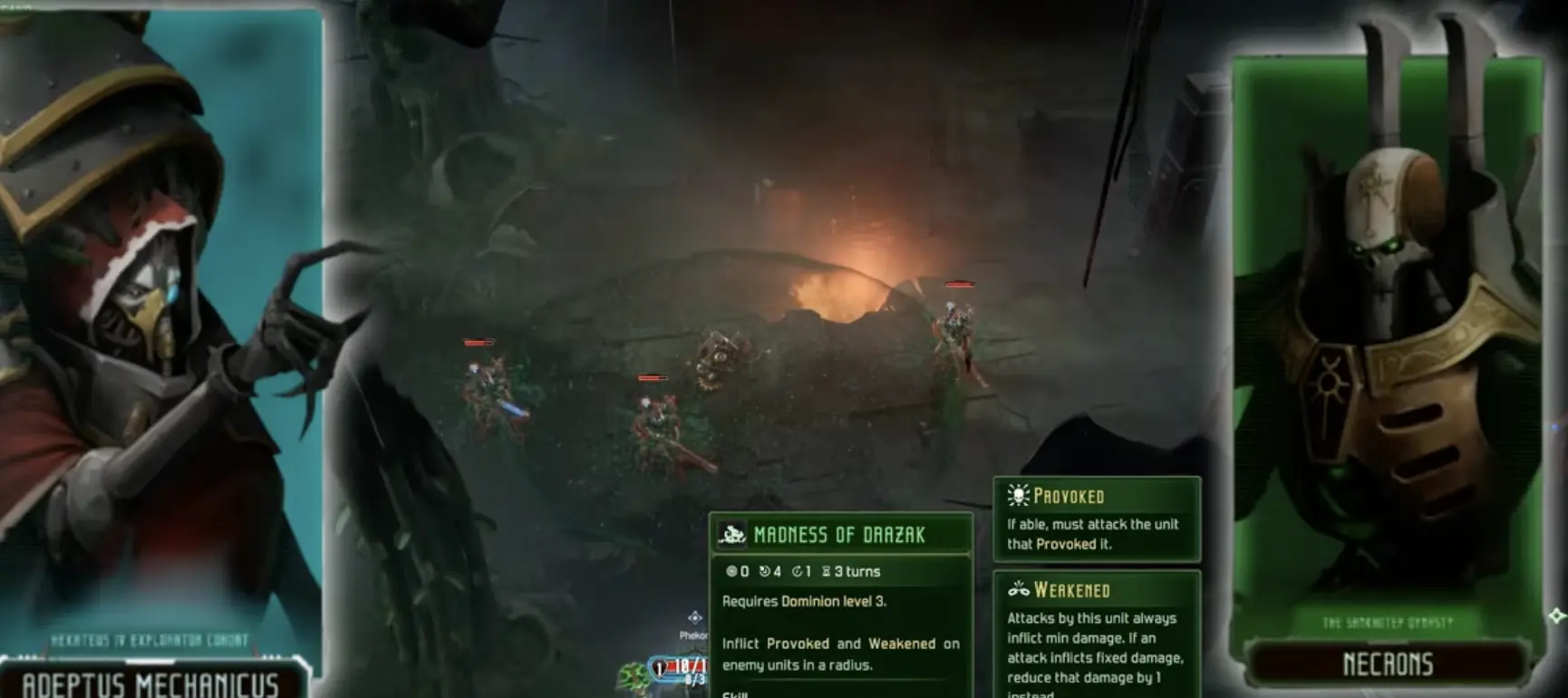
Mechanicus 2 is built around two campaign perspectives: Adeptus Mechanicus and Necrons. Returning players should treat them as different tactical economies, not simple unit skins.
Quick Reference for Returning Players
Skim this first if you played Mechanicus 1 and only want the important differences.
| Returning player question | Short answer |
|---|---|
| Do I need to replay Mechanicus 1 first? | No. Mechanicus 2 follows the first game, but the new campaign is understandable on its own. |
| What is the biggest gameplay change? | You now manage two different faction systems: AdMech Cognition and Necron Dominion. |
| What will feel most different in combat? | Cover, terrain destruction, and unit activation choices matter much more. |
| Is Cognition the same as Mechanicus 1? | No. Units now generate Cognition in different ways, and Leaders spend it through faction-specific tools. |
| Which campaign is easier to start with? | Necrons are usually easier to understand first because their identity is more direct: advance, damage, reanimate, and scale through Dominion. |
| What should AdMech veterans unlearn first? | Do not treat Cognition as a generic shared pool you can solve after positioning. Positioning now helps create Cognition. |
Biggest Change 1: There Are Two Playable Factions
Mechanicus 1 was an Adeptus Mechanicus game about exploring and surviving Necron tombs. Mechanicus 2 lets you play both sides of the conflict.
The important part is not just that Necrons are playable. The important part is that the two factions run on different tactical logic.
| Faction | Returning-player read |
|---|---|
| Adeptus Mechanicus | More technical, more positional, more resource-sensitive. You need to generate and spend Cognition well. |
| Necrons | More direct early on. You build momentum through damage, Dominion, reanimation, and Lord-retinue planning. |
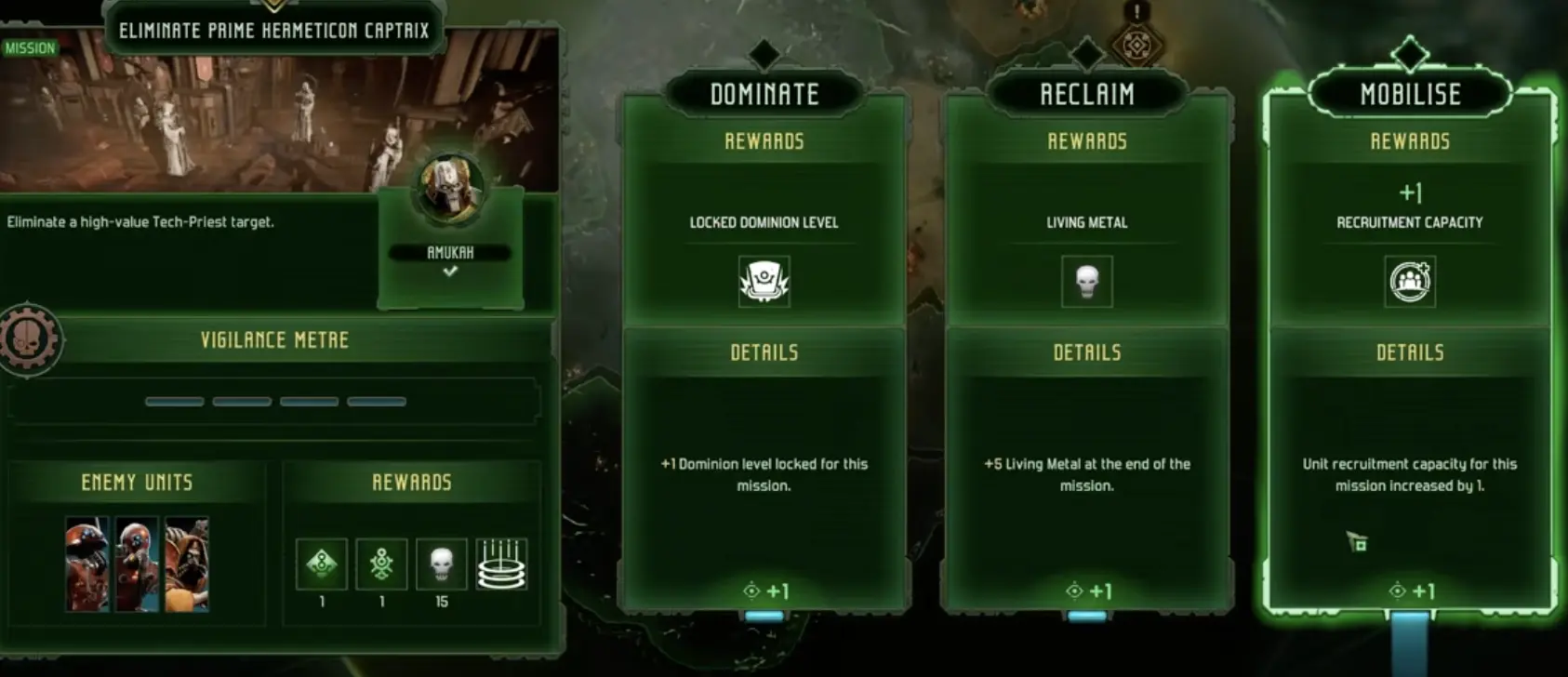
Necron Lords are tied to retinues, unit unlock paths, and Dominion scaling. They do not feel like AdMech Leaders with different models.
Biggest Change 2: Cover and Terrain Now Shape Every Fight
This is one of the most important changes for returning players.
In Mechanicus 1, positioning mattered, but Mechanicus 2 makes battlefield shape more central. The Adeptus Mechanicus side wants to use cover, firing lanes, and safe angles. Necrons can play more aggressively with terrain because they can destroy or ignore some of the positional advantages that AdMech wants to preserve.
How the New Terrain Identity Works
| Side | How terrain changes your play |
|---|---|
| Adeptus Mechanicus | Use cover to protect fragile units, hold firing angles, and preserve Cognition-generating positions. |
| Necrons | Push into space, break defensive positions, and pressure units that are relying too heavily on cover. |
For returning players, this means you should stop thinking only in terms of attack range and ability order. Ask these questions before spending actions:
- Is this unit safe after it attacks?
- Does this position let Rangers keep distance for Cognition?
- Will moving forward expose my Leader?
- Can the enemy destroy or bypass this cover next turn?
- Am I using cover as a plan, or just hiding behind it?
The main adjustment is simple: AdMech wants cover to make a plan work. Necrons want to turn cover into a temporary problem.
Biggest Change 3: Cognition Is Redesigned
Cognition returns, but it should not be treated like the Mechanicus 1 version.
In Mechanicus 1, returning players remember Cognition as a shared resource that helped power movement and abilities. In Mechanicus 2, the important change is that different unit types generate Cognition through different behaviors. That makes positioning part of the resource economy.
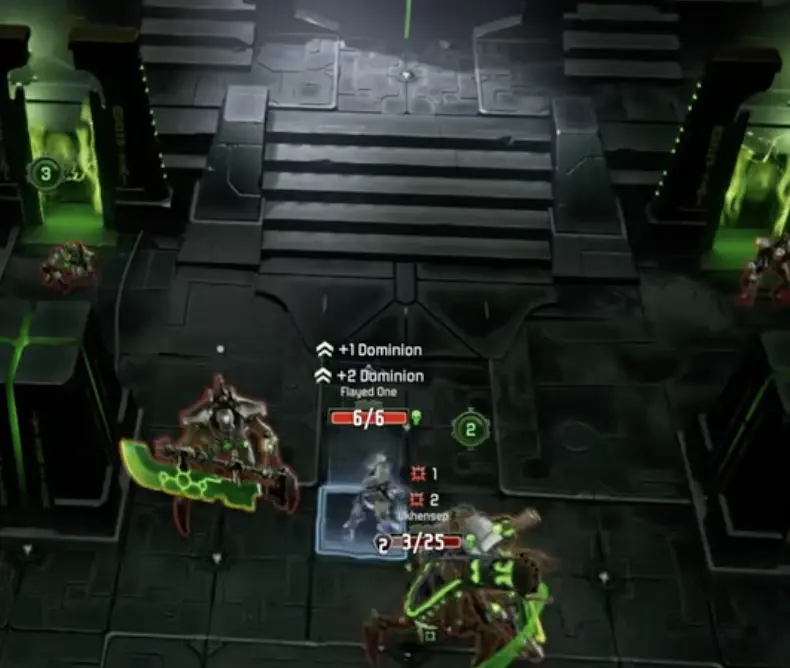
Returning players should not assume old Cognition habits still work. Mechanicus 2 ties Cognition more directly to unit role, positioning, and Leader skill usage.
Early Cognition Examples
| Unit or role | How it can create value | Tactical meaning |
|---|---|---|
| Rangers | Generate Cognition by attacking from safe distance, such as over 5m in early examples. | Keep them at range. Do not chase kills if moving closer breaks the generation condition. |
| Servitors | Can generate Cognition by taking damage. | They are not just disposable bodies; they can be used as a front-line pressure sponge. |
| Leaders | Spend Cognition through weapons, skills, control effects, empowerment, or faction-specific tools. | Do not spend Cognition just because you have it. Save it for the action that changes the fight. |
What Returning Players Need to Change
| Old habit | Mechanicus 2 adjustment |
|---|---|
| “I will generate Cognition first, then solve positioning.” | Positioning is how you generate Cognition efficiently. |
| “Servitors are just cheap bodies.” | Servitors can create resource value by absorbing pressure. |
| “Ranged units should always move for the best shot.” | Rangers may need to preserve distance to generate Cognition. |
| “Leader actions are the plan.” | Leader actions are the payoff; units create the resource base. |
If you are struggling with AdMech early, the problem is often not that your Leader is weak. The problem is that your army is not generating clean Cognition turns.
Biggest Change 4: Necrons Use Dominion Instead of Cognition
Necrons do not play like AdMech with green weapons. They use Dominion, a momentum system built around dealing damage and scaling through the fight.
The early rule is easy to understand:
1 damage dealt = 1 Dominion pointNecrons gain 1 Dominion point for each point of damage dealt, so early Dominion levels can come online quickly if your army keeps dealing damage. For exact early thresholds and upgrade timing, see the Mechanicus 2 Early Upgrades and Resources Guide.
| Dominion state | What it means for returning players |
|---|---|
| Low Dominion | Your Necron force is still using its basic kit. |
| First levels gained | Some tools begin to feel stronger or unlock extra value. |
| Higher Dominion | Necrons can snowball hard if the fight lasts long enough. |
| Later progression | Some upgrades can help preserve Dominion levels between fights. |
This is why Necrons often feel easier to start with. The combat identity is intuitive: deal damage, build Dominion, reanimate, and keep pressure on the enemy.
Biggest Change 5: Turn Order Is More Flexible
Another major returning-player adjustment is the new approach to activation. Instead of simply waiting for a fixed individual turn order to hand you the next unit, Mechanicus 2 puts more emphasis on choosing which unit to act with on your turn.
That changes the tactical question:
Mechanicus 1 habit: “What does the next unit in the queue do?”
Mechanicus 2 habit: “Which unit should act now to set up the rest of the turn?”
Why This Matters
| Situation | Better activation logic |
|---|---|
| Ranger has a safe shot | Activate the Ranger before moving other units if the shot generates Cognition. |
| Servitor can absorb pressure | Move the Servitor before exposing a Leader. |
| Leader has a strong spend | Generate or preserve Cognition first, then activate the Leader. |
| Necrons can finish a target | Use the damage action that builds Dominion before spending a payoff skill. |
| Cover is about to be destroyed | Activate the unit relying on that cover before the position collapses. |
This makes turns feel more player-driven. The bad habit is spending actions in the order they look convenient. The better habit is to ask which activation improves every later activation.
Biggest Change 6: The Campaign Is Larger Than a Tomb Crawl
Mechanicus 1 felt like a focused expedition into hostile Necron ruins. Mechanicus 2 shifts the scale upward. You are no longer only thinking about a tomb route. You are managing a wider planetary conflict with regions, missions, resources, garrisons, and faction campaign pressure.
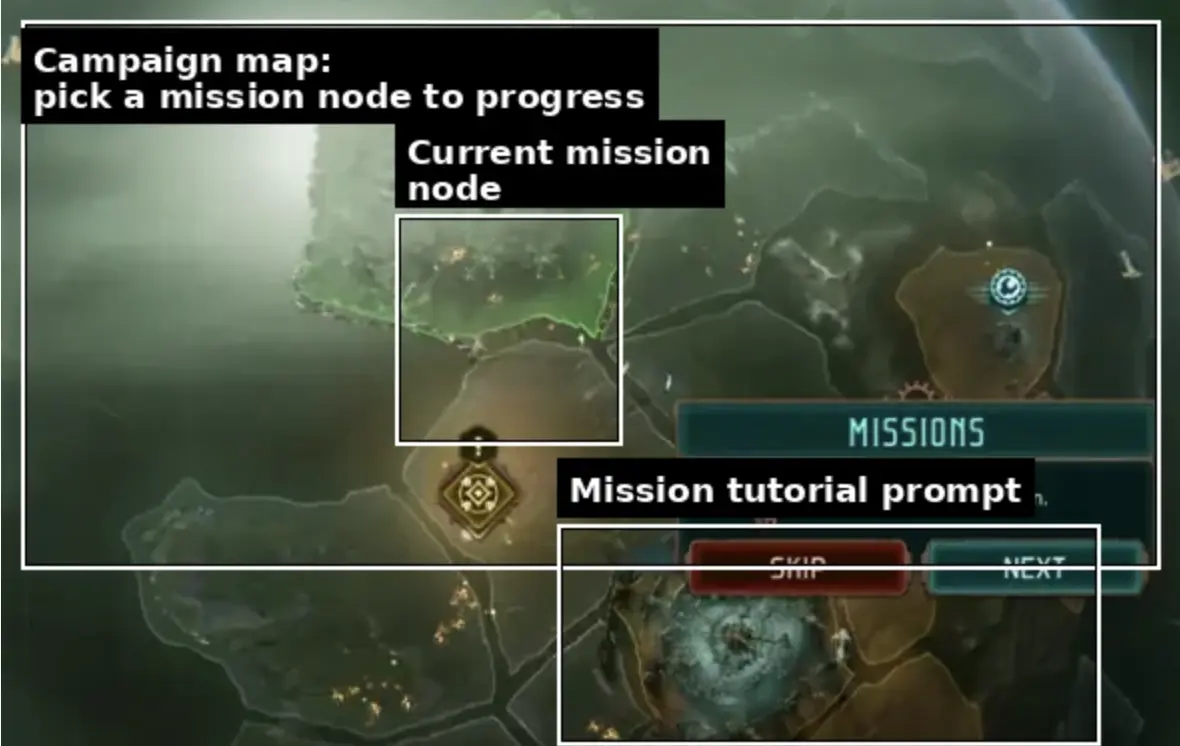
The campaign map now matters as a strategic layer. Mission choice, territory pressure, and resource routing affect future fights.
Scale Difference
| Mechanicus 1 expectation | Mechanicus 2 reality |
|---|---|
| Expedition into tomb structures | Planetary-scale campaign with regional control. |
| Progression through an investigation route | Mission selection, territory pressure, and resource decisions. |
| Combat power mostly solved inside encounters | Campaign-layer spending affects what you can bring later. |
| Enemy pressure feels localized | Control, garrisons, and multi-front pressure matter more. |
This is why Mechanicus 2 can feel more demanding even when the individual fight is readable. You are solving the battle and the campaign layer at the same time.
Biggest Change 7: AdMech Is More Demanding Early
A returning Mechanicus player may expect the Adeptus Mechanicus campaign to be the natural first route. It is familiar, but it is not necessarily simpler.
AdMech has more moving parts early:
- Requisition controls mission deployment.
- Unit cards are generated for each mission.
- Shrine of Knowledge unlocks affect future unit access.
- Forge holdings affect resource flow.
- Cognition depends on unit behavior.
- Cover discipline matters.
- Leaders need the right setup before they feel powerful.
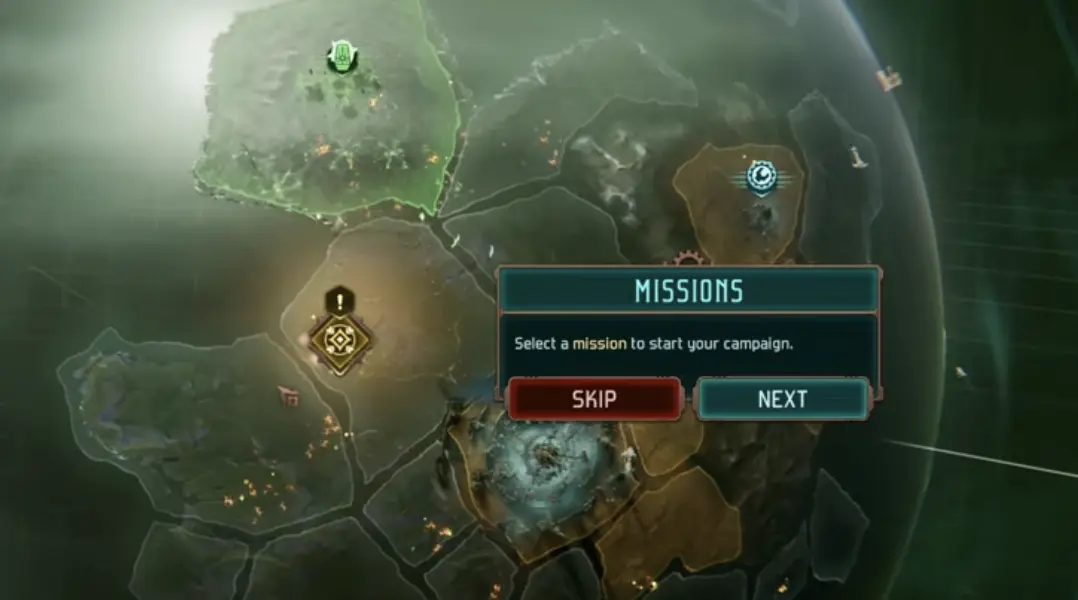
AdMech campaign strength is built over several missions. Returning players should avoid spending as if each deployment is isolated.
Recommended Campaign Order for Returning Players
If you want the smoother first run, start with Necrons. If you want the more technical returning-player challenge immediately, start with Adeptus Mechanicus.
The reason is not only difficulty. It is identity.
| Start with… | Why |
|---|---|
| Necrons | Their tactical identity is more direct: advance, damage, reanimate, build Dominion, and unlock stronger pressure. |
| Adeptus Mechanicus | Better if you want a harder technical campaign where cover, Cognition generation, Requisition, and Leader timing all matter early. |
Necrons are a cleaner first campaign because their baseline plan is easier to understand. AdMech becomes extremely strong, but it asks you to understand cover, distance, Cognition, and resource discipline before the faction really opens up.
Scaevola Warning for Returning Players
Scaevola is one of the characters returning players will notice quickly, but she should not be treated as a generic damage Leader.
Her Tech-Acquisitor identity leans into aggressive Cognition usage and unstable high-output tools. If her setup involves Forbidden Knowledge or Xenarite-style power, the risk is that strong effects may come with instability or less predictable consequences.
How to Play Around That Risk
| If your army can… | Scaevola becomes… |
|---|---|
| Generate Cognition consistently | A strong offensive payoff Leader. |
| Keep Rangers at safe distance | Easier to fuel her tools without overextending. |
| Use Servitors as pressure absorbers | Better at turning frontline damage into resource value. |
| Not control Cognition generation | Risky, because her best tools may be hard to fuel at the right time. |
The practical rule: do not rush aggressive Scaevola upgrades before your army can generate Cognition reliably. If you notice that Cognition is often empty when Scaevola wants to act, fix the army first: keep Rangers at safe firing distance, make Servitors durable enough to absorb pressure, and delay pure damage upgrades until the Cognition engine works.
What Returning Players Actually Need to Unlearn
This section only covers habits not fully solved by the individual systems above.
| Old habit | Better Mechanicus 2 habit |
|---|---|
| Treating every mission as self-contained | Think about the next deployment before spending resources now. |
| Assuming familiar AdMech means easier AdMech | AdMech is familiar, but its economy and Cognition flow are more demanding. |
| Treating terrain as background | Cover and destructible terrain now define the fight. |
| Waiting for the turn order to tell you the plan | Choose activations based on what sets up the strongest sequence. |
FAQ
Do I need to play Mechanicus 1 before Mechanicus 2?
No. Mechanicus 2 follows the first game, but the new campaign, new planet, and tutorialized systems make it understandable without replaying the original.
What is the biggest change from Mechanicus 1?
The biggest change is that Mechanicus 2 is built around two faction identities. AdMech runs on redesigned Cognition, cover discipline, and campaign resources. Necrons run on Dominion, reanimation, Lords, and retinue planning.
Is Cognition the same as Mechanicus 1?
No. Returning players should treat Cognition as redesigned. Units can generate it through role-specific behavior, such as ranged attacks from safe distance or Servitors absorbing pressure, and Leaders spend it through their own tools.
Why do people say Necrons are easier first?
Their early plan is more direct. You deal damage, build Dominion, use reanimation, and lean on a Lord-retinue structure. AdMech has more early friction because cover, Cognition, Requisition, and unit card randomness all interact.
Does cover matter more in Mechanicus 2?
Yes. AdMech wants to preserve cover and firing lanes, while Necrons can pressure or destroy those positions. Returning players should treat terrain as part of the core combat system, not as decoration.
Continue Reading in the Warhammer 40000 Guide Cluster
This article is part of our Warhammer 40000 strategy cluster. Use these guides to keep learning the game's core systems and routes.
Choose your first Mechanicus 2 campaign with a clear Necrons vs Adeptus Mechanicus breakdown for difficulty, story perspective, combat, and resources.
Faction GuideMechanicus 2 AdMech Guide: Cognition & UnitsDominate AdMech missions in Mechanicus 2. Learn to generate Cognition, manage Vigilance, deploy the best units, and utilize powerful Stratagems.
Faction GuideMechanicus 2 Necron Guide: Dominion & ReanimationLearn the Mechanicus 2 Necron campaign with practical tips for Dominion party-wide buffs, Reanimation, Lords, terrain destruction, units, and early mistakes.
Resource GuideMechanicus 2 Early Upgrades: Resources, Lords & DominionPrioritize early upgrades in Mechanicus 2 with concrete AdMech Requisition rules, Forge-Temple logic, Necron Lord routing, and Dominion thresholds.