Black Jacket Guide
Black Jacket Deck Building Guide: Early Builds & Combos
Build the ultimate deck in Black Jacket! Learn the best early builds, suit strategies, artifact choices, card combos, and when to burn or awaken cards.
Deck building in Black Jacket is not about stuffing your deck with every exciting card you see. A stronger deck is usually easier to read, easier to control, and harder for bosses to disrupt.
The best beginner rule is simple:
add cards that solve a problem, burn cards that make your draws worse, and build around the suits, artifacts, and opponent you are actually facing.
Black Jacket starts like blackjack, but your deck quickly becomes the real game. You are choosing which values appear more often, which effects control the table, how your suits shape shop rewards, and whether your deck can survive boss curses.
What a good early deck looks like
A good beginner deck usually has four things:
- Enough high-value cards to reach 18–21
- Some flexible or multi-value cards
- At least one way to check or control upcoming draws
- A way to pressure the opponent when you are already ahead
A bad beginner deck usually has:
- too many random low cards,
- too many cards that require setup,
- no way to check upcoming draws,
- no removal,
- no coin-pressure tools,
- one combo that only works when everything goes perfectly.
The best early decks are not always flashy. They are consistent. They give you fewer dead draws and more chances to make correct decisions.
Best deck size for beginners
The best deck size in Black Jacket is the size where most draws still help your plan.
Do not judge the deck only by card count. Judge it by draw quality.
Before adding a card, ask:
| Question | If the answer is no… |
|---|---|
| Does this card help me reach safe totals? | Skip it. |
| Does this card support my current suit plan? | Skip it. |
| Does this card help against the next boss or enemy type? | Skip it unless it is generally strong. |
| Would I be happy to draw this at 15 or 16? | Be careful. |
| Does this card make my deck more consistent? | If not, do not add it. |
A bigger deck is fine if the new cards improve your plan. A smaller deck is better if your current deck already has the cards it needs.
Suit orientation: build around your journey suits
Suits matter because they shape what cards can appear during a journey. When you start a journey, you choose three suits, and those suits define the card pool you are likely to build from.
This means deck building starts before the first shop.
You are not only choosing “cards.” You are choosing the kind of deck your shops can support.
| Suit direction | What it usually means for deck building | Beginner use |
|---|---|---|
| Spades-style disruption | Interfere with the opponent’s deck, draws, or table plan. | Strong if you like making the opponent misplay or draw badly. |
| Diamond-style control | Look at or rearrange card order, including top or bottom deck planning. | Very beginner-friendly because it reduces blind draws. |
| Value-changing suits | Modify card values, create safer totals, or turn bad totals into playable ones. | Good if you often bust or misread totals. |
| Burn / thinning suits | Remove weak cards and improve draw consistency. | Strong for long-term deck quality. |
| Combo-oriented suits | Reward specific placement, face cards, stacked cards, or keyword chains. | Powerful, but harder for first runs. |
If you are new, choose suits that give you information, flexible values, and simple control. A suit that looks powerful but requires perfect combo timing can make early runs harder.
Spades strategy: opponent disruption
Spades-style cards are built around opponent disruption. Instead of only improving your own hand, they can make the opponent’s future hands worse.
Early Spades examples include:
- Swap with the opposing slot
- Insight on their deck
- Put an Impulse card on the bottom of their deck
- Put named cards somewhere in the target deck
This makes Spades strong when you want to make the opponent draw badly instead of simply making your own hand bigger.
Use Spades-style disruption when:
- the opponent is close to busting,
- you can force them into bad draws,
- you want to pressure their coin economy,
- the boss or soul relies on predictable deck flow,
- you need to weaken the opposing table instead of chasing 21 yourself.
The risk is that disruption can be less obvious than raw value. If you do not understand what the card changes, you may spend coins without gaining a real advantage.
Diamond-style control: safer draws
Diamonds-style control is easier to understand early because seeing or rearranging cards gives you direct information.
Use deck-order control to:
- avoid busting from 15–17,
- set up a future 20 or 21,
- move bad cards away,
- prepare a sleeve play,
- decide whether to pass instead of guessing.
If you are losing because you keep drawing one card too many, prioritize suit effects that show you what is coming next.
Do not take every card
The biggest deck-building mistake is taking cards just because they look interesting.
A card can be powerful and still be wrong for your deck.
For example:
| Card type | Good when… | Bad when… |
|---|---|---|
| High-value card | You need more 10s or stronger totals. | Your deck already busts too often. |
| Low-value utility card | It has insight, exploit, whisper, demand, or control. | It has no useful effect. |
| Combo card | You already have the other pieces. | You are hoping to find support later. |
| Risky value-changing card | You understand the timing. | You are still misreading card values. |
| Boss counter card | The next boss punishes your current plan. | It does nothing for your deck outside one narrow scenario. |
If you cannot explain why the card belongs in your deck, skip it.
Why 10-value cards are strong
10-value cards are important because they create two of the safest blackjack patterns:
- Ace + 10 = blackjack
- 10 + 10 = 20
A true blackjack beats a normal 21, and a clean 20 is often strong enough to pass without risking another draw.
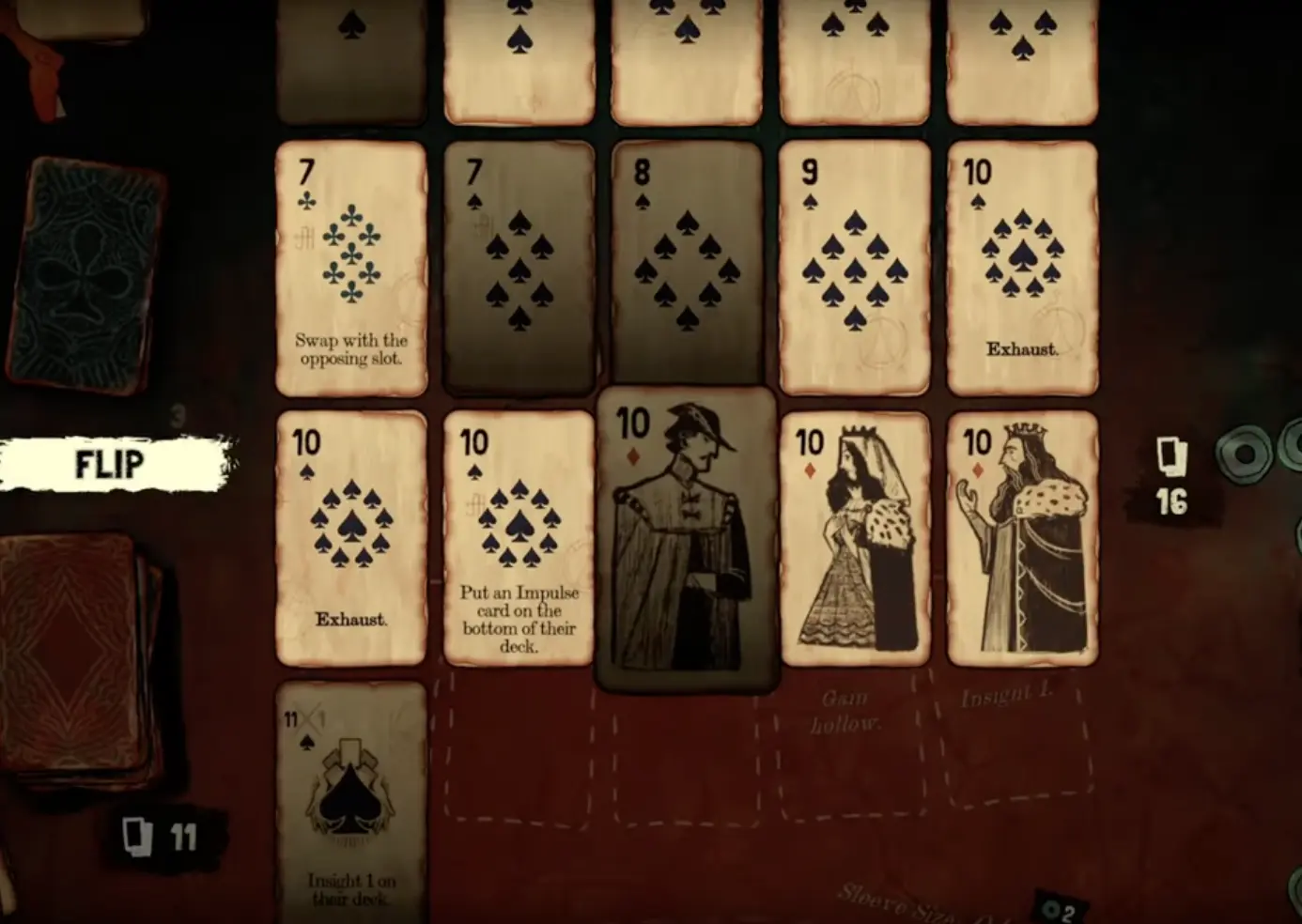
Good uses for 10-value cards:
- pair with Aces,
- create safe 20s,
- win highest-card tie breakers,
- punish bosses when they pass low,
- make sleeve plays more threatening.
Do not add every 10 you see. A deck with too many high cards and no control will bust more often. Pair high cards with insight, sleeve planning, flexible values, or low utility cards.
Multi-value cards are beginner-friendly
A card with multiple possible values is safer because the game can use the value that brings you closer to 21.
Multi-value cards help you:
- avoid busts,
- turn awkward totals into playable hands,
- recover after negative-value effects,
- keep drawing options open,
- set up blackjack or 20 without overcommitting.
Do not underrate flexible cards just because they do not look flashy. Early in Black Jacket, flexibility wins runs.
Use insight to build around information
Insight is one of the strongest early deck-building tools because it turns blind gambling into a decision.
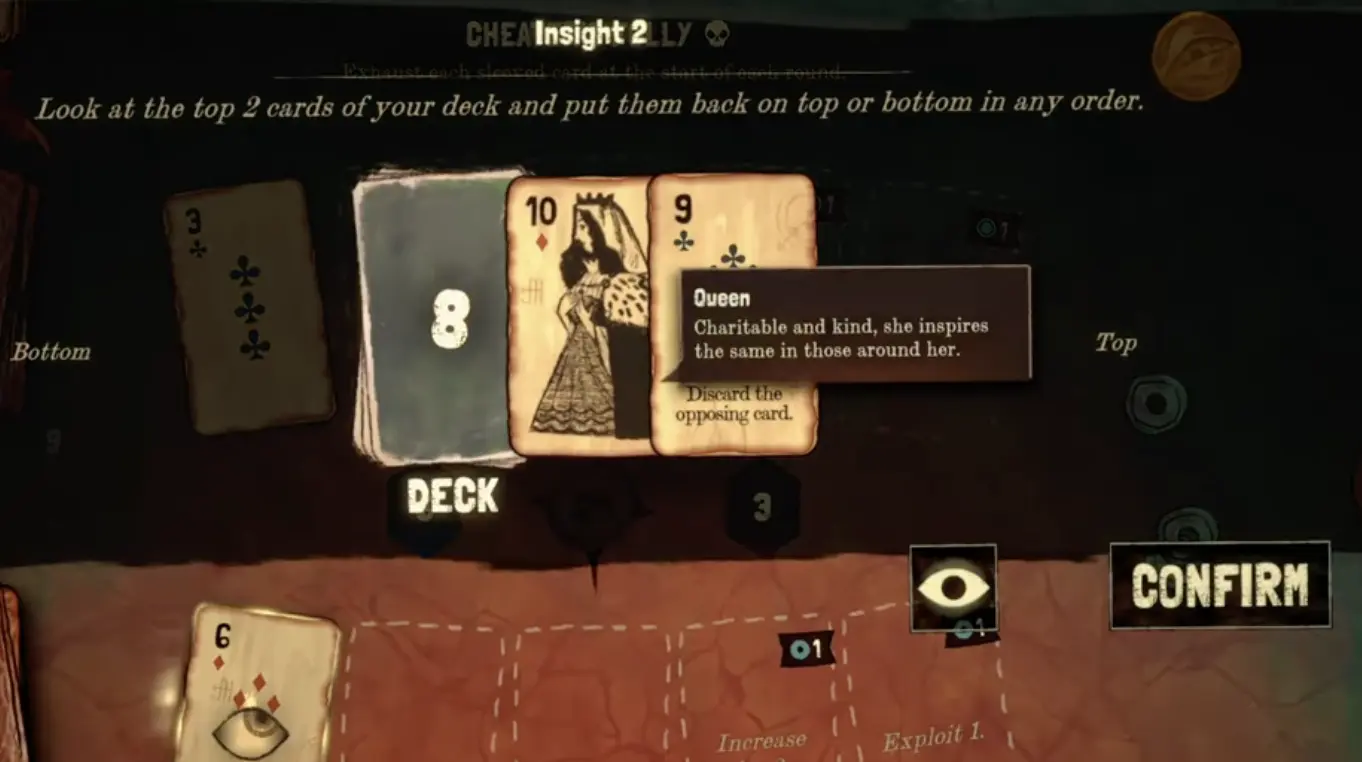
Insight helps you answer questions like:
- Can I safely draw from 15?
- Is my next card a bust?
- Should I pass now?
- Should I sleeve this card for later?
- Should I put a bad card on the bottom?
- Can I set up next round before losing this one?
A deck with insight is easier to play than a deck full of raw power. If you are new, prioritize effects that let you see or control your next cards.
When to burn cards
Burn removes a card from your deck. It is one of the easiest ways to make your deck better without adding more complexity.
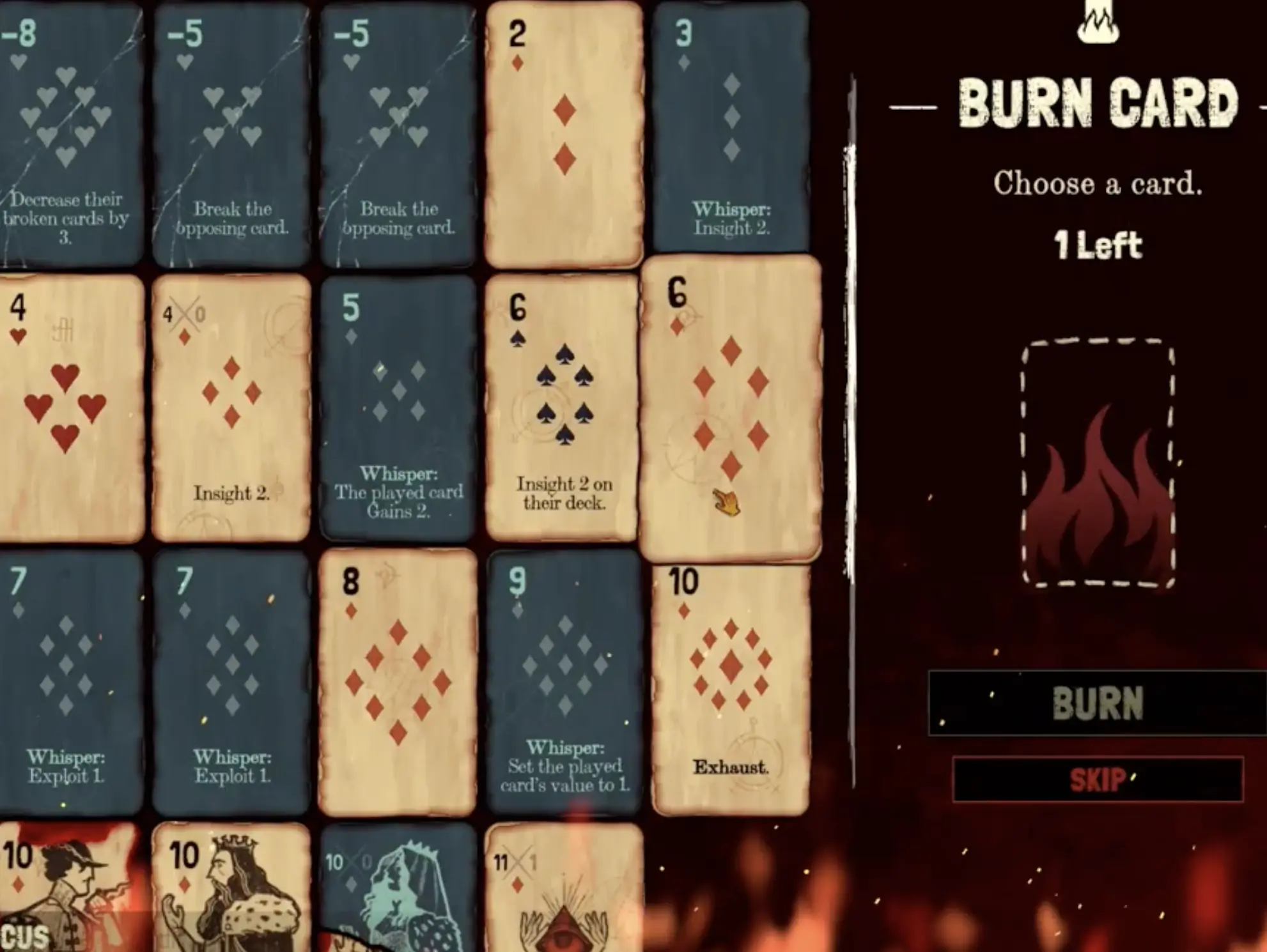
Burn a card when:
- it has low value and no useful effect,
- it keeps showing up at bad times,
- it does not fit your current suit plan,
- it makes your deck too inconsistent,
- you would rather draw almost anything else.
Do not burn a card only because it has a low number. Low cards can be excellent if they carry insight, exploit, whisper, demand, drain, or other useful effects.
Use this rule:
Burn cards that are bad draws, not cards that are simply low.
When to awaken cards
Awakened cards are how your deck starts becoming more than blackjack. An awakened card can gain an effect that changes values, reveals cards, discards cards, pressures coins, or enables combos.
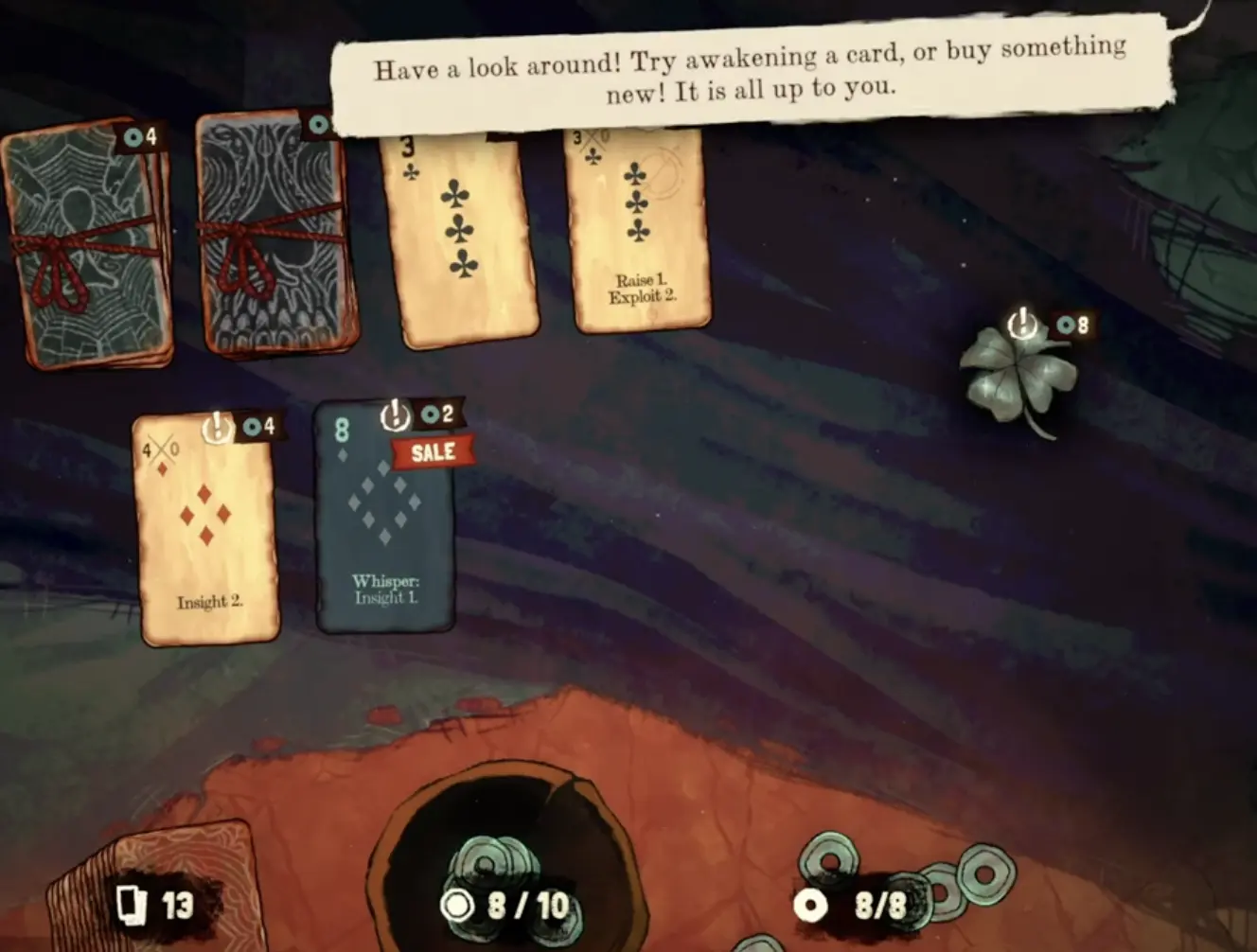
Good early awaken targets:
| Target | Why it is good |
|---|---|
| Cards you draw often | The effect appears more consistently. |
| Flexible-value cards | They stay safe while gaining utility. |
| 10-value support cards | They help build strong 20 / blackjack turns. |
| Cards with simple effects | Easier to use correctly under pressure. |
| Cards that fix your deck’s weakness | Better than adding random new cards. |
Avoid awakening purely for novelty. If you do not understand when the awakened effect is useful, it may make your decision-making worse.
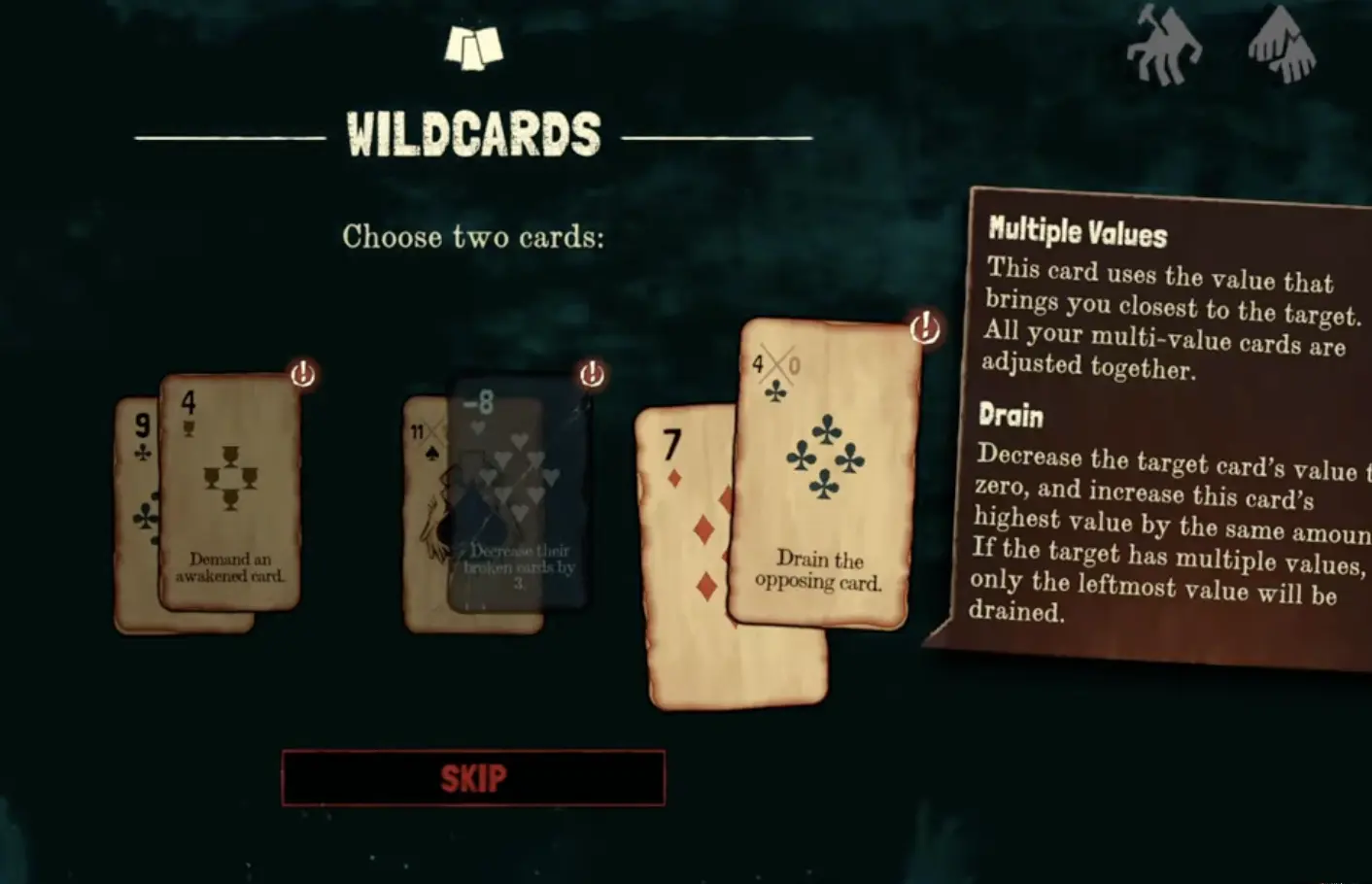
Are Wildcards and card rewards worth taking?
Wildcards and card reward screens are worth taking when the offered cards solve a real deck problem. They are bad when you take them only because they look interesting.
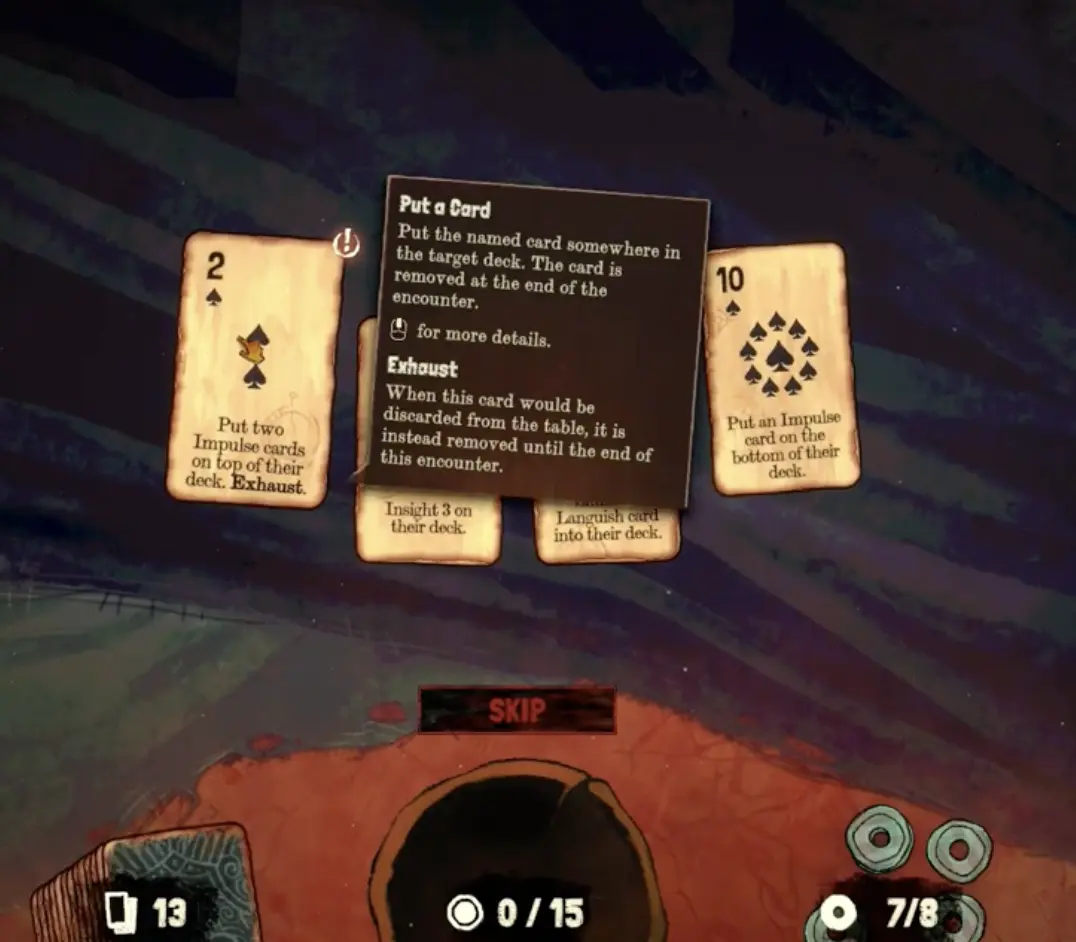
Take a card reward when:
- your deck lacks high-value cards,
- you need more cards from your suit strategy,
- the reward gives you Insight, Burn, Drain, Demand, or another useful effect,
- your current deck cannot handle the next boss,
- the card improves your plan immediately.
Skip or be cautious when:
- your deck is already bloated,
- the offered cards do not match your suits,
- you only need to remove bad cards,
- your coin economy is weak,
- the card requires a combo you do not already have.
A card reward is not automatically value. Sometimes the best choice is to skip, burn a weak card later, awaken a reliable card, or keep your deck compact.
Artifacts and deck-building
Artifacts are not just bonus items. They can decide what kind of deck your run wants to become.
A good artifact should either strengthen what your deck already does or fix a weakness that keeps killing you.
| Artifact support type | Best with | Why it matters |
|---|---|---|
| Coin economy artifact | Exploit, sleeve, boss fights | Lets you survive more forced bets and risky rounds. |
| Deck-control artifact | Insight, Diamonds-style control, combo builds | Makes draws easier to plan. |
| Value artifact | Safe 20 builds, multi-value cards | Helps reach strong totals more reliably. |
| Removal / thinning artifact | Bloated decks, burn strategies | Improves draw quality over time. |
| Sleeve support artifact | Ace / 10 setups, face-card combos | Makes saved-card plans stronger. |
| Boss-counter artifact | Curse-heavy routes | Helps survive specific boss mechanics. |
Do not pick artifacts only because they look rare. Ask:
Does this artifact make my current deck more consistent, safer, or better against the next boss?
If yes, it is probably worth considering. If it asks you to rebuild your whole deck around a plan you do not have, skip it.
How to use sleeve in deck building
Sleeve is not just a combat trick. It changes how your deck plays.
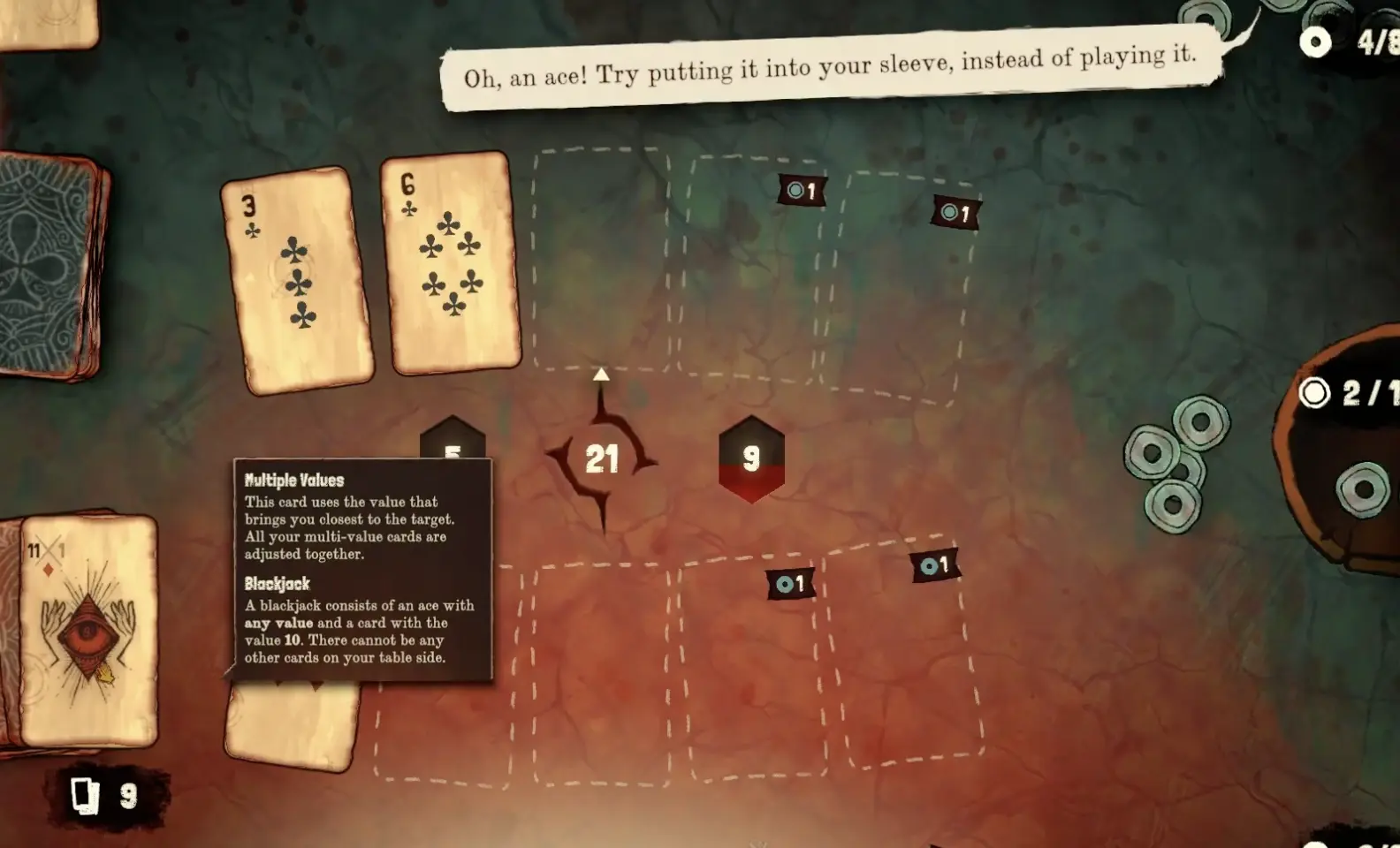
Sleeve makes these cards better:
- Aces,
- 10-value cards,
- face cards,
- combo pieces,
- flexible-value cards,
- cards that are bad now but strong next round.
But a deck that depends too much on sleeve can collapse against bosses that punish sleeved cards. If the next boss exhausts or weakens sleeve plays, your deck needs another way to win.
Beginner rule:
Use sleeve to support your deck, not to carry your entire deck.
Face cards and card combos
Your deck comes with face cards, and the game hints early that playing them next to each other can trigger special interactions.
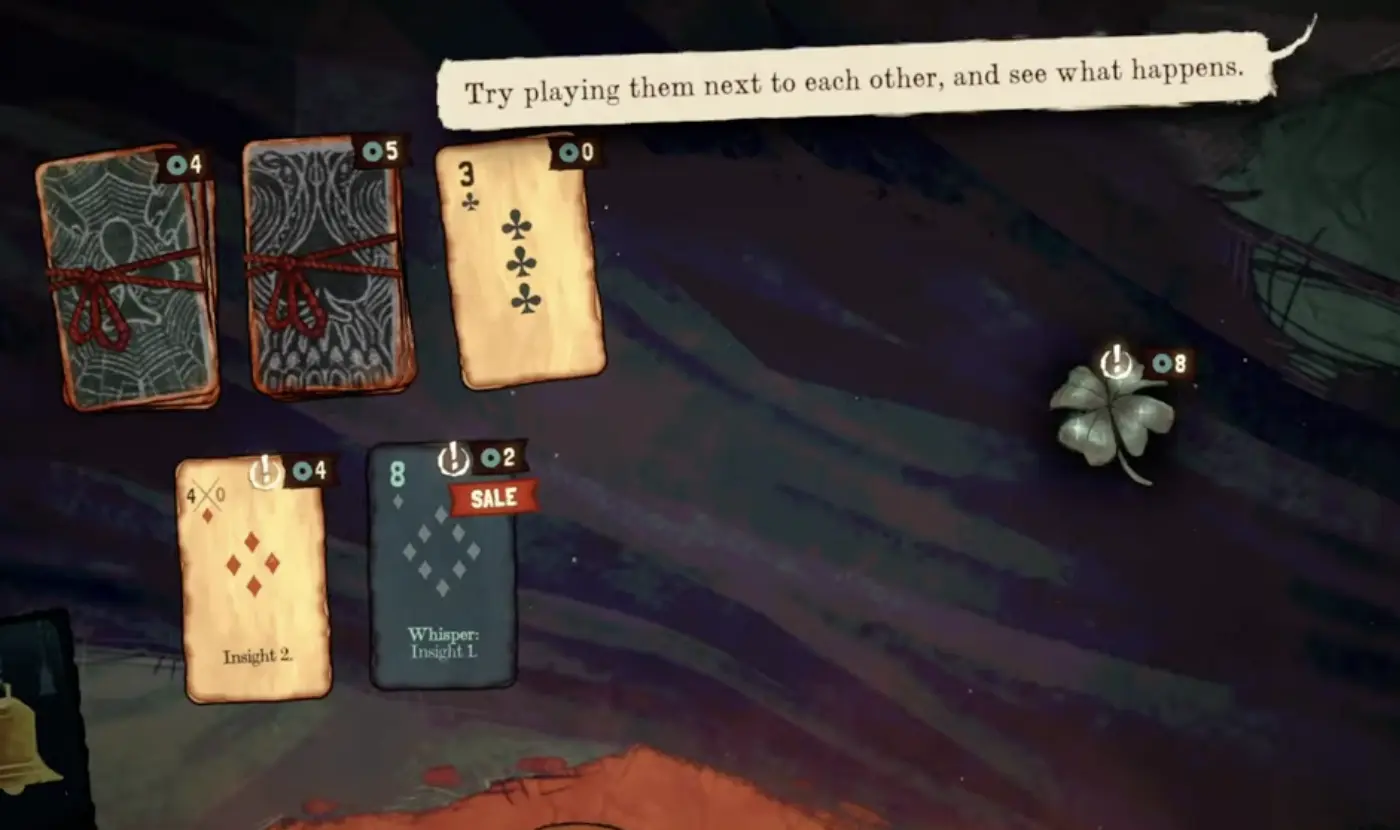
For early deck building, face cards are useful in two ways:
- They are often strong 10-value cards.
- They can become combo pieces.
You may see these interactions described as Face Trios, Royal Sets, or face-card combos. If your run starts giving you face-card support, do not burn those cards too early unless they clearly hurt your plan.
Beginner face-card rules
| Rule | Why |
|---|---|
| Keep at least some face-card access | They support blackjack and combos. |
| Try placing face cards next to each other | The game directly hints at this interaction. |
| Use sleeve to save one face card | This can help complete a future combo. |
| Do not force a combo at bad coin pressure | A combo is not worth going broke. |
| Watch for hidden effects | Some interactions are not obvious until tested. |
Face-card combos are exciting, but they should not be your only win condition.
Hollow, Whisper, and stacked-card builds
Stacked-card builds work through two connected mechanics: Hollow and Whisper.
Hollow lets another card be played on top of a card, and both card values remain active.
Whisper triggers when a card is played into that Hollow slot, and Whisper effects are not optional.
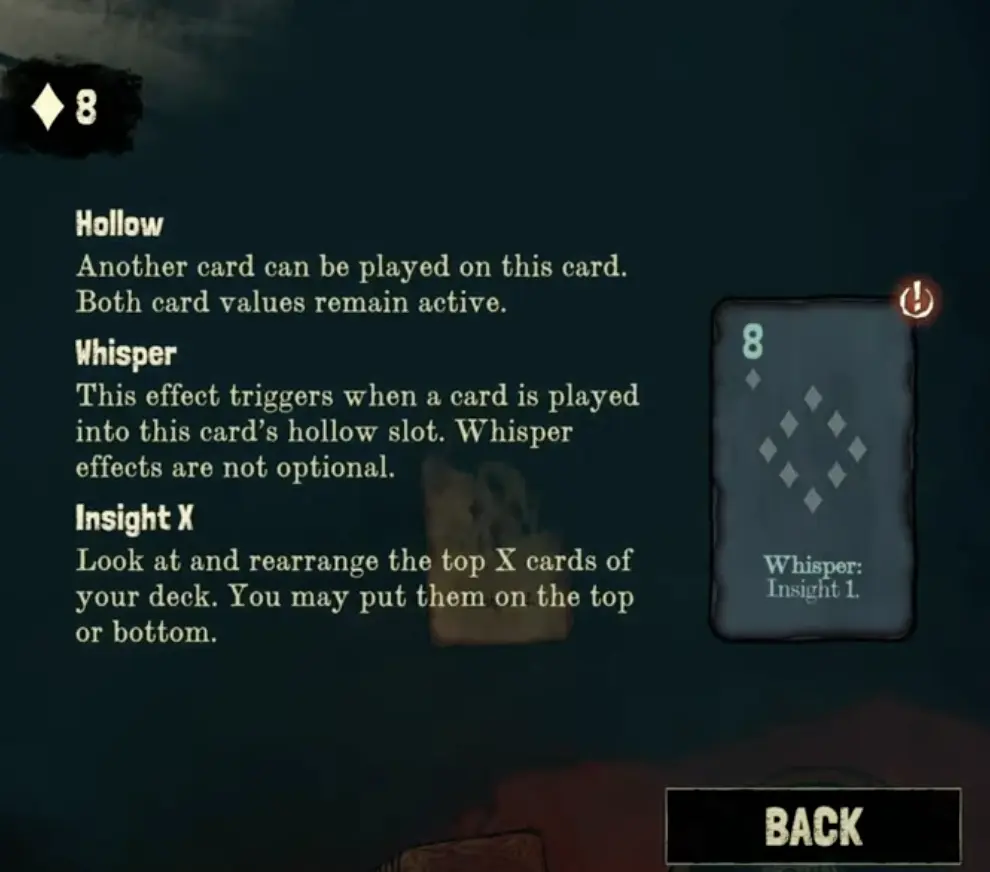
This means stacked-card builds can be powerful, but they are not free value. You must care about both the total value and the triggered effect.
Use Hollow / Whisper when:
- the stacked card helps your total,
- the Whisper effect supports your build,
- you can avoid busting from both active values,
- you want to trigger Insight, Exploit, or another attached effect,
- you have enough coin safety if the play goes wrong.
Avoid Hollow / Whisper when:
- you are already near 21,
- the extra card pushes you toward bust,
- the Whisper effect hurts your plan,
- you forgot that both values remain active,
- a boss curse punishes stacked or altered cards.
For beginners, Hollow and Whisper are mid-step mechanics. Learn coin pressure, safe totals, and Insight first, then use stacked cards to add stronger combo lines.
Drain, break, and negative-value cards
Some cards manipulate values directly. Drain decreases a target card’s value to zero, then adds that value to the Drain card’s highest value. If the target has multiple values, only the leftmost value is drained. Break can turn positive values into negative values or otherwise change the math of the table.
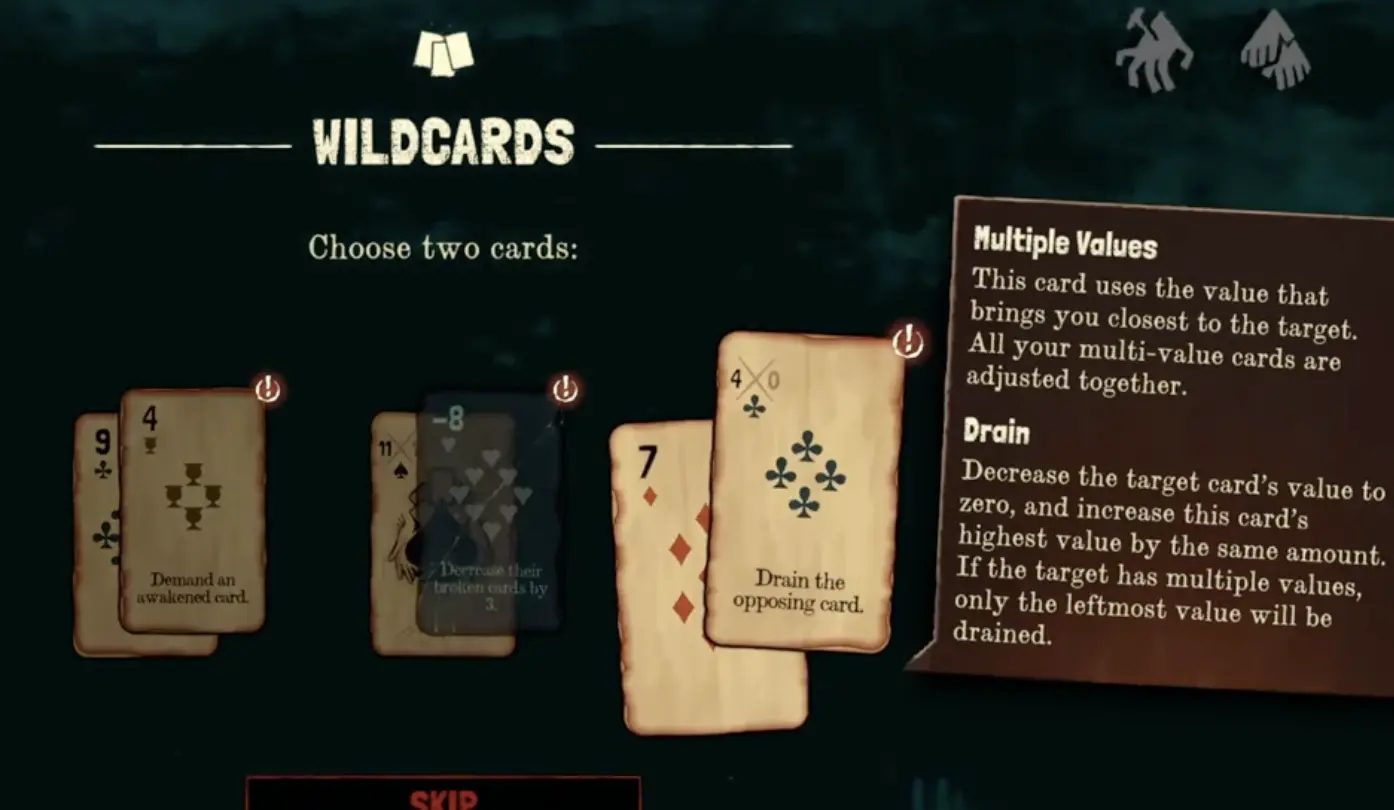
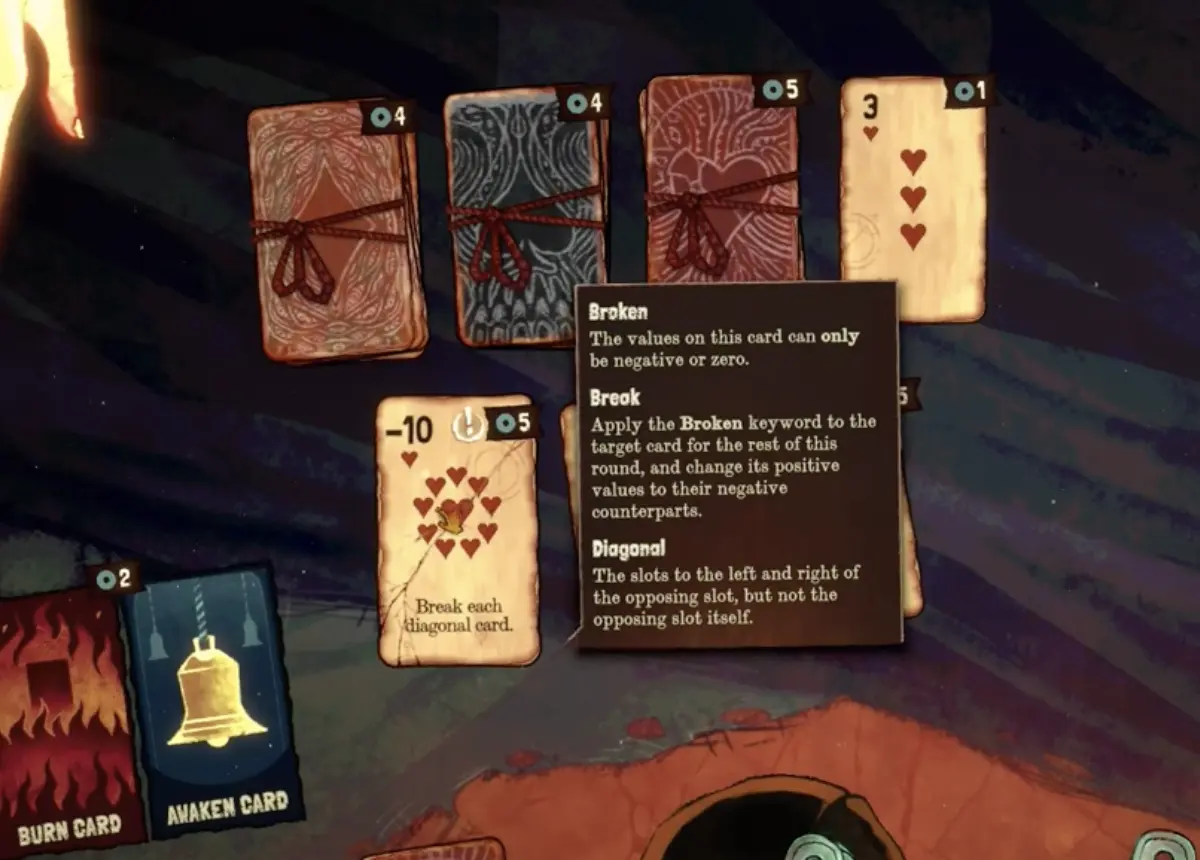
These effects are powerful because they let you win hands that normal blackjack logic would not allow. They are also easy to misplay.
Use value manipulation when:
- you can create 20 or 21 safely,
- you can prevent a bust,
- you know which value Drain will take from a multi-value target,
- you can weaken the opponent’s best card,
- you understand which card is being changed,
- you have enough coins to survive if the plan fails.
Avoid value manipulation when:
- you are guessing,
- multiple values are involved and you are confused,
- you have not checked the leftmost value on a multi-value target,
- the round is already won,
- the effect costs your last coin,
- a boss curse may alter the result after you commit.
Value tricks are not beginner autopilot tools. Treat them as calculated plays.
Adjust your deck to opponent behavior
Deck building is not only about your cards. It is also about the soul sitting across the table.
Different opponents can have different styles. Some pass early. Some pressure coins. Some add unwanted cards. Some manipulate values. Bosses take this further with curses and Soul Coin pressure.
Before choosing a shop reward, ask:
| Opponent problem | Deck answer |
|---|---|
| Opponent passes early with safe totals | Build stronger 18–20 hands and avoid greedy draws. |
| Opponent pressures coins | Add safer hands, coin support, or exploit only when favored. |
| Opponent disrupts your deck | Prioritize Insight, Burn, and flexible values. |
| Opponent adds negative or strange cards | Use value control and avoid overcommitting. |
| Boss punishes sleeve | Build direct-play strength instead of relying on stored cards. |
| Boss rewards long fights | Improve consistency and coin economy before entering. |
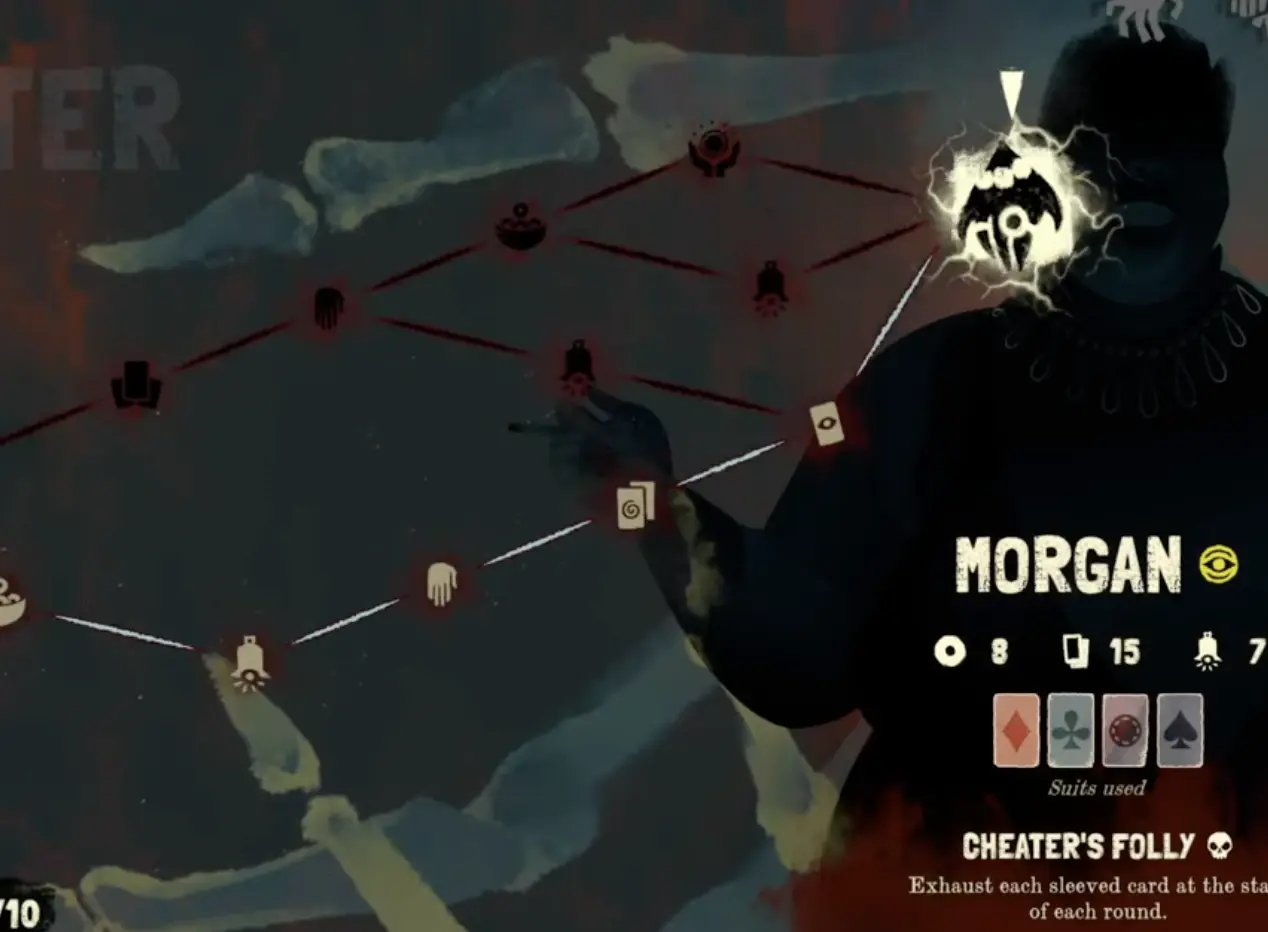
This is where a good deck-building guide connects to boss strategy. If your deck is strong in normal encounters but collapses against Morgan, Ivel, Niv, or another boss, the issue may not be your card quality. It may be that your deck is answering the wrong problem.
For specific boss patterns, read the Black Jacket Boss Guide.
Early build types
You do not need a perfect named build to win early. Think in simple build types.
| Build type | Core idea | Best for | Weakness |
|---|---|---|---|
| Safe 20 build | Use 10s, Aces, flexible values, and controlled passing. | Beginners and early boss fights. | Can bust if you add too many high cards without control. |
| Control build | Use Insight, rearranging, discard, Drain, or deck manipulation. | Players who want safer decisions. | Can lack raw power if you never add enough value. |
| Coin-pressure build | Use Exploit and slot effects to force opponent payments. | Ending encounters when you are ahead. | Backfires hard if you raise while behind. |
| Disruption build | Use Spades-style effects to interfere with the opponent. | Enemies with predictable draws or greedy behavior. | Harder to evaluate than simple value cards. |
| Combo build | Use face cards, Whisper, sleeve, and hidden interactions. | Experienced players and strong shop luck. | Fragile if you cannot find the pieces. |
Pick the build that matches your suits, artifacts, and next boss. Do not force a combo build just because one card looks exciting.
How to prepare your deck for bosses
Bosses punish greedy decks. Before entering a boss fight, check your deck for these problems:
| Problem | Why it is dangerous |
|---|---|
| Too many weak cards | You cannot find your good cards in time. |
| No insight | You draw blind into boss curses. |
| Too much sleeve dependence | Some bosses punish or exhaust sleeved cards. |
| No flexible values | You bust more often under value pressure. |
| One fragile combo | Boss disruption can break your only plan. |
| Too little coin pressure | You cannot finish boss rounds when ahead. |
| Too much coin pressure | You raise pots that the boss wins. |
| No artifact synergy | Your passive bonuses do not support your actual deck. |
Before a boss, prioritize:
- Burn one bad card if your deck feels bloated.
- Awaken a reliable card instead of buying a random flashy one.
- Add insight or flexible values if available.
- Check whether your artifact supports your actual plan.
- Keep enough coins to survive a bad first round.
- Stop building around sleeve if the boss punishes sleeve.
For boss-specific advice, read the Black Jacket Boss Guide.
Mistakes and fixes
Use this table when your deck starts feeling worse after shops.
| If your run is failing because… | Likely mistake | Fix |
|---|---|---|
| Your deck feels random | You are adding too many cards. | Add only cards with a clear role; burn weak cards. |
| You bust too often | Too many high cards without control. | Add flexible values, Insight, or safer low utility cards. |
| You cannot reach strong totals | Not enough high-value support. | Add useful 10-value cards, Aces, or value artifacts. |
| You keep losing to bosses | Your deck only works in normal encounters. | Build around the next curse, not just average hands. |
| You run out of coins | You overuse sleeve, exploit, or risky slot effects. | Protect coins and raise only when favored. |
| Your combos never appear | The deck is too large or unfocused. | Burn off-plan cards or stop forcing the combo. |
| Shops make your deck worse | You buy interesting cards instead of useful cards. | Prioritize consistency, awaken upgrades, or removal. |
| Face-card combos fail | You force Royal Sets at bad timing. | Use face cards as strong cards first, combo pieces second. |
| Artifacts feel weak | They do not match your deck plan. | Pick artifacts that support your current build, not a fantasy build. |
| Disruption cards feel confusing | You are not sure whether they affected the opponent’s table or deck. | Read effects like Swap, Insight on their deck, and Put a Card carefully before spending coins. |
| Whisper stacks make you bust | You forgot that Hollow keeps both card values active. | Count both values before playing into a Hollow slot. |
Deck building is not about one universal best answer. It is about fixing the weakness that is killing your current run.
Simple first-win deck plan
For your first real win, use this plan:
-
Choose suits that support one broad plan.
Information, flexible values, and simple control are easiest for beginners. -
Keep a compact deck.
Do not add cards unless they improve your odds or solve a problem. -
Prioritize 10s, Aces, and flexible cards.
These create safe totals and blackjack chances. -
Take Insight when offered.
Information is the safest form of power. -
Awaken reliable cards.
Choose effects you understand. -
Burn cards that do nothing.
Removal is a win condition in deckbuilders. -
Pick artifacts that match your deck.
Do not chase passive bonuses that support a different plan. -
Adapt before bosses.
A deck that beats normal enemies can still lose to a curse. -
Pass when the odds are bad.
A disciplined pass is often better than a heroic bust.
FAQ
What is the best deck size in Black Jacket?
The best deck size is the one where most draws still support your plan. A compact deck is usually easier to control, but adding cards is fine if they improve your values, effects, suit synergy, or boss matchup.
What is the best suit strategy in Black Jacket?
For beginners, the safest suit strategy is to pick suits that give information, flexible values, or simple control. Spades-style disruption is strong if you want to interfere with the opponent’s deck, while Diamonds-style control helps you plan safer draws.
Is Spades good in Black Jacket?
Yes. Spades-style effects are useful because they can disrupt the opponent’s deck or force awkward situations. They are strongest when you understand what the opponent is trying to do.
Should I add every 10-value card?
No. 10-value cards are strong because they create blackjack and safe 20s, but too many high cards can make you bust more often. Add them when you also have Aces, insight, sleeve support, or flexible values.
When should I burn cards?
Burn cards that are bad draws. Remove low-value cards with no useful effect, off-plan cards, or cards that make your deck inconsistent. Do not automatically burn every low card.
Are awakened cards worth it?
Yes, especially if the awakened effect gives information, flexibility, discard, value control, or reliable coin pressure. Awaken cards you expect to draw often.
Are artifacts important?
Yes. Artifacts can define your build by supporting coin economy, deck control, value manipulation, removal, sleeve plays, or boss counters. Pick artifacts that strengthen your current deck.
Are Wildcards and card rewards worth taking?
Yes, when the offered cards solve a real problem. Take card rewards that support your suits, improve your values, add useful effects, or help against the next boss. Skip cards that only make your deck larger.
Are face cards good?
Yes. Face cards are strong 10-value cards and may also trigger hidden interactions when played next to each other. They can support blackjack, Royal Sets, Face Trios, and combo builds.
What is the safest beginner build?
The safest beginner build uses 10-value cards, Aces, flexible values, Insight, and a few simple awakened effects. It avoids overcomplicated combos and protects coins before boss fights.
Should I build around combos?
Build around combos only when you already have the pieces. Do not add weak cards just because they might support a combo later.
Why does my deck feel worse after shops?
You are probably adding too many cards or buying cards that do not match your suit plan. Shops improve your deck only when you buy useful cards, awaken reliable cards, pick matching artifacts, or remove weak cards.
How should I adjust my deck for different opponents?
Watch what the opponent pressures. If they attack your coin economy, play safer and avoid unnecessary raises. If they disrupt your deck, prioritize Insight and Burn. If they punish sleeve, build more direct-play strength.
Continue Reading in the Black Jacket Guide Cluster
This article is part of our Black Jacket strategy cluster. Use these guides to keep learning the game's core systems and routes.